
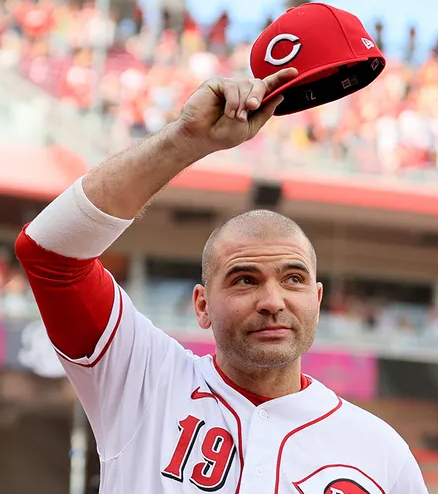
The second installment in this series offers the first chance to have a discussion concerning the Hall of Fame case of Joey Votto. With his retirement last week, the clock starts on his five-year eligibility window. But be it today or 2029, I have a bad feeling this may be another example of the interminably broken nature of the Hall of Fame’s current induction process. In other words, I don’t think Joey Votto is getting into Cooperstown because he’s going to fall victim to the hypocrisy of the Baseball Writer’s Association of America (BBWAA) and the general nudnikery of the Sabermetrics crowd.
My Case For Joey Votto
I have to make a clear distinction here. I’m not an “anti-numbers” guy; baseball’s history is scribed on scrolls of numbers. But I’m very dismissive of the Sabermetrics crowd. When I hear somebody basing an entire argument on only what they can quantify, I know immediately they likely fall into two categories.
- People who don’t watch the game
- People who don’t know what they are watching
In much the same manner the .200 mark named for Mario Mendoza represents a clear delineation for hitters, Joey Votto may very well be the guy who defines where the break for the Sabremetricians will be. Right now, they are arguing among themselves comparing Votto to recent inductees like Todd Helton based on their voodoo numbers like WAR. That’s because they couldn’t tell with the simple “eyeball test” that for the “meat and potatoes” portion of his career, Joey Votto was simply one of the best hitters in game. There’s plenty of traditional numbers to bear that out.
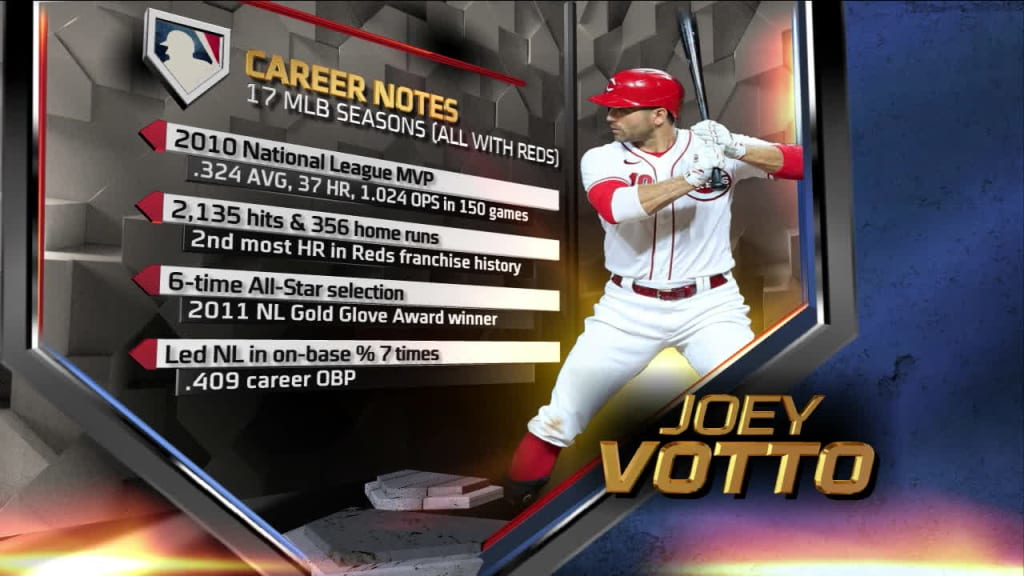
1 Most Valuable Player (MVP) Award
There’s a lot of plaques in Cooperstown which do not include the letters “MVP.” Some of the most notable…
- Derek Jeter
- Tony Gwynn
- Wade Boggs
- Eddie Murray
- Eddie Matthews
- Mel Ott
There’s about two dozen more, so continuing to list them is overkill. Suffice it to say that if you are selected as the “best” player in an entire league, you’ve done something right. There’s a lot of guys in Cooperstown who can’t say that; Joey Votto can.
2,135 Hits
It only seems logical to compare a potential Hall of Famer against some current members. In the case of Joey Votto, his career hit total is arguably the weakest bullet point on his resumé for Cooperstown, but that number doesn’t tell the whole story. Those of us who actually watch baseball know Votto toiled on a lot of bad teams; ones that couldn’t put somebody in the lineup to protect him. To tell the story of Joey Votto is to talk about extended stretches where he never saw pitches to hit.
While his career hits total doesn’t put Votto on the “Boardwalk” side of of the “Hits” Monopoly board, it still puts him ahead of Mike Piazza, Joe Mauer, and Johnny Bench. Yes, I know those are all are catchers clad in the lowered expectations for those who took the beating the “tools of ignorance” But there’s still a treasure trove of batting titles and MVP awards in that triumvirate. Not only does that downplay the importance of career totals, it elevates the value of being recognized amongst the best.
To that end, the more telling part of Votto’s mark is where he ranked among active players when he hung up the spikes. On the day Votto retired, there were only three players with more career knocks; Freddie Freeman (2,241), Jose Altuve (2,200), and Andrew McCutchen (2,137). Two of those guys are likely Hall-of-Famers, and a case can be made for the third. Either way, that cements the case Votto was one of the best hitters of his day.
.409 On-Base Percentage
Here’s a stat which really doesn’t get it’s due; you can’t score if you don’t get on-base. Last time I checked, baseball was still a game in which the team scoring the most runs wins. Votto got on base at the same rate as the legendary Jackie Robinson and he outpaced Hall of Famers Rickey Henderson, Joe DiMaggio, and Rod Carew…which is why he led the league in this category seven times. Upon Votto’s retirement, only two active players had a better mark; Juan Soto (.422) and Mike Trout (.410).
It’s a shade early to have the Cooperstown conversation on Soto, but that’s not going to be the case much longer. As for Trout, they’ve already commissioned the making of his plaque…we’re just waiting for the unveiling.
459 Doubles
I might the only one who cares about this, but if you show me a guy who hits a lot of doubles, I’ll show you a hitter pitchers fear. That’s because baseball history is chock full of 30-homer “mistake” sluggers. But the guy who hits a lot of doubles is one who does damage on “pitcher’s pitches.” There’s no stat for this, but how many times did a pitcher love a pitch coming out of his hand only to see Votto smoke it into the gap? Plenty.
While Votto’s was not known as the traditional “power” hitter, his proclivity for hitting doubles placed him consistently in the top ten for slugging percentage, including a league-leading .600 in his 2010 MVP campaign. Votto’s career mark for two-baggers puts him ahead of Hall of Fame sluggers Jimmie Foxx, Jim Thome, and Fred McGriff, and behind only one active player (Freddie Freeman, 504).
The Arguments Against…
“He Walked Too Much”
Joey Votto retired as the active career leader in bases on balls at 1,635. He also got walked intentionally a lot. With 147 intentional free passes in his career, Votto led the league in IBB three times and walks in general five. Somehow, that’s a bad thing.
The people who believe that simply don’t understand baseball. This includes respected baseball people such as Votto’s former manager (and known mental Pygmy) Dusty Baker who once said that “on-base percentage is good. But RBIs are better.”
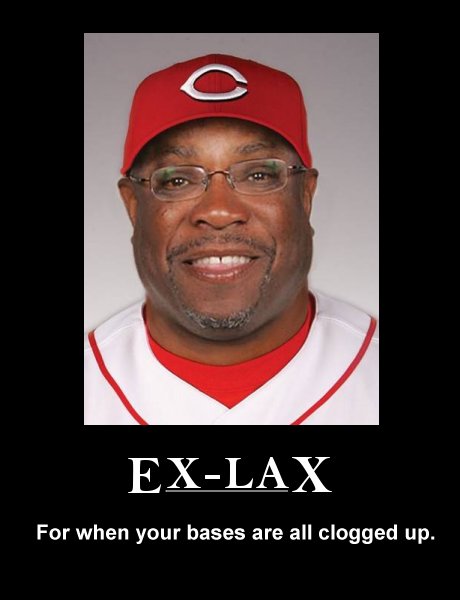
It shouldn’t shock anybody that bit of “if it doesn’t fit, you must acquit”-type logic came from the same brain that brought us “too many baserunners just clog up the basepaths.” People who agree with silliness like that need to read my treatise for on-base percentage, particularly the part about how scoring necessitates getting on base. You simply don’t get one without the other.
If you ever hear the “walked too much” argument, you immediately know not to take whose saying it seriously. In the same era, none of them ever said that about Frank Thomas who had 300+ career more career walks than did Votto.
Pointing that out will invariably result in the bleat “yeah…but Frank Thomas hit 500 home runs!” While that’s true, it’s just the setup to another flawed argument.
“He Didn’t Hit For Power”
While 356 career dingers isn’t exactly an eye-popping number, as previously mentioned Votto consistently ranked in the top ten in slugging percentage. That means there’s no denying he slugged with the best of them. The truly exasperating part of this argument is it always comes from the same people; the ones who hypocritically take communion on the eucharist of the home run while still clutching their pearls over steroids.
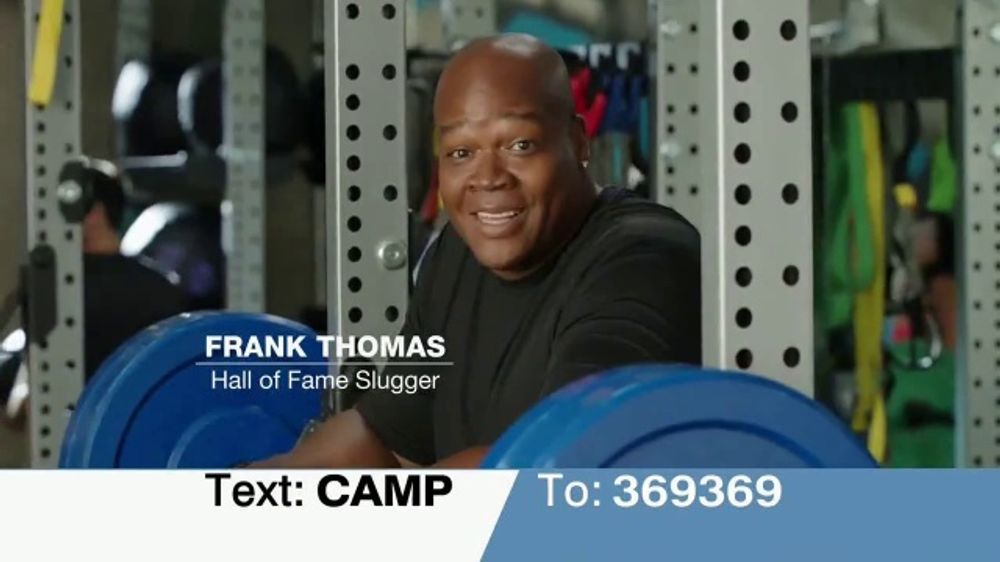
If you want to watch them go completely apoplectic, ask them why Frank Thomas’ name never got mentioned in the same breath as steroids even though the heart of his career was during that era and he was the size of an apartment building…especially with that shady “low testosterone” stuff he’s selling these days.
“He Didn’t Drive In Runs”
This one goes hand-in-hand with the “didn’t hit for power” crap. It’s hard to argue that 1,144 RBIs is a “first ballot” sort of number, but this is another case of the numbers telling only part of the story. First of all, Votto plated more runs more than the legendary bats of Tony Gwynn, Roberto Alomar, and Kirby Puckett. There were only two active players who were more productive than Votto upon his retirement; Freddie Freeman (1,216) and Paul Goldschmidt (1,171). Slice it anyway you like, it’s just another category in which Votto was in the top-five amongst active players.
Keep on mind Votto played on a lot of bad teams…ones that either couldn’t get runners on base ahead of him and/or were managed by a guy who thought “baserunner just clog up the basepaths.”
The Bottom Line on Joey Votto
Like I said, Votto’s case for enshrinement is so “borderline” it may become it’s very definition. I firmly believe that had he been a New York Yankee his induction would be a certainty. But because he played in the baseball backwater of Cincinnati, many of his exploits went unnoticed…just not to those of us who were paying attention.
Votto was a Gold Glove winner, a six-time All-Star, National League MVP, and led the league in on-base percentage seven times in an nine-year span from 2010-2018. He wasn’t the prototypical slugger one usually envisions from a 1st Baseman; he only topped 30 home runs three times in his career. That is the crux of the “didn’t hit for power” argument, but his .511 career slugging percentage ties him with Ty Cobb and ahead of Hall of Fame sluggers Eddie Mathews, Fred McGriff, and Harmon Killebrew.
After you boil it all down, the fact remains Joey Votto was one of the best hitters of his day. Despite the fact he played on a lot of crappy teams, he was the kind of guy you wanted coming to the plate when the ball game was on the line, and the last one opponents wanted to see. Come five years, there’s a spot for him on my Hall of Fame Ballot, but what do I know? I’ve only been watching baseball longer than most members of the BBWAA have been alive.
Got a case for or against? Or perhaps you just want to yell at us? Hit us up through our Comments section, the contact form below, or at dubsism@yahoo.com, @Dubsism on Twitter, or on our Pinterest, Tumblr, or Instagram, or Facebook pages, and be sure to bookmark Dubsism.com so you don’t miss anything from the most interesting independent sports blog on the web.


 Dubsism