
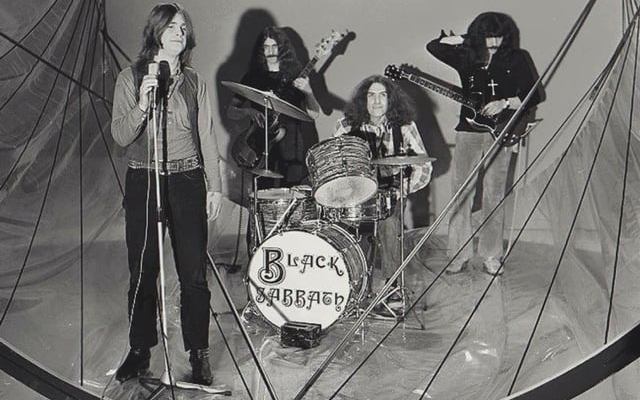

Today’s Argument: Despite their legendary status as Godfathers of heavy metal, the discographies of Ozzy Osbourne and Black Sabbath consisted of a lot of crap when they weren’t together.
The Rationale: First of all, let’s get one thing straight. By no means is this to be construed as a “trash job.” With Ozzy’s passing, there’s been the usual eulogizing, and I have yet to hear something with which I disagree.
Nobody who is being intellectually honest can even suggest that in his time, John Micheal “Ozzy” Osbourne didn’t become an icon of rock. As shopworn as those “Mount Rushmore” discussions have become, there’s no way Ozzy can’t be credited as the face of heavy metal’s genesis.
There’s an undeniable test determining when a band has hit “icon” status. Just a few months back, “Uncle” duty brought me to a 7th-grade band concert. Keep in mind, this is central Indiana; the school attended by my niece has playing fields surrounded by corn on the root. But the second song in the band’s set was none other than “Iron Man.”
Black Sabbath released three albums between 1968 and 1970 which completely defined the term “heavy metal.” Those releases were so revolutionary that on their own, they served as the clarion call for the young J-Dub (who was emerging as a drummer and bassist) toward having a heavy level of insatiability for the work of Bill Ward and Geezer Butler.
The reason was as obvious as Black Sabbath’s sheer volume. They simply didn’t sound like anybody else, which earned them inclusion in the “Holy Trinity of British Hard Rock” along with Deep Purple and Led Zeppelin. But unlike those other bands who formed in London, Black Sabbath’s metallic sound was reflective of their “coal mine meets steel mill” roots of the industrial British Midlands of the late 1960s.
The first incarnation of the “Birmingham Sound” came from a band called Velvett Fogg. This was a band founded by Tommy Iommi, the man who would eventually gain fame as Black Sabbath’s guitarist.
While Velvett Fogg was rich in musical proficiency, it lacked “star power.”But it did lead to the first Birmingham band to break through.
While Slade became a headline act in the United Kingdom, they didn’t enjoy fame in the United States until Quiet Riot resurrected some of their hits (Cum On Feel The Noize, Mama Weer All Crazy Now) as part of the California band’s dominance of the early MTV era nearly a decade later.
Not so surprisingly, it was also the infancy of MTV which brought another act from the British Midlands to prominence in America. In another example of a track which would have never garnered much radio play without the newfound power of video, Judas Priest’s “You Got Another Thing Comin'” became an anthem in 1983.
The important part here is noting that before Judas Priest refined its signature sound, they were clearly embracing what would become Tommy Iommi’s “Sabatthian” approach; using a larger-than-life front man to punctuate “black hole heavy” riff-rock.
Despite the fact it took Judas Priest well over a decade to hit the “big time” in the States, their rocket got put on the launching pad by the same algorithm perfected by Iommi’s 1968 “Velvett Fogg” re-boot.
Judas Priest not only watched Tommy Iommi form an instrumental leviathan with the aforementioned Bill Ward and Geezer Butler, they also bore witness to Iommi’s fixing Velvett Fogg’s fatal flaw. With the addition of John Micheal “Ozzy” Osbourne, Black Sabbath had a first-class “rock star” as a front man.
It’s hard to imagine now, but it was well within the realm of possibility that had Iommi’s 1968 re-boot failed, the world may have never known Ozzy Osbourne or Black Sabbath.
If you doubt that, consider this: Ozzy’s addiction issues forced him out of the band in 1979; Black Sabbath never released anything even close to what it did with their “rock star” front man.
The same can be said for Ozzy. The overwhelming majority of his post-Sabbath discography is soulless noise brought to you by an equally soulless American recording industry. This is how a guy who could arguably be Face #1 on the heavy metal Mount Rushmore ends up doing duets with musical abortions like Lita Ford.
Having said that, I’m sure the Sabbath “purists” will be more than happy to point out their favorite post-Ozzy jams. That’s only fair because the glaring exception here for Ozzy is “Blizzard of Ozz.”
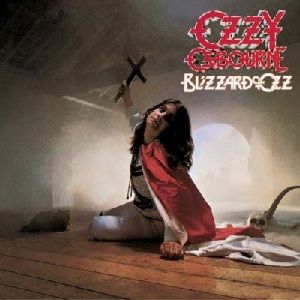
The ex-Sabbath front man’s first solo effort is one of the great metal albums of all time…largely because it follows the Iommi formula. But even if guitar wunderkind Randy Rhoads had not perished in that 1981 plane crash, even the greatest among us can only create so much genius.
In other words, Ozzy Osbourne with Black Sabbath gave us multiple miracle of rock lighting and heavy metal thunder in a 12-inch sleeve, and with precious few exceptions they never really replicated it without each other.
Change my mind.
You can see more of our not-so-popular opinions here.
Got a question, comment, or just want to yell at us? Hit us up at dubsism@yahoo.com, @Dubsism on Twitter, or on our Pinterest, Tumblr, Snapchat or Facebook pages, and be sure to bookmark Dubsism.com so you don’t miss anything from the most interesting independent sports blog on the web.

 Dubsism
As a RJD fan, I actually didn’t mind Ronnie James Dio singing with Sabbath. And Ozzy’s later solo work was undeniably successful.
That said, I see your point. There’s not much like listening to that early Sabbath stuff.
I mean, War Pigs is an absolute masterpiece, and those guys together changed the trajectory of music.
LikeLike