

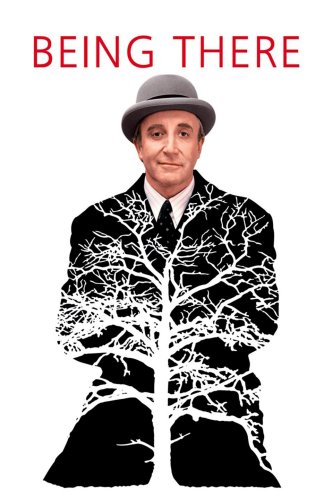
- Today’s Movie: Being There
- Year of Release: 1979
- Stars: Peter Sellers (#17 on my list of favorite actors), Shirley MacLaine, Melvyn Douglas
- Director: Hal Ashby
This movie is on my list of essential films.
NOTE: This installment of Sports Analaogies Hidden in Classic Movies is not being done as part of a blog-a-thon. Instead, this is a monthly event hosted by MovieRob called Genre Grandeur. The way it works is every month MovieRob chooses a film blogger to pick a topic and a movie to write about, then also picks a movie for MovieRob to review. At the end of the month, MovieRob posts the reviews of all the participants.
For October of 2023, the honor of being the “guest picker” went to MovieRob himself, and the topic is “movies about mistaken/stolen identities.”
The Story:
Being There is the tale of Chance (played by Peter Sellers) who is a middle-aged gardener living in the townhouse of a wealthy Washington D.C. man. Chance has had almost no contact with the outside world as he has lived a virtually cloistered life in that house. On top of that, were he alive today, Chance would probably be referred to as “on the autism spectrum.” His entire life is tending to the garden, and his entire view of the outside world is shaped solely by what he sees on television. Besides the owner of the house (known only as the “Old Man”), the only other person Chance comes in contact with is Louise the maid (played by Ruth Attaway).
Then the “Old Man” dies. Chance tells the lawyers handling the estate that the “Old Man” took him in when as a baby Chance was abandoned on his door step, and that he has lived in the house ever since. However, the lawyers can find no mention of Chance in any of the estate’s documentation; Chance is forced to leave and enter the outside world for the first time.
Having nowhere to go, Chance wanders through a wintry Washington, D.C. nattily attired in an old-fashioned, very British-feeling business suit, complete with bowler hat, umbrella, and briefcase. Since his clothes are finely-tailored, and since the cycle of fashion has turned to bring his old style back into vogue, people presume him to be a man of means.
During his wanderings, Chance comes upon an electronics store front featuring televisions in it’s display window. Startled by seeing his image on one of the screen which was captured by a camera in the shop window, Chance backs into the street where he is struck by a limousine carrying wealthy businessman Ben Rand (played by Melvyn Douglas). Chance suffers a leg injury from the collision; as such Rand and his wife Eve (played Shirley MacLaine) invites Chance to their home to recuperate. Once they reach their home, the Rands offer Chance a cocktail. But since he has never tasted alcohol, Chance chokes on the drink. While he is coughing, the Rands ask him his name, but in his sputtering from the drink, his statement “Chance the Gardener” is heard as “Chauncey Gardiner.”
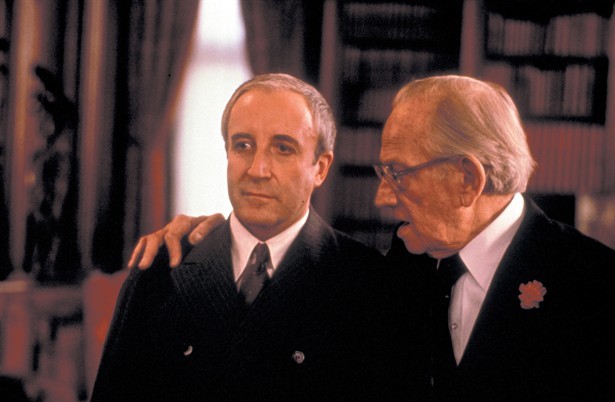
During dinner, Chance tells the Rands of the lawyers coming to the house after the “Old Man’s” passing. Fitting the theme driving the collective mistaken identity of Chance, the Rands assume that Chance is a well-heeled and educated entrepreneur based on his appearance and demeanor. During this entire exchange, the viewer knows Chance is describing being kicked out of the home where he was a gardener, but Ben Rand interprets his tale as one of attorneys shutting down Chance’s business because of financial problems.
Rand further extrapolates Chance’s problem to have been caused by “kid lawyers from the SEC (Securities and Exchange Commission)” believing that this must have been something far more complex than a simple business/tax issue. As such, Rand empathizes with Chance and wants to help him.
Now that the initial impression of Chance is that of a well-respected man about town, almost everything he does from this point forward is further misinterpreted. Chance’s quiet, yet personable persona along with his simple insights turn the perception of his usually garden-related utterances into prescient commentaries on current affairs.
Things get kicked up a notch when it turns out Ben Rand is a trusted friend and advisor to the President of the United States (played by Jack Warden). Rand is so close to the President that he introduces him to Chance as “Bobby.” During an informal chat, President “Bobby” takes Chance’s comments on how gardens change with the seasons as a pointed observation about the relationship between economics.
In no time at all, Chance/Chauncey Gardiner rises to national attention as a respected political pundit. His populist “simple brand of wisdom” begins to resonate with the jaded American public. Now, the legend of “Chauncey” really takes off; at an “A-List” Washington cocktail party, two “movers and shakers” are heard speculating on Chance’s background. They are buying into a rumor that Chance hold degrees in both medicine and law. Meanwhile, Ben Rand implores his wife to get closer the Chance since Rand is dying.
Another person who is curious about Chance is Rand’s doctor Robert Allenby (played by Richard Dysart). Even though he has a photo and fingerprints of Chance, Allenby can find no record of “Chauncey Gardiner.” Eventually, Allenby figures out “Chauncey’s” true identity. But since he knows Chance has helped Rand immensely to accept his impending death and because he does not want to do anything to upset Rand in his final days, Allenby says nothing.
In his final days, Rand reworks his will to include Chance. At Rand’s funeral, President “Bobby” gives a high-toned, long-winded speech which exemplifies the difference between the elite class and “Chauncey’s” ever-burgeoning populist appeal. As a result, Rand’s pallbearers (who are obviously all influential citizens and members of the board of Rand’s several corporations), hold a “king-maker” conversation as to potential replacements for not-so-popular President “Bobby.” They unanimously agree on “Chauncey Gardiner.”
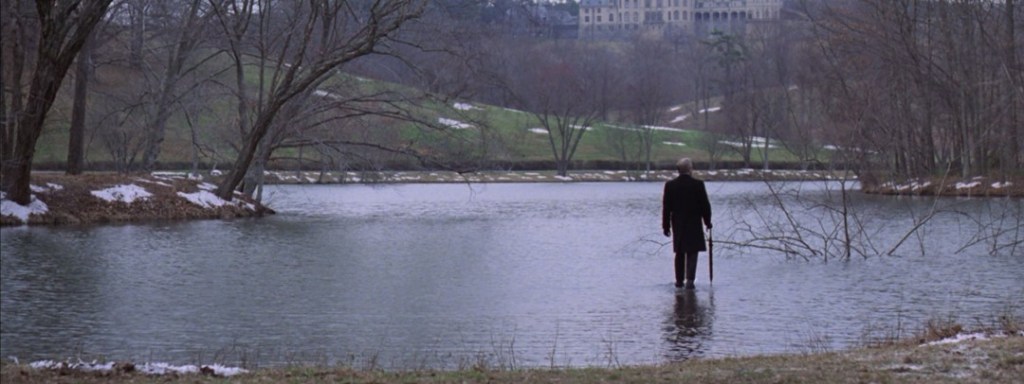
Naturally, Chance is oblivious to all this. In a call-back to the rise of “Chauncey,” Chance wanders away from the funeral and through the wintry scape of Rand’s estate. Being true to his roots as a gardener, Chance straightens a pine sapling then strolls to the edge of a pond. The film ends with Chance wading into the pond to a voice-over of Rand saying “life is a state of mind.”
The Hidden Sports Analogy:
There’s many ways to look at Being There. From my experience, the popular take is this film is an exercise in mistaken identity; hence my choosing it for this event. But it’s also a demonstration of the power of being in the right place at the right time. Either way, they both figure prominently in the recipe for making anybody the “man of the moment.”
There’s almost no better example of that than football’s back-up quarterback, which is why that theme has figured prominently during this blog’s run. For the unfamiliar, you can get a solid understanding of the concept perusing the five greatest achievements by the second-string signal callers. As Jim Plunkett tops that list, he has an installment all his own of Sports Analogies Hidden In Classic Movies. Another great example is Nick Foles, who became the classic “man in the moment” when he won the Most Valuable Player (MVP) award in Super Bowl LII; a snapshot in time which saw him compared favorably to Van Johnson’s “Lt. Steve Maryk” in The Caine Mutiny.
Continuing that theme, the embodiment of Being There‘s combination of mistaken identity and sudden, if not misplaced fame lies in Jeff Hostetler. That name will evoke very different memories for fans of the New York Giants and the Oakland Los Angeles Oakland again Las Vegas Raiders. For the unfamiliar, Hostetler was a capable if not great quarterback at West Virginia University.
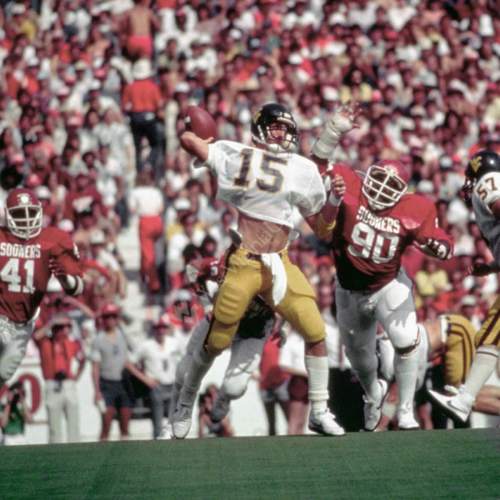
He was good enough to be drafted in the third round (the 69th overall pick) by the New York Giants in 1984. The problem for Hostetler is that he was clearly going to be the back-up to the Giants’ Pro Bowl-caliber quarterback Phil Simms. That became the status quo for the G-Men until December of 1990, when Simms suffered a season-ending injury with the New York sporting a 11-2 record and looking primed for a deep run in the play-offs.
Giants’ fans were thirsty for a hero, considering after their victory in Super Bowl XXI, New York missed the post-season entirely in both 1987 and 1988, and suffered a heart-breaking overtime loss to the Los Angeles Rams in the first-round of the 1989 play-offs. But just like the moment “Chance the Gardener” became “Chauncey Gardiner,” that 1990 run to the Super Bowl was when the legend of “Hoss” Hostetler was born.
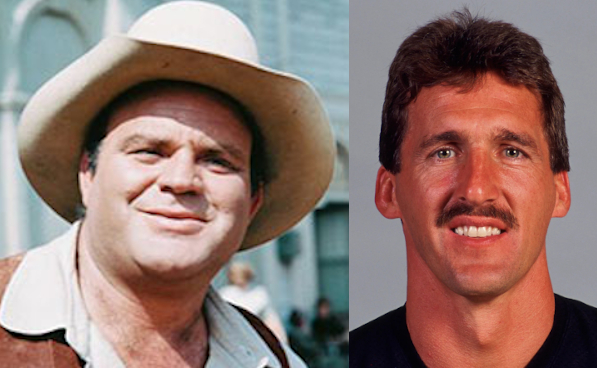
Like most legends, it eventually proved to be more a manifestation of “wishful thinking” than reality. For Giant fans, the reality was Hostetler played capably in Simms’ absence. While the G-Men lost that game against Buffalo in which Phil Simms was injured, “Hoss” led New York to wins in their final two regular season games over the Phoenix Cardinals and New England Patriots.
“Hoss” Hostetler continued to play capably (have you caught on to the theme here yet?) during the post-season. “Hoss” didn’t light up the stat sheets…or the scoreboards…but that wasn’t what the Giants needed from him. New York’s offense was powered largely by the bruising style of veteran running back Ottis Anderson. In other words, “Hoss” really only had two jobs; hand the ball to Anderson, and don’t screw up. He did both as needed, which played a major role in the Giants capturing the Lombardi Trophy as the winners of Super Bowl XXV.
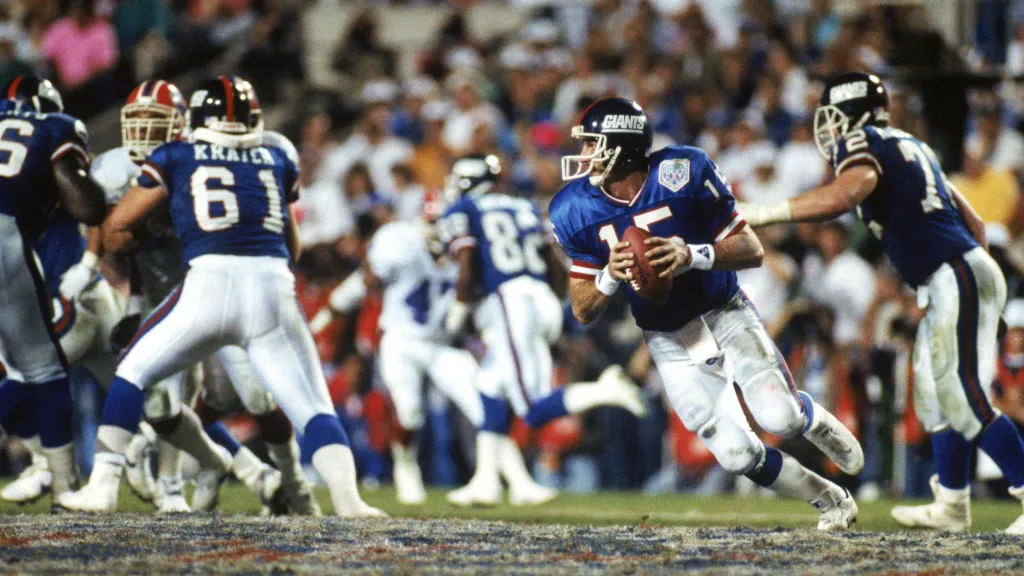
1991 saw the story of “Hoss” Hostetler enter it’s second chapter, as Phil Simms was injured again, thi time only one into the season. Yet again, “Hoss” did what was asked of him, but the team in general had a bit of the “Super Bowl Hangover.” The G-Men finished the season at 8-8 which didn’t get them into the play-offs. 1992 proved to be even worse as they went 6-10. Again, Phil Simms got injured, New York played “mix and match” at quarterback, but it was Hostetler who was at the controls of the Giants’ offense for five of their six wins.
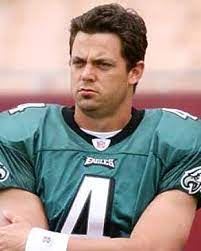
Add it all up, and you have the math that many NFL teams then and now searching for a quarterback follow: a guy who was moderately successful as a back-up is just a starter waiting for an opportunity. It’s really the football equivalent of a lottery ticket. Every once in a while, a team hits on a Kurt Warner or a Tom Brady; guys who were just sitting on somebody’s bench biding his time for a shot to see the field. But for every one of those, there’s ten the other way.
Name your team, and odds are there’s a guy in your past who fits this description. Admit it my fellow Eagles’ fans, there was a time not that long ago we thought Kevin Kolb was the answer.
But if you really want to test your memory banks, tell me the last time a guy went from being a back-up quarterback for one team to have serious, long-term success with another? Even if you can think of a few to argue about, you can still see those are long odds against.
But in this case, the Los Angeles Raiders felt the odds were ever in their favor…signing “Hoss” to a three-year, $8 million contract. That pales in comparison to what quarterbacks make today, but that was serious coin in its time. In comparison, for only $2 million more, they could have had Super Bowl legend and Hall-of-Famer Joe Montana. In that same year, “Joe Cool” signed a deal with the Kansas City Chiefs for three years, $10 million.

In all fairness, “Hoss” did what “Hoss” always did; he played capably. But $8 million doesn’t come with expectations of “just O.K.” Having won a Super bowl in New York, “Hoss” was supposed to bring that magic west. When that didn’t happen, “Hoss” was labeled a failure.
I always thought that was bullshit. Hostetler didn’t hang the millstone of expectations around his neck. He didn’t point a gun at anybody’s head for the $8 million either. That brings us to the guts of today’s analogy. Chance/Chauncey Gardiner and Jeff “Hoss” Hostetler didn’t change anything about themselves. The collective perception did.
The Moral of the Story:
There’s an old saying about it’s better to be lucky than good. But nothing beats being both.
Got a question, comment, or just want to yell at us? Hit us up at dubsism@yahoo.com, @Dubsism on Twitter, or on our Pinterest, Tumblr, Instagram, or Facebook pages, and be sure to bookmark Dubsism.com so you don’t miss anything from the most interesting independent sports blog on the web.

 Dubsism