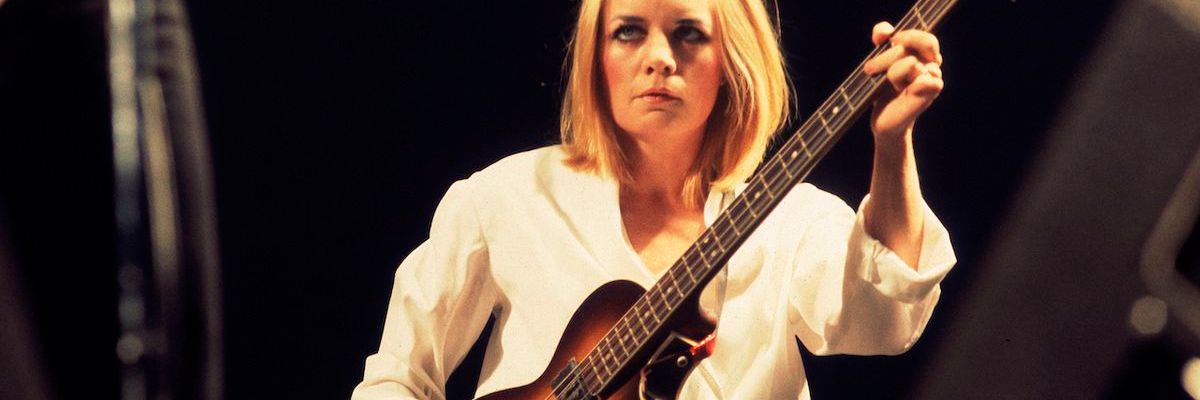

Ever since the first caveman rhythmically banged a stick on a rock, music has been a male-dominated business. However, that isn’t to say there aren’t any great female musicians out there; in fact there’s many more than you might think. Being a bassist myself, it only seems logical that’s where I should start showing a list of my favorites.
12) Abby Travis (best known for Brainticket, noted studio musician)
As a dedicated “Prog” guy, I’m about to utter an uncomfortable truth about “Progressive Rock” fans. It’s very easy to spot us. We are the “CrossFit” people at the gym. We are the “vegan” in your life. We will never allow any ambiguity as to our affinities; telling you about our fandom is as important as the fandom itself.
To be even more honest, we really can’t help but sound a bit smarmy while we do it. It’s even worse when we also happen to be musicians ourselves. There’s a simple reason for that. Being a “prog rocker” means having a familiarity with all genres of music. “Prog rock” really is the “all-you-can-eat buffet” of music. You just drift along the steam tables, taking a scoop of whatever suits your fancy. That’s also the reason why so many “”Prog Rock” bands feature studio musicians. That’s a gig which requires the ultimate in versatility; you never know what you’re going to be paid to play.
That brings us to Abby Travis. She paid her dues in numerous studio sessions, until she burst onto the scene at a 2011 “Prog Rock” reunion show featuring German “proggers” Brainticket. Travis’ young goth vibe managed to blend seamlessly with the seriously psychedelic musicians some 30 years her senior. Since then, Travis joined the The Go-Gos upon Kathy Valentine’s departure (more on her in a bit). Not to mention, she’s also worked with acts ranging from Cher to the Butthole Surfers. If that doesn’t say Abby Travis can play anything, I don’t know what does.
11) Aimee Mann (best known for ’Til Tuesday)
Anybody who has ever tried to play bass while fronting a band completely understands it’s the musical version of patting your head and rubbing your stomach at the same time. You are literally working the opposite ends of the song. That’s why so many who try end up with a love/hate relationship with the instrument.
That’s why I immediately dismiss those who would say Mann doesn’t belong on this list because she has spent the vast majority of her career playing rhythm guitar. To me, it’s a “quantity/quality” thing; Mann as a bassist blends a fast-paced, punky-yet-eclectic playing style wound around a strong sense of melody. The way she weaves words through elevating bass lines is similar in structure to Geddy Lee’s approach…whom she worked with on Rush’s 1987 release Time Stand Still.
10 A & B) Enid Williams and Gil Weston (best known for Girlschool)
Williams and Weston split the bass duties for the 80’s metal powerhouse Girlschool. Frankly, I couldn’t decide which one was more deserving of mention here…until I realized doing so was pointless. They both put the fire in the heavy-metal foundry that was Girlschool in their prime. This band had far more success in their native U.K.; Americans would mostly come to know Girlschool from their remake of Sweet’s pop-metal leviathan Fox on the Run, and their collaboration with Motörhead.
Realistically, that should tell you all you need to know about Girlschool. It’s a given any band backed by Lemmy Kilmister kicks ass, and that “punch you in the gut and take your lunch money” level of grit comes from the bass slot…no matter who’s on the thick strings.
9) Kathy Valentine (best known for The Go-Gos)
Kathy Valentine has the distinction of being the only bassist on this list mentioned to date* mentioned in our series “Old School” Rhythm Sections and Their Sporting Comparisons. In a theme you will see more than once on this list, Valentine is the first example of a bassist going above and beyond simply holding down their end of the rhythm section. If you show me a huge hit for The Go-Gos, I will show you a song A) written by Kathy Valentine, B) driven by a punky-pop melodic bass line, or C) all of the above.
8 ) Johnette Napolitano (best known for Concrete Blonde)
Am I the only one who gets a bit of a Jack Bruce vibe from her? Not like a full-on impersonation, but the way she weaves her vocals around what she playing and the how she fits notes together give me the idea that at one point, she went through a phase where she had Cream’s Tales of Brava Ulysses on a constant loop.
However, this is another case like that of Aimee Mann; the “purists” may scoff at her inclusion on this list because she’s another who later eschewed the bass while fronting a band. Let them scoff all they want. The fact is the “classic” Concrete Blonde line-up circa 1990 with Napolitano on bass and lead vocals cemented Concrete Blonde’s place as a great “power trio”…just like the Jack Bruce-led Cream.
7) Jackie Fox (best known for The Runaways)
Jackie Fox with The Runaways was the classic example of leading from behind. The track above is a perfect example of a rock song completely driven by the bass line. Not only is Fox laying the foundation, but listen to how much her playing isn’t just the bridge between the melody and the rhythm..it is the melody. Usually in a rock band, the player who leaves their role to hold together a weak melody is usually the lead guitarist who steps down (think what Slash had to do on about 90% of Guns ‘N’ Roses tracks). Any way you slice it, only a truly talented musician can fill their own role while picking up the slack for others.
6) Sara Lee (best known for Gang Of Four, The B-52s, The League Of Gentlemen)
Did you say you played in a band with Robert Fripp? Please have a seat right over here. Could I get you a coffee or something while we flesh out the rest of this list?
Call me a sucker for a dexterous bassist surnamed “Lee,” especially one who can hold her own in any discussion about great bassists. Lee was a trail-blazer in the “Punk-Funk” movement of the late 1970s and early 1980s, as shown in her work with Gang of Four and The B-52s. But her most impressive work came during her stint in “Prog Rock” god Robert Fripp’s short-lived The League Of Gentlemen. The fact that she literally stole the show out from under Fripp in his own band is a testament to her skill as a musician. If that weren’t enough, her solo album Make It Beautiful showcases Lee’s formidable chops as a singer and song-writer.
5) Kira Roessler (best known for Black Flag)
When it comes to 80s punk, the “gold standard” was Black Flag. But like many bands, creative differences began to divide it’s members. Just such a rift was forming between founding members Greg Ginn and Chuck Dukowski. As the guitarist primary songwriter, Ginn wanted Black Flag’s sound to evolve in a quest discovering what the punk genre could really do, and he was growing increasingly frustrated with bassist Dukowski’s refusal to strive for such musical growth. When the relationship between the two became irreparably damaged, Dukowski was replaced with Kira Roessler.

Along with vocalist Henry Rollins, Ginn discovered Roessler while she was sitting in with DC3, another Los Angeles-based punk band. punk group. At the time, Roessler was an engineering student at UCLA, but Ginn was drawn to her nuanced, sophisticated stylings. Believing that she represented the direction Ginn wanted to take Black Flag’s sound, he asked Roessler to join the band in 1983.
Roessler’s impact as a bassist and songwriter was noticeable on Black Flag’s 1984 release Family Man, but it became undeniable on the band’s subsequent albums Slip It In and Loose Nut; the former having been noted as one of my influences as a budding musician.
Besides, true Black Flag-o-philes knew who really had the 10 1/2…
4) Kim Deal (best known for The Pixies, The Breeders)
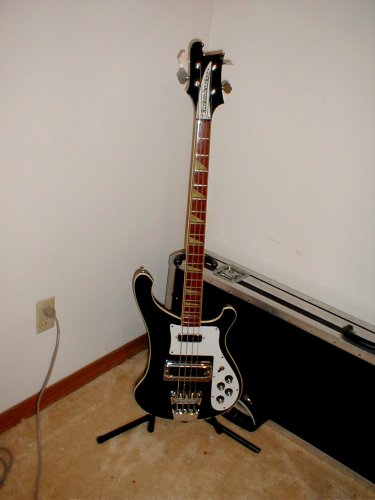
How many bands are almost universally identified by their bass player? There’s Geddy Lee with Rush, Paul McCartney with The Beatles and Wings, and the immortal Lemmy and Motörhead. Those three are the reason why I bought my first and favorite “Rick;” a “Jet Black” 1977 Rickenbacker 4001 bass.
I’m not sure if they are making instrument-purchase decisions based on this, but I do know there’s a sizeable number of Pixies fans who firmly believe Kim Deal was the band. To a man or woman, Pixies’ fans will attest to Deal’s presence being the straw that stirred the drink which was the band’s signature sound. That may have a lot to do with why both Debaser and Gigantic (two of the most-popular Pixies’ cuts) open with a Deal bass solo.
3) Tal Wilkenfeld (best known as a solo artist and noted studio musician)
No matter how much we all would wish, there will never be another Jaco Pastorius. But for those of us who kneel before the altar of the Church of Jaco, it’s pretty clear that Tal Wilkenfeld possesses at least a whiff of that holy spirit. There’s just no way I can lister to her when she’s letting her “fusion” flag fly without picking up distinct hints of his meisterwerk Portrait of Tracy.
Obviously, evoking memories of the dear departed Jaco is easily enough to land her a spot on this, but Wilkenfield can also blow you away with her sophisticated song-writing. If that weren’t enough, she can offer a wide range of unique covers, touching on everything from Tom Petty to The Smiths.
2) Gail Ann Dorsey (best known as a solo artist and noted studio musician)
Easily the deepest singer-songwriter on this list, Dorsey is amongst a select few who combine massive writing chops with a dexterous and flexible playing technique…while ensuring one doesn’t overpower the other. The key to her approach is all about note choice. By putting exactly the right note in exactly the right place, Dorsey pockets a groove in a way that’s uniquely her own.
1) Tina Weymouth (best known for Talking Heads, Tom Tom Club)
From the first time I saw Tina Weymouth playing with Talking Heads, I was hooked. All it took was the barely-teen me being mesmerized by the sight of them pumping out the Al Green standard Take Me To The River live. As much as the legendary New York City night club CBGB was the epicenter of the “Punk/New Wave” movement, and for all the bands whose careers were launched from that stage in the East Village nightclub, none sounded like Talking Heads.
The reason for that was quite simple. Nobody sounded like Talking Heads because nobody played bass like Tina Weymouth. David Byrne may have been the face and the voice of Talking Heads, but Weymouth was the heart and soul…because she kicked ass. The groove she put behind their sound was the ramp that launched Talking Heads (and later her own Tom Tom Club) from the relative obscurity of the club scene to being staples of early MTV.
The bottom line: much of what you heard on the radio and on “when it still had music” MTV sounded the way it did because Tina Weymouth will never get the full amount of credit she deserves for what a tremendous influence she was.
* – Stay tuned for an upcoming episode of “Old School” Rhythm Sections and Their Sporting Comparisons which will feature Weymouth and her husband Chris Frantz (whom she’s never worked without).
Got a question, comment, or just want to yell at us? Hit us up at dubsism@yahoo.com, @Dubsism on Twitter, or on our Pinterest, Tumblr, or Instagram, or Facebook pages, and be sure to bookmark Dubsism.com so you don’t miss anything from the most interesting independent sports blog on the web.

 Dubsism
[…] signature sound, which even the most-ardent Rick-haters still try to emulate. Tina Weymouth (my favorite female bassist) never played a Rick (to my knowledge), but here’s a guy who just diagnosed her chronic Rick […]
LikeLike