
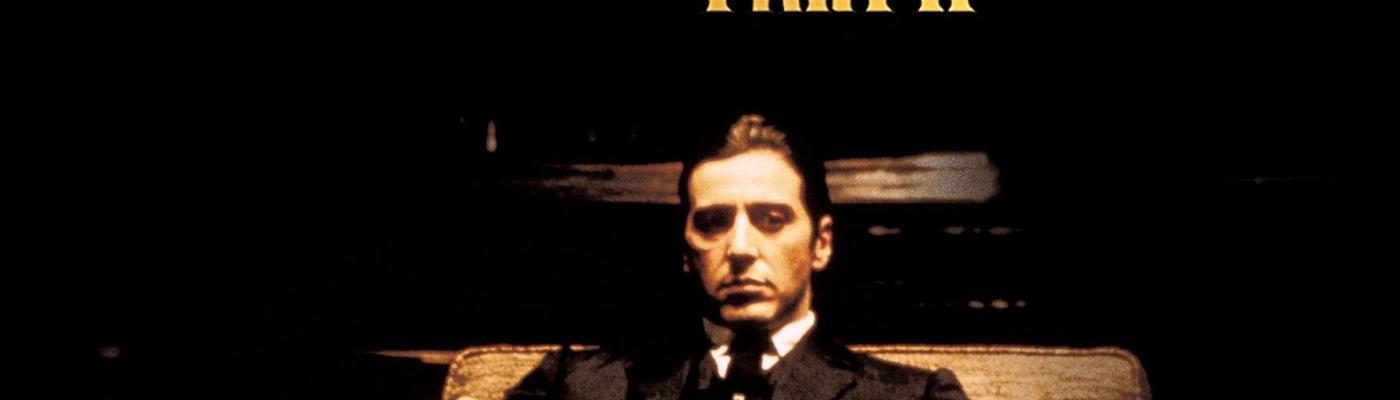

- Today’s Movie: The Godfather II
- Year of Release: 1974
- Stars: Al Pacino, Robert Deniro, Robert Duvall
- Director: Fransic Ford Coppola
This movie is on my list of essential films.
NOTE: This installment of Sports Analaogies Hidden in Classic Movies is not being done as part of a blog-a-thon. Instead, this is a monthly event hosted by MovieRob called Genre Grandeur. The way it works is every month MovieRob chooses a film blogger to pick a topic and a movie to write about, then also picks a movie for MovieRob to review. At the end of the month, MovieRob posts the reviews of all the participants.
For January of 2024, the honor of being the “guest picker” went to MovieRob himself, and the topic is “movies told in flashback (movies where the main character is telling a story of something that happened in the past).”
The Story:
As you watch the film, it certainly meets it the requirements for telling a story in “flashback.” However, all that jumping back and forth gets confusing for us old concussed writers who brain-damaged themselves to a “Fredo Corleone”-level.
In other words, so that I don’t confuse you while completely befuddling myself, I’m going to keep the “flashback” story separate from the film’s main plot as opposed to the way The Godfather II weaves the two into a masterful tapestry of crime.
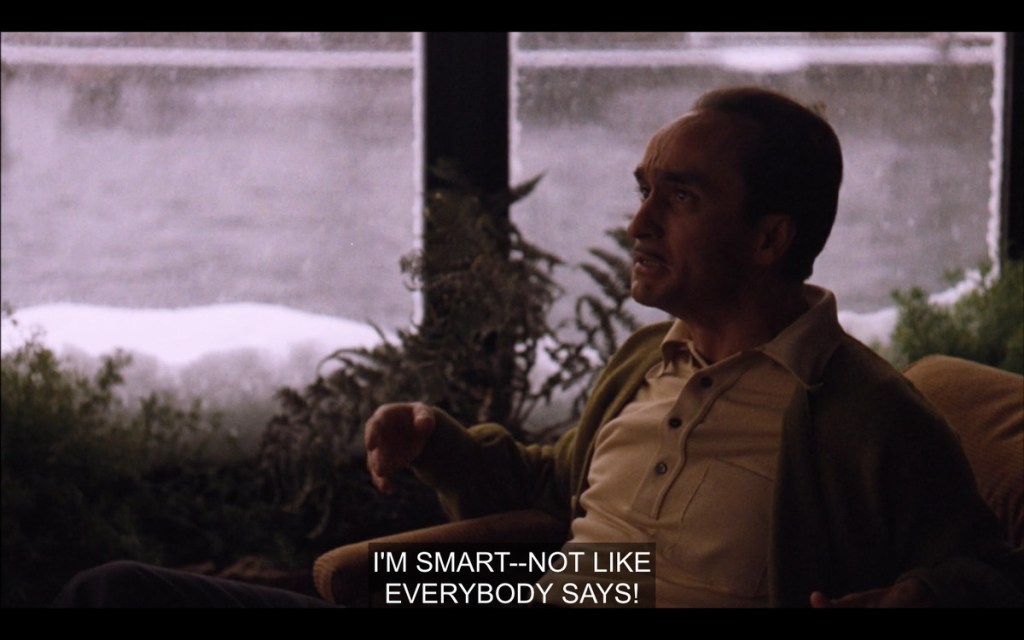
Flashback: The Early Life of Vito “Corleone”
The “flashback” sequences start in 1901 as the nine-year-old Vito Andolini (played by Oreste Baldini) is forced to flee his home in Corleone, Sicily. As a result of his father’s insulting the local Mafia capo, young Vito’s entire family is killed…including his witnessing the shotgun murder of his mother. Vito makes his way to America, where upon being processed for entry at Ellis Island, his name is changed to Vito Corleone.

The weaving nature of the film flashes the viewer forward to 1917 when Vito (now played as a young man by Robert DeNiro) is living in New York City with his wife Carmela (played as a young woman by Francesca de Sapio) and their newborn son Santino. Vito’s trajectory toward a life of crime is set when he loses his job at a grocery store because of Don Fanucci (played by Gaston Moschin), a local “Black Hand” shake-down artist. While pondering what he’s going to do, Vito’s neighbor Peter Clemenza (played by Bruno Kirby) asks for his help hiding a sack full of guns. To thank him for the favor, Clemenza (with Vito’s help) steals a rug for the Corleone’s bare-floored apartment.
As the flashbacks keep moving forward, Vito and Carmela have three more children; Fredo, Michael, and Connie. To support his growing family, Vito becomes a petty thief along with Clemenza and new partner named Salvatore Tessio (played by John Aprea). When the re-selling of stolen goods begins to net them a profit, Fanucci re-appears to extort them. While Clemenza and Tessio believe they must pay the “Black Hand,” Vito convinces them he will “take care” of Fanucci.
During a neighborhood festival, Vito meets Fanucci and pays him only half of what had been demanded. Impressed by Vito’s courage, Fanucci offers him a job. However, later that day, Vito confronts Fanucci at his apartment and murders him with a pistol. For this act, Vito is established as a formidable man and builds his influence through the exchange of “favors.”
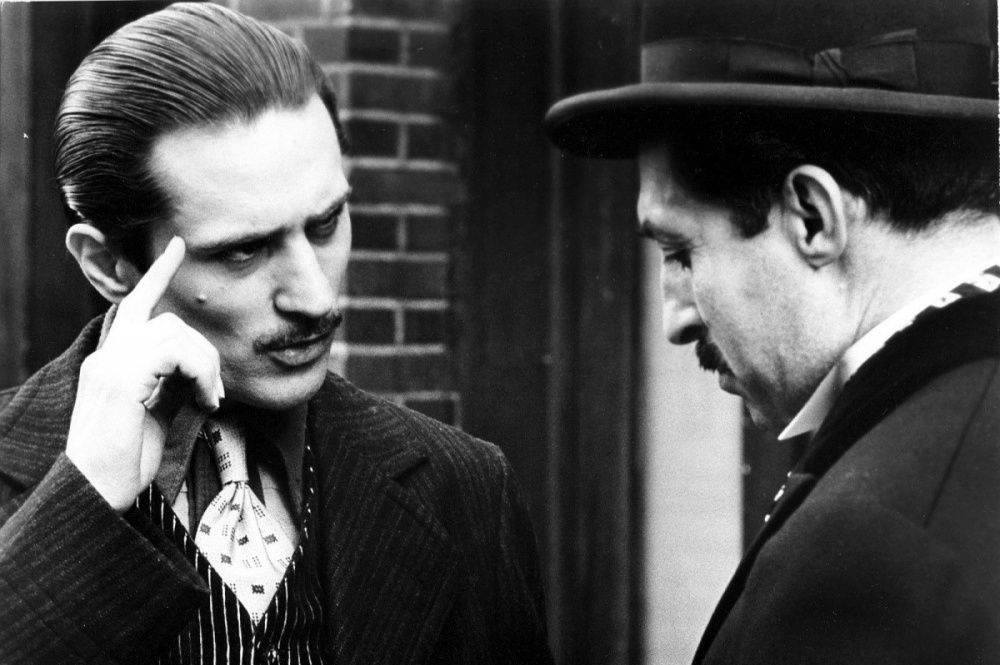
The flashbacks end in 1922 by bringing the Sicilian portion of Vito Corleone’s life “full circle.” He takes his family back to the town for which they are named. In keeping with the issues of “closure” and “family,” Vito avenges the deaths of his Sicilian by stabbing the capo who ordered them.
The Main Plot: The Corleones in Nevada
Much like it’s predecessor, The Godfather II opens with a religious ceremony. Instead of a Catholic wedding in New York in 1947, a First Communion party for Michael Corleone’s (played by Al Pacino) son at Lake Tahoe eleven years later serves as the backdrop for some introductory “family business.” In his role as the Don of the Corleone crime family, Michael is seeing people in his office. Frank Pentangeli (played by Michael V. Gazzo) is a Corleone capo who is need of help defending his Bronx territory against the Rosato Brothers.
Michael refuses to help Pentangeli because the Rosatos work for Hyman Roth (played by Lee Strasberg), a Jewish mafioso and long-standing Corleone business partner. As such, Michael tells Pentageli that he has deals in place with Roth that he doesn’t want disturbed. This angers Pentageli.

Meanwhile, as part of moving to Nevada, Michael is interested in obtaining casino gaming licenses. In order to help get them, Senator Pat Geary (played by G.D. Spradlin) tells Michael the price of the bribe he expects, and does so while dishing out some ethnically-charged insults. In response, Michael tells him he won’t pay, and tells Geary he expects the Senator to pay for the licenses personally.
Later that night, an attempt is made on Michael’s life.
He then tells Corleone family consigliere Tom Hagen (played by Robert Duvall) that he suspects a traitor within the family. Later, even though he suspects Roth orchestrated the assassination attempt, he lies to Roth by telling him he believes Pentangeli is the culprit. While Michael uses him to deflect Roth, back in New York City, Pentangeli attempts to make peace with the Rosatos, but in return they try to kill him.
Back in Nevada, Michael has neutralized Senator Geary by framing him for the death of a prostitute in a brothel which just so happens to be owned by Fredo Corleone (played by John Cazale). Tom Hagen offers to “take care of the problem” in return for Geary’s political support.

Now, we get to the guts of the story. Roth, Michael, and several partners meet in Cuba to discuss business prospects under a government friendly to their business…namely gambling and prostitution. However, Michael voices concern over the growing Cuban Revolution; fearing that the communist rebels can win; knowing that if they do, Cuba will no longer be a place where they can do business. Michael’s hesitance about Cuba only ratchets up the tension between him and Roth.
As the Cuba situation comes to a head, Michael’s suspicion there a traitor in his ranks proves to be true. When they are introduced to each other on New Year’s Eve, Fredo and Roth’s main henchman Johnny Ola (played by Dominic Chianese) deny knowing other, but later Fredo inadvertently reveals the truth, which also tells Michael that Fredo is the traitor.
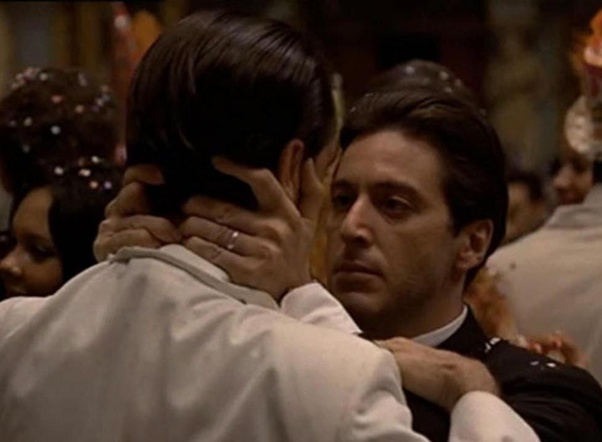
As a result, Michael orders hits on Ola and Roth. Michael’s “Bodyguard” (played by Amerigo Tot) garrotes Ola with a coat hanger, but is shot dead by soldiers as he attempts to smother Roth in a Cuban hospital. However, the situation changes radically as the rebels have entered the city of Havana. The ruling dictator resigns and flees the city, leaving all to fend for themselves. Michael, Fredo, and Roth all separately escape Cuba.
Now that the Cuba matter has had a resolution brought upon it, Michael’s main concern lies in Washington, D.C. A Senate committee is holding hearings on organized crime and is doing some serious digging into the doings of Michael and the Corleone family. While Michael is grilled by the committee chair, Senator Geary offers an impassioned defense of the Italian people in general…in stark contrast to his earlier blatant racism.
Originally, because Pentangeli believed Michael had sold him out to the Rosato Brothers, he agrees to testify in front of the Senate committee and enter the Witness Protection Program. Knowing Pentangeli intends in implicate him in a myriad of crimes, Michael arranges for Pentangeli’s brother (played by Salvatore Po) to come from Sicily and appear at the hearing. Once he sees his brother in the gallery of the Senate chamber, Pentangeli recants his previous sworn statement, an act which completely collapses the hearings as a whole.
Once they are reunited at the family compound in Nevada, Fredo implores Michael to believe that he did not know Roth meant to have him assassinated. In a moment of frustration, Fredo intimates that he resents the impression he is an idiot, and that he feels that he was “stepped over” in terms of taking over the family upon Vito’s death.
Michael does not believe Fredo, and banishes him from the family, but he gives an order to family soldier Al Neri (played by Richard Bright) that “nothing happens to him while our mother is alive.” Things continue to unravel for Michael when Kay reveals that she had earlier said was a “miscarriage” was actually an abortion she had while Michael was in Cuba. In a fit of rage, he hits Kay in the face, takes sole custody of their children, and banishes her as well.
Eventually, the day comes when Carmela joins her husband Vito in the hereafter. Just like the “Baptism” scene in the original movie where “they settle all the family business,” Carmela’s funeral serves as the catalyst to a series of events in which Michael is clearly settling some scores. The clue as to what is coming lies in the moment when Michael seemingly forgives Fredo, but gives Al Neri a clear glance indicating Fredo’s time is up.
In a dramatic moment, after Kay comes to the compound to visit her children, Michael reinforces her status as “banished” by closing the door on her.
Hyman Roth is forced to return to America after having been denied asylum in Israel. Michael orders Corleone family capo Rocco Lampone (played by Tom Rosqui) to kill Roth at the airport, which he does…but is shot dead by federal agents while making his escape.
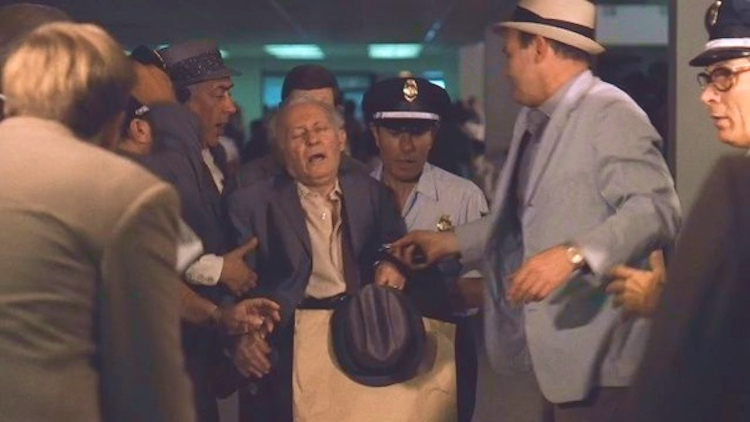
At the Army base where Pentangeli is in federal custody, he is visited by by Tom Hagen, who delivers a thinly-disguised message about how those who plotted against the emperor in ancient Rome and failed were given the chance to commit suicide in order to spare their families. Pentangeli got the message; he is later found dead in his bathtub having slit his wrists.
Finally at the Corleone family compound, Al Neri and Fredo are about to take Michael’s son out for a day of fishing on Lake Tahoe. But Michael has Anthony called back to the house, ostensibly to go to Reno. Neri and Fredo continue out onto the lake; Michael watches from his office as Neri shoots Fredo.
In the movies’ last bit of “flashback,” Michael reminisces about his father’s 50th birthday party…which just so happened to be on December 7, 1941. While the family is waiting for Vito to arrive home so they can start the surprise, Michael dishes out one of his own by announcing he has dropped out of college and joined the United States Marine Corps.
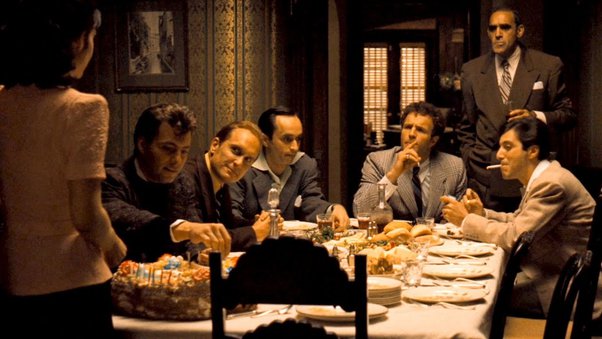
This angers Santino, shocks Tom Hagen; Fredo is alone in supporting Michael’s decision. After this bombshell, the door is heard to open as Vito has arrived. The rest of the family greets him as Michael is left in the dining room alone.
As the film fades back to the present day from the flashback, Michael is again sitting alone…in the very same chair from which he watched the murder of Fredo.
The Hidden Sports Analogy:
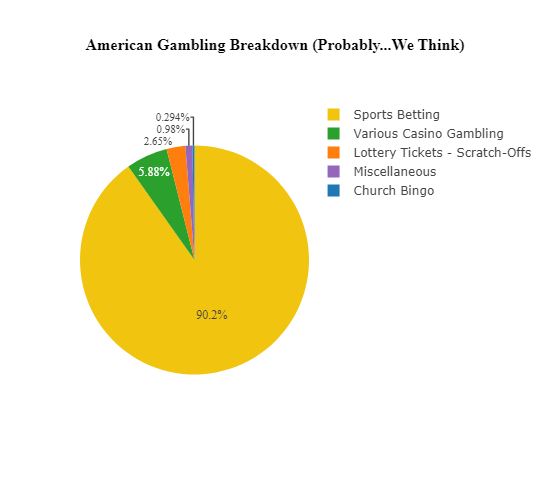
The Corleone family’s move from New York to Nevada was all about gambling. You really don’t need the supercomputers at NASA to figure out why. If the entirety of the money wagered in America in a year were expressed as a pie chart, how big would the slice for sports gambling be?
The O’Malley family’s moving the Brooklyn Dodgers to Los Angeles was a major part of another installment in this series. Walter O’Malley’s motivation wasn’t about gambling, but it was certainly financial in nature.
That’s only the beginning of the common threads weaving together the moves of these two families. One of the most obvious and lies as close to the seam as the monetary motivation is the timing. Fictional or factual, there’s a reason why both these moves happen in 1958. After World War II, two things happened which drove both the O’Malleys and the Corleones.
First, the American population shifted away from the Northeast and the industrial Midwest. The golden sun that made the Golden State did so at first because at the beginning of the motion picture industry, electric/artificial lighting had not yet been perfected. That meant the celluloid world of the early cinema was entirely dependent on reliable natural sunlight, which southern California offered in abundance. That same sunny climate, along with it’s proximity to the Pacific part of the Second World War, made the Los Angeles basin a perfect place for the aerospace industry.
As a result, the population of southern California exploded. Not to mention, millions of servicemen on their way to the war in the Pacific went through Los Angeles, and didn’t forget the amazing climate when they came home. That’s why in the 30 years between 1920 and 1950, the population of Los Angeles quadrupled to nearly 2 million…and that growth wasn’t stopping anytime soon.
Hence Walter O’Malley’s interest in the “Southland.” The interest in major league in California started with the Wrigleys well before the war, but as the calendar approached 1960, many of the objections to baseball that far away from the rest of the league were disappearing. The market size of cities like Los Angeles and San Francisco were now at the point they could support “big league” baseball. On top of that, advances in aviation brought about by the war meant air travel was about to overtake train travel, shrinking the travel time form the next-closest “major league” city at the time (St. Louis) from days to hours.
That’s the second thing that happened after the Second World War, and the one that really drives what the Corleones did. While legalized gambling in Nevada was the flame to Michael Corleone’s moth, it was of limited value unless getting to Las Vegas from the “big” cities of the east became cheap, fast, and easy. After all, there was no on-line gambling in 1958; people had to bring their money to Las Vegas to lose it.
Having said that, the real “guts” of this analogy comes from the characters on both sides; be it baseball or La Cosa Nostra, there were no end of complicated shenanigans to complete the moves of either family.
William Wrigley = Vito Corleone:

The elder Corleone is the one who laid the foundation for everything that was to come. If only the Genco Olive Oil Company had made chewing gum…
Walter O’Malley = Michael Corleone:
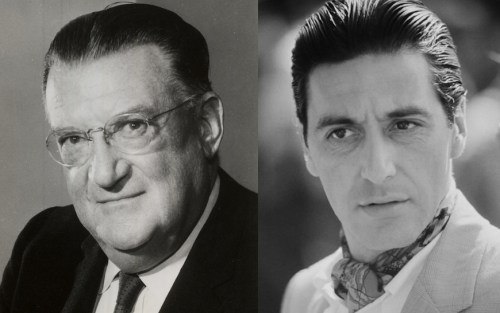
These were the two heads of the families who wanted to head west. However, to make their moves, they both needed help, willing partners, and political connections. After all, there were plenty of people who were not in favor of such moves…as we shall soon see.
Besides, these two captains of their respective industries will be forever linked with one word…Brylcreem.
Horace Stoneham = Hyman Roth:

O’Malley had been told he needed to have a partner in the westward move because having two teams on the West Coast made scheduling much less problematic. In 1958, while air travel was up and coming, it still wasn’t near outpacing the train as the most viable transportation option. At thus time, airplanes were still slow, loud, and expensive. O’Malley went through plenty of potential suitors until New York Giants’ owner Horace Stoneham agreed to move to San Francisco.
Stoneham had long wanted to get out the New York’s Polo Grounds; he had designs on the brand-new stadium his team’s minor-league affiliate was playing in which was built by the city of Minneapolis in the hopes of attracting a major league team. But O’Malley convinced him that San Francisco was a better option
Although they agreed to move west together, O’Malley and Stoneham were rumored to have a very low level of trust for each other…just like Corleone and Roth.
August “Gussie” Busch, Jr. = Frank Pentangeli:
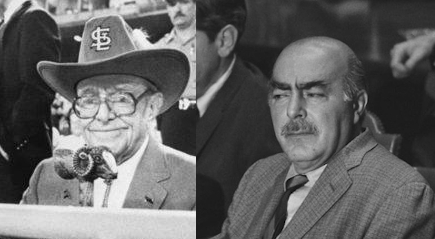
Pentangeli was the man most opposed to the Corleone’s westward move. “Gussie” Busch wasn’t a fan of baseball in California, although as far as we know he never tried to have Walter O’Malley assassinated. The problem was that before 1957, there was no major league baseball further south or west than St. Louis. And being that America was still largely regional at the time, the Cardinals’ radio network spanned nearly two-thirds of the country as they were the closest baseball team for that huge area. That also meant Busch, who just so happened to own the St. Louis Cardinals and the Anheuser-Busch beer empire, had a radio network spanning an enormous chunk of North America, and like today, there’s nothing like a sporting event for selling beer. O’Malley and Stoneham in California threatened to halve the size of Busch’s advertising monopoly.
Philip Wrigley and Gene Autry = The Rosato Brothers
This is easily the most interesting comparison here; after all the chewing gum magnate Wrigley and Gene “The Singing Cowboy” Autry play as large a role in the westward expansion of baseball as O’Malley and Stoneham.
Wrigley was the first owner who thought the grass was greener in the Golden State. Wrigley was the first owner who eschewed Florida in the 1930s for spring training for the maritime clime of California’s Catalina Island. This also made him the first one to understand the problems posed by the distance between the established major league world and California.
Despite that, in 1941 he wanted to take his Chicago Cubs away from the often-frigid breezes of Lake Michigan for for the sunnier shores promised by the Pacific. However, the other National League owners along with league president Warren Giles convinced Wrigley that with World War II on the horizon, this was not the time for such a move.
But, the absence of major league baseball from the West Coast did not mean the sport did not exist there. The Pacific Coast League (PCL) was a thriving minor league; so much so that there were those who thought it capable of rivaling the National and American Leagues as a third “Major.”
In other words, by the time we get to the late 1950s and major league baseball is looking at moving west, there were far more “moving parts” than just New York’s two National League teams.
First, there was the aforementioned Pacific Coast League. It’s threat to emerge as a third “major” league was at the very least credible because it already had major-league ownership. The very same Philip Wrigley who wanted to move the Chicago Cubs was also the owner of the PCL’s Los Angeles Angels. He inherited them, along with the Cubs and the entire Wrigley empire from his father, William Wrigley. It was the senior Wrigley who built the first ballpark to bear his name…and it’s not the one you think.

The first Wrigley Field stood on the corner of San Pedro and 42nd Streets in Los Angeles. It served as home to the Angels from 1925 to 1957 when Wrigley was bribed persuaded to move them to Spokane, Washington to make room for O’Malley’s Dodgers. It then enjoyed it’s “fifteen minutes” of national fame as host to television’s Home Run Derby from 1959-1961.
At this same time, the American League announced an expansion team would begin play in Los Angeles in 1961. As part of his agreeing to move his minor-league team, Philip Wrigley was given “first dibs” on any expansion franchises in California. It was his intention to own the new major-league Los Angeles Angels, and have them play in Los Angeles’ Wrigley Field. That was until Baseball Commissioner Ford Frick ruled that Wrigley could not own two major league franchises.
As a compromise, Wrigley was allowed to sell his rights to buy the Angels. This is where Wrigley’s drinking buddy friend and business partner Gene Autry enters the picture. Wrigley gave Autry a “buddy price” assuming he would pay rent for the use of Wrigley Field.
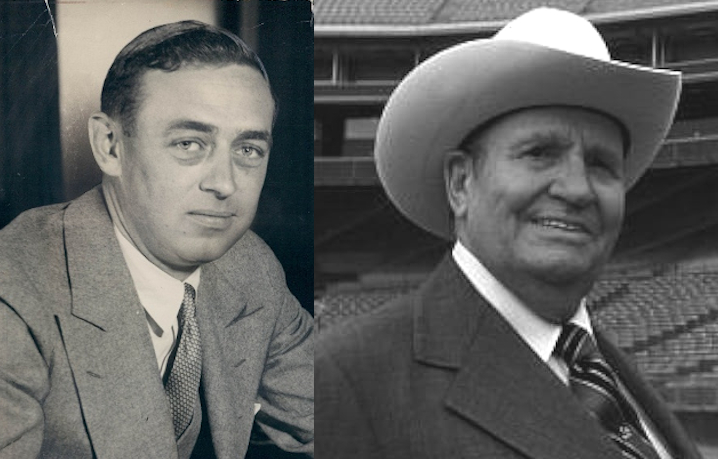
That only lasted a single-season, after which it became clear Autry had his own vision for his Angels. Instead of paying Wrigley rent for a run-down 20,000-seat minor league ballpark, Autry made a deal for the Angels to play their home games in the brand new 55, 000-seat Dodger Stadium while the city of Anaheim constructed a 50, 000-seat multi-purpose venue. The Angels moved into Anaheim Stadium in 1965, and the last vestige of the Wrigley era in southern California baseball disappeared when the ballpark on San Pedro and 42nd was demolished in 1969.
As for the remaining structure with Wrigley’s name on it, even though it was built before it’s name sake in Los Angeles, the ballpark at 1060 West Addison Street in Chicago didn’t bear it’s current name until 1926…making it the second Wrigley Field by one year.
And in case you were wondering why the younger Wrigley is not “Michael” to his father’s “Vito” in terms of this comparison…as many times as Philip Wrigley threatened to move, he never did.
Lou Perini = Fredo Corleone:
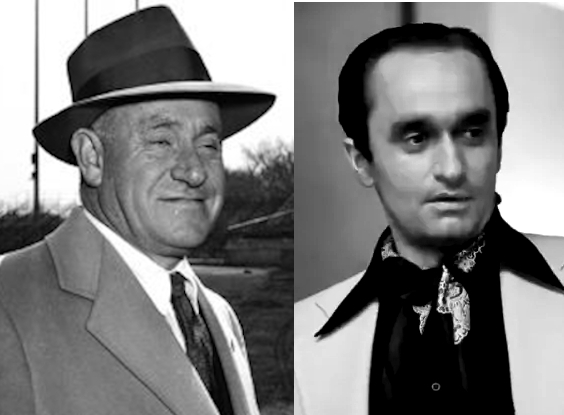
Perini was the owner of the National League’s Boston Braves. Having long been the “little brother” to the Red Sox in Boston, Perini’s desire to relocate made him a “natural” for a partnership with Walter O’Malley. But Perini proved to be more of a “pain” than he was worth.
Once he knew he was going to be left out of any deals, Perini…who had now already moved his team to Milwaukee.. began undermining O’Malley’s attempts to find a move partner. Once O’Malley and the other owners got wise to his shenanigans, Perini became a pariah, and once his move to
Wisconsin proved to be a case of “pulling the trigger too soon, nobody accepted his requests for help with his financial difficulties. Even though he agreed to vote in favor of O’Malley and Stoneham’s move, the damage was done, and he eventually had to sell the Braves in 1962.
The Moral of the Story:
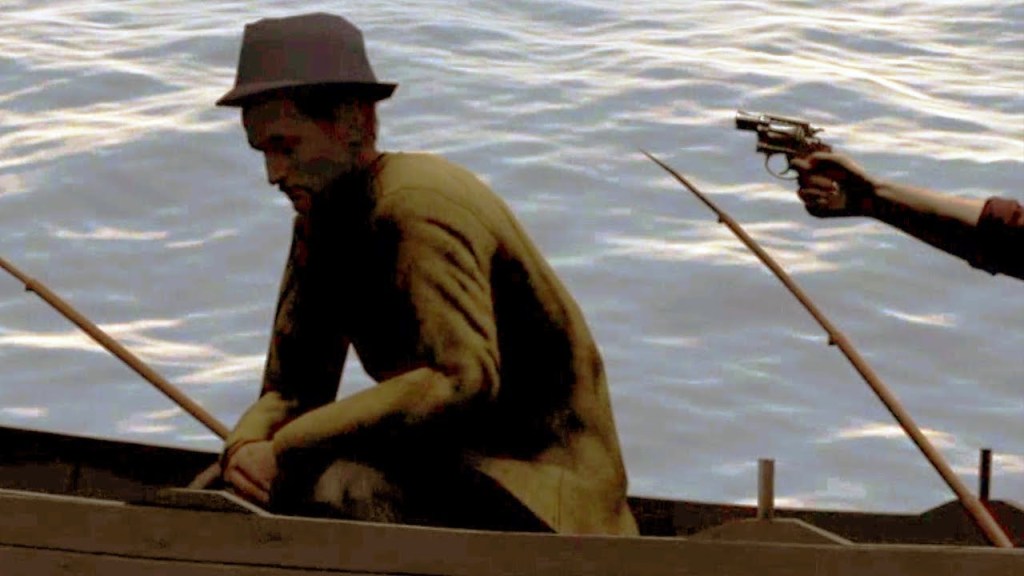
Keep your friends close, and your enemies closer. Either way…stay out of the boat.
P.S Just in case you were wondering, yes…there is a sports analogy hidden in the original Godfather.
P.P.S For a great bit of discovery for the Wrigley Field you were today years old when you first heard about it, it’s just a click away…
Got a question, comment, or just want to yell at us? Hit us up at dubsism@yahoo.com, @Dubsism on Twitter, or on our Pinterest, Tumblr, BlueSky, Truth Social, Instagram, or Facebook pages, and be sure to bookmark Dubsism.com so you don’t miss anything from the most interesting independent sports blog on the web.

 Dubsism
Deep dive, man. I like it.
I will officially refer to my bad beats, or lost final legs of my parlays that screw me out of money, as “My Fredo’s.”
I know it was you, three-teamer. And it breaks my heart.
LikeLike
[…] The Godfather II […]
LikeLike