
NOTE: This installment of Story Time With J-Dub is actually a sequel to a post from a few months back which was about the movie Fargo. It was done as part of the Seen On The Screen Blog-A-Thon hosted by Taking Up Room.
In reality, Fargo never had a sequelae per se, but it did spawn a series. But for this event, not only is”Part II” necessary, it was promised. That’s because the point of this event was to write about a movie having a setting to which you had some personal knowledge.
As I intimated in that original piece, there would be “bonus coverage” of that post featuring just such attractions from this very part of the world. That’s because as one who lived large parts of his life in North Dakota and Minnesota, I have tons of connections and even roots in the area. As a result, I would be on a vacation to this very spot about a month after that posting. Well, as threatened, here’s that “bonus coverage.”
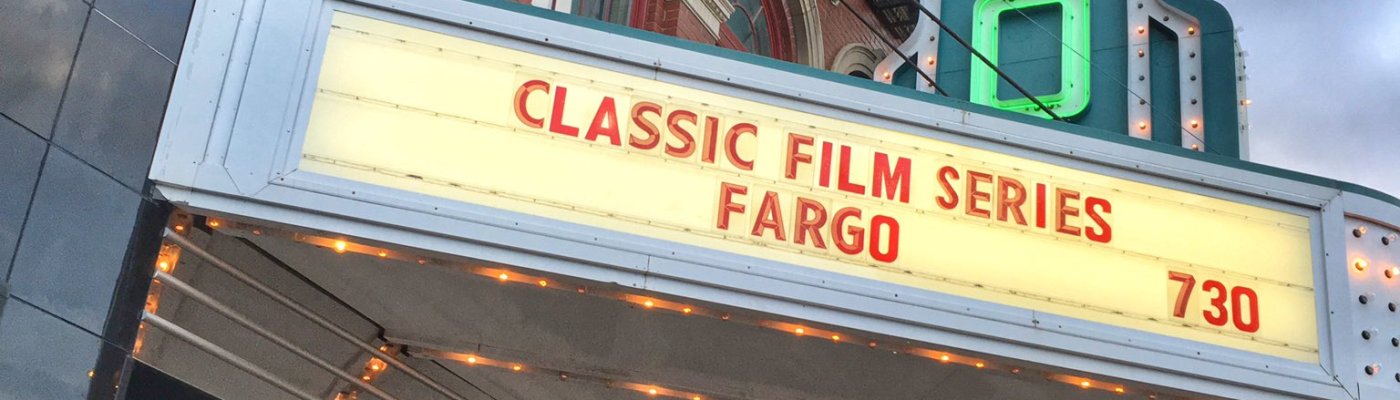
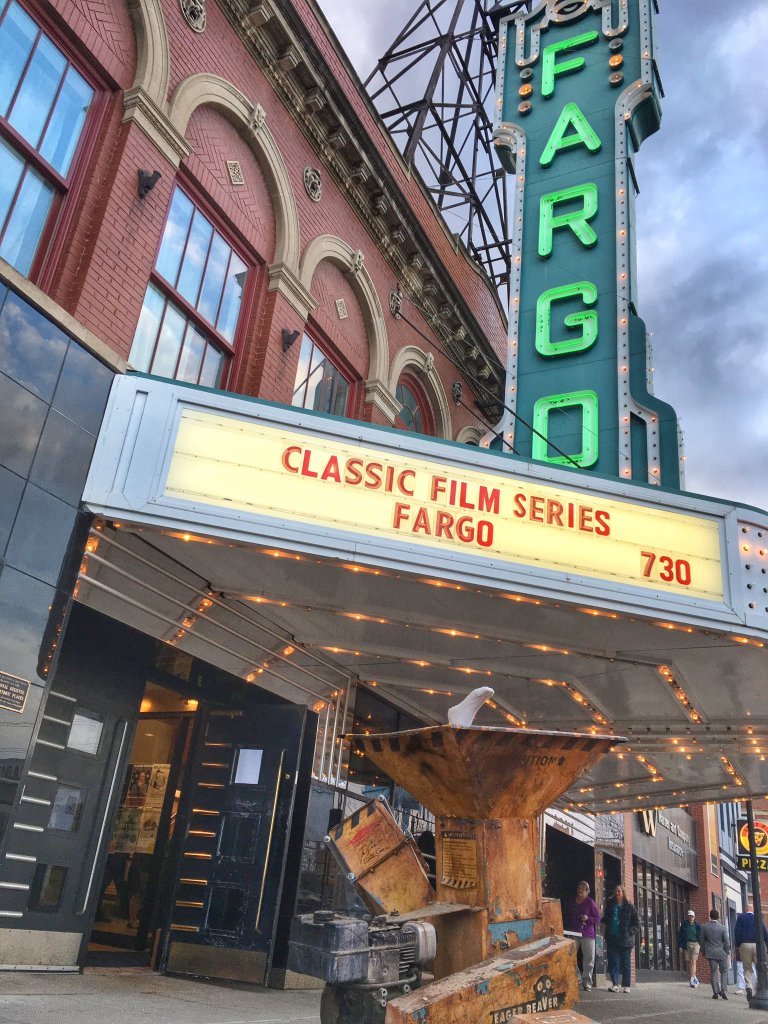
It’s only fitting to start such a travelogue with the shot at the top of this piece; the marquee of the iconic Fargo Theatre during a screening of the namesake film, complete with an appearance of the world-famous woodchipper. After all, it has it’s own Facebook page.
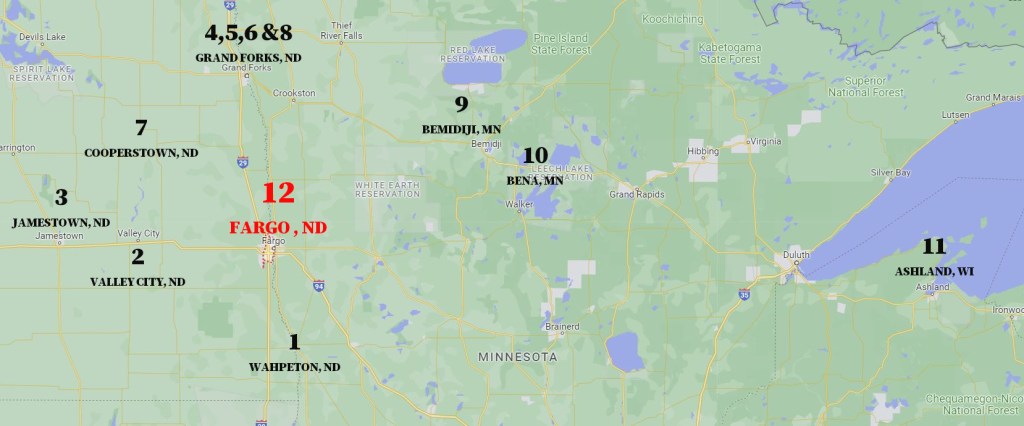
With apologies to Bing Crosby and Bob Hope, the journey isn’t all about the destination. That’s especially true for the Road to Fargo; there’s far more interesting things in the wide open spaces of eastern North Dakota and northern Minnesota than one might think. As you read, use this map showing my selection of these things and their relative proximity to Fargo.
For example, Mrs J-Dub has a fascination for photographing her hulking behemoth of a husband next to things which make me look small in comparison.
1) The World’s Largest Catfish

At the southern end of the Red River Valley lies a hamlet called Wahpeton, North Dakota. It’s claim to fame is being the home of the world’s largest catfish. Given Mrs. J-Dub’s proclivity for such photo opportunities, this one only serves as proof that she did in fact “catfish” me.
2) The Hi-Line Bridge
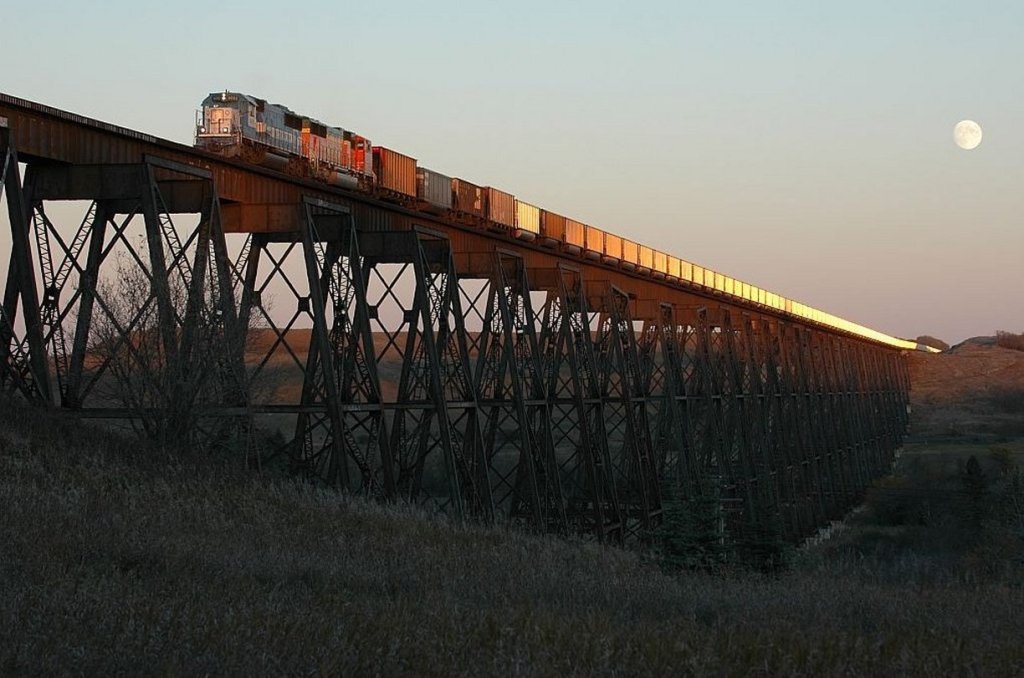
Fargo sits in the Red River Valley, which is actually the flattest piece of land imaginable. That’s the result of it once having been the floor of a glacial lake bed known as Lake Agassiz. But about an hour west of Fargo lies the aptly named Valley City, North Dakota. Here, those same glaciers of the last ice age sculpted a valley around the Sheyenne River which is nearly 200 feet deep and has uncharacteristically steep walls.
This geographic anomaly created a major problem for the railroads. The Northern Pacific (now the Burlington Northern Santa Fe) opted for building what was at the time the longest and highest viaduct trestle bridge in the world. To this day, it’s still one of the largest bridges of it’s type. Completed in 1908, the Hi-Line Bridge dominates the skyline of the town at 3,860 feet long and 162 feet high. Even the local high school’s team are known as the “Hi-Liners.”
To this day, the Hi-Line Bridge is a vital link in America’s rail network; millions of tons of freight cross it every year. During both World Wars, it was deemed so important as a link between the factories of the Midwest and the ports of the Pacific Coast that it was guarded against sabotage by a full battalion of troops.
3) The World’s Largest Buffalo
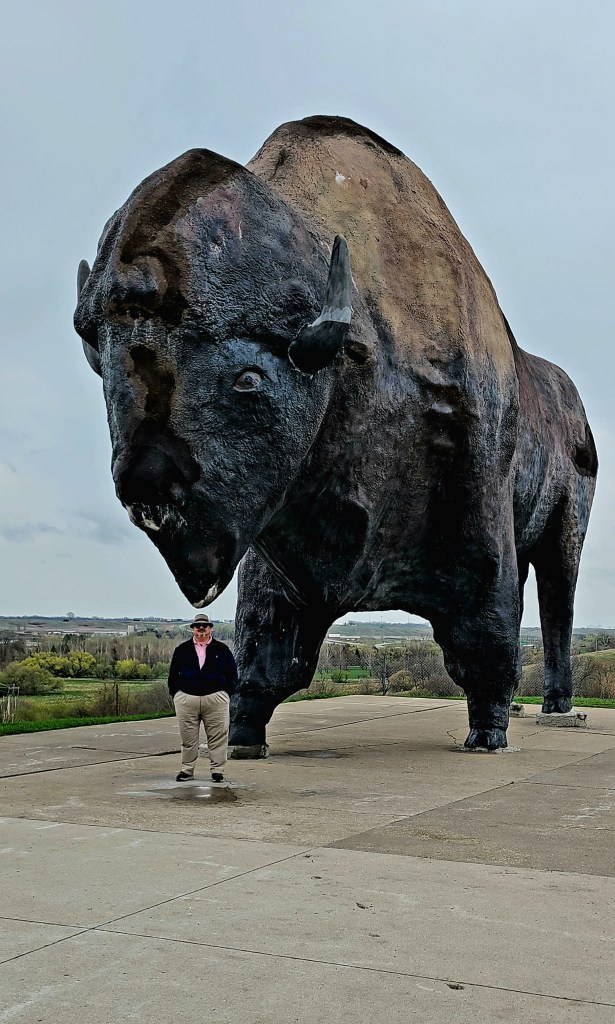
Most people hot-footing Interstate 94 across North Dakota would only pick out Jamestown as the place with the giant buffalo. Then they might wonder why it’s there; just a bit down the road there’s a town actually named Buffalo. They also might be curious as to why isn’t it further west in Theodore Roosevelt National Park, where there’s an honest-to-goodness herd of the massive ruminants.
The truth is the Jamestowners built it in 1959 knowing the Interstate was coming, and the Big Buffalo would present dorks like me with the perfect reason to stop, take a picture, buy some buffalo jerky and the obligatory refrigerator magnet.
Doing my finest “Clark Griswold” impression as a North Dakota ex-patriate turned tourist, I did them all. Don’t touch my jerky.
4) A “Grand” Mural

Established by French fur trappers at the confluence of the Red and Red Lake rivers decades before the United States of America even existed, Les Fourches Grandes (French for “Grand Forks”) was a trading post which eventually became the first “large” town to incorporate in the Dakota Territory in 1881…eight years before North Dakota was admitted to the Union.
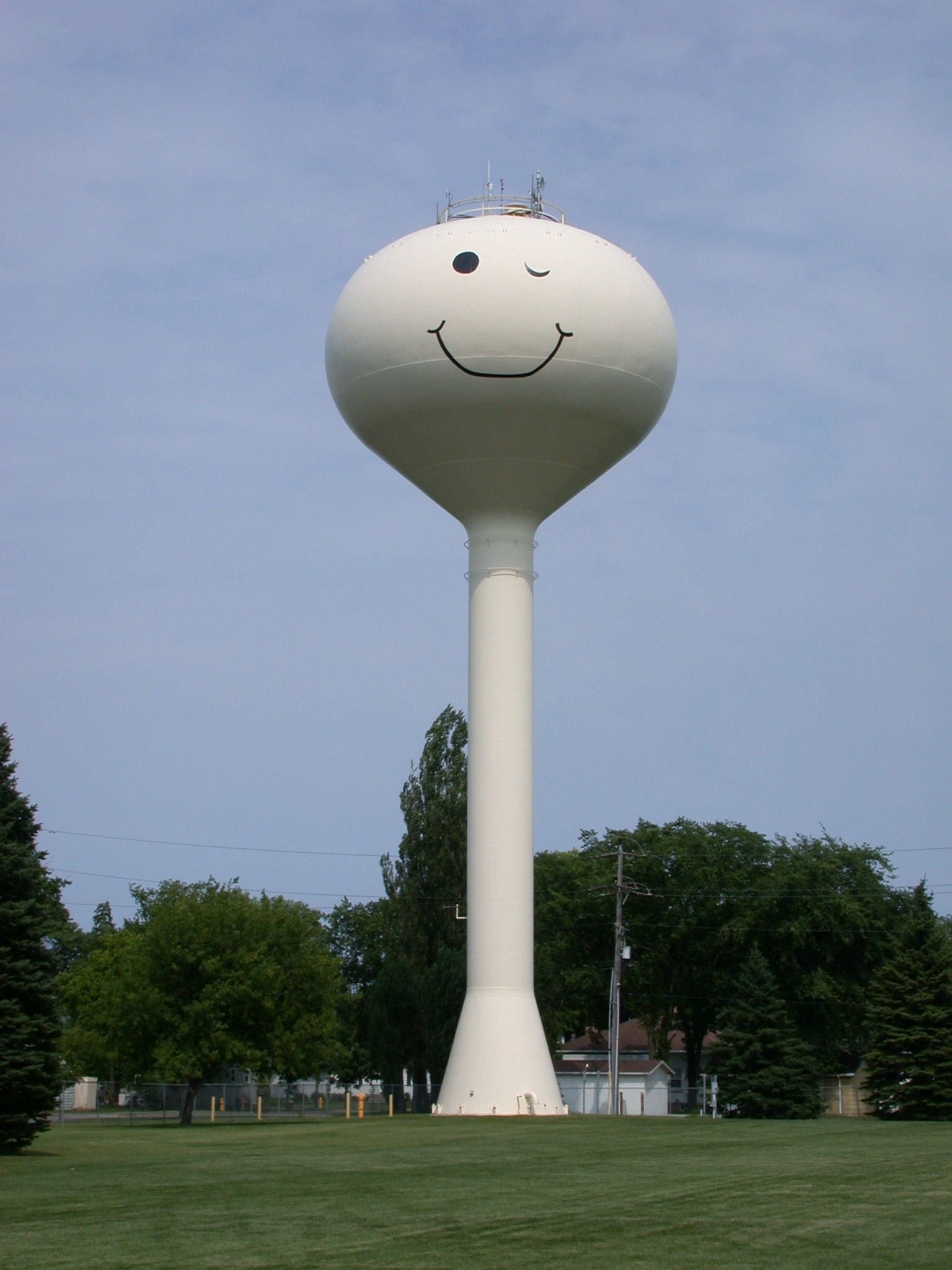
Grand Forks is known for it’s “Smiley Face” water towers 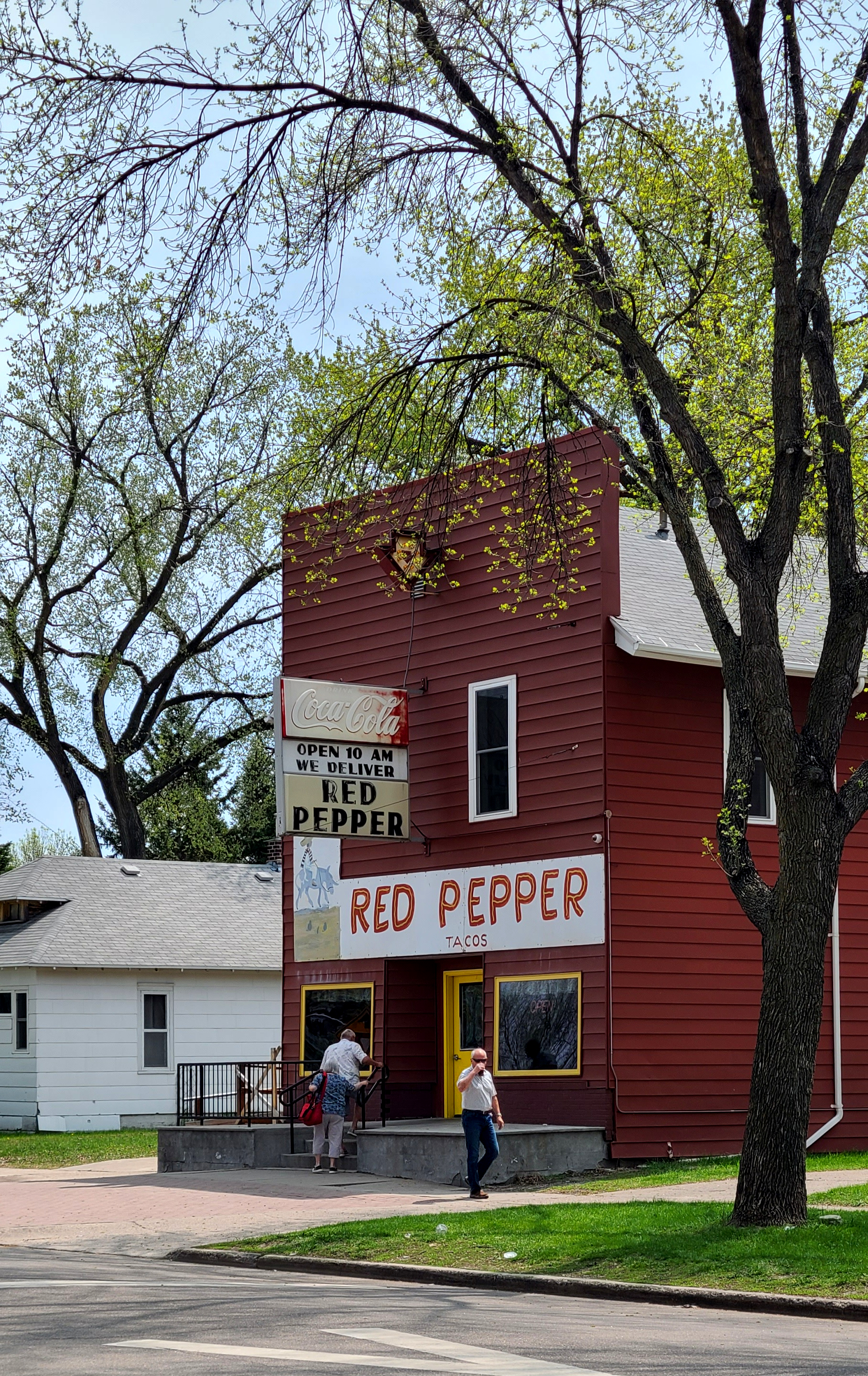
Guy Fieri’s “Diners, Drive-Ins, and Dives” can never be complete until they visit The Red Pepper, Grand Forks’ iconic sandwich shop since the 1960s https://www.redpepper.com/ 
If you know “The Wall,” then you know the Red Pepper
Being near the dead center of North America, Grand Forks suffers the extremes of climate; it’s sub-arctic winters routinely see temperatures near -40 F, and it’s short, yet brutal summers aren’t unfamiliar with daytime highs over 100 F. In other words, the weather is never going to be what gets you to love Grand Forks. The people will take care of that for you.
5) The Alma Mater

Another thing granted to Grand Forks before statehood was the university. Founded in 1883 by the Legislature of the Dakota Territory and Grand Forks native George W. Walsh, North Dakota University held it’s first classes in 1884. After statehood in 1889, the name was changed to the University of North Dakota.
Today, UND is a leader in aviation and aerospace engineering, and it’s partnership between NASA of the Opegaard School of Aerospace Sciences means virtually every American astronaut gets to visit Grand Forks before they will ever see space. That relationship served as the bedrock for UND being selected as the first school to participate in the United States Space Force’s University Partnership program.
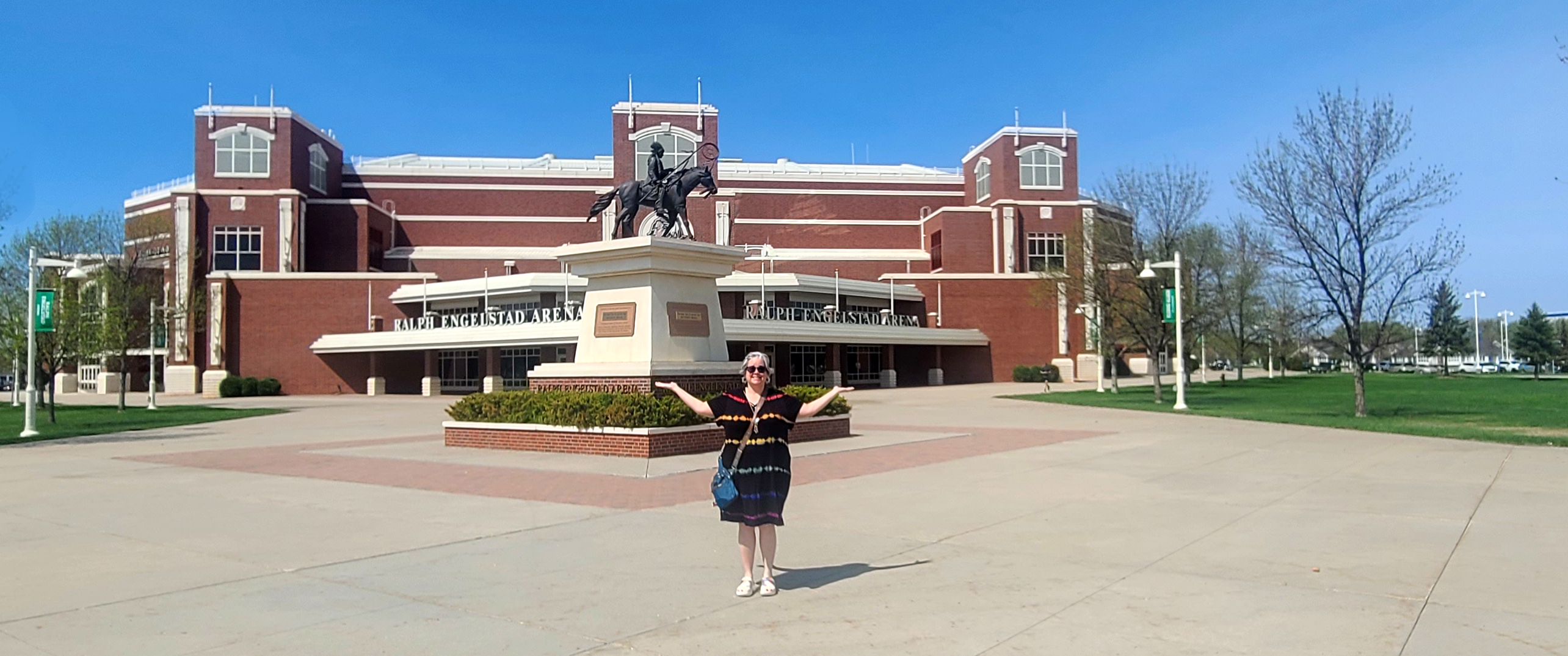
Mrs. J-Dub in front Ralph Engelstad Arena, home to the University of North Dakota’s 8-time national champion hockey team 
The entry way into Ralph Engelstad Arena, complete with a statue of it’s namesake 
Your blogger finding a new way to “selfie” with Ralph 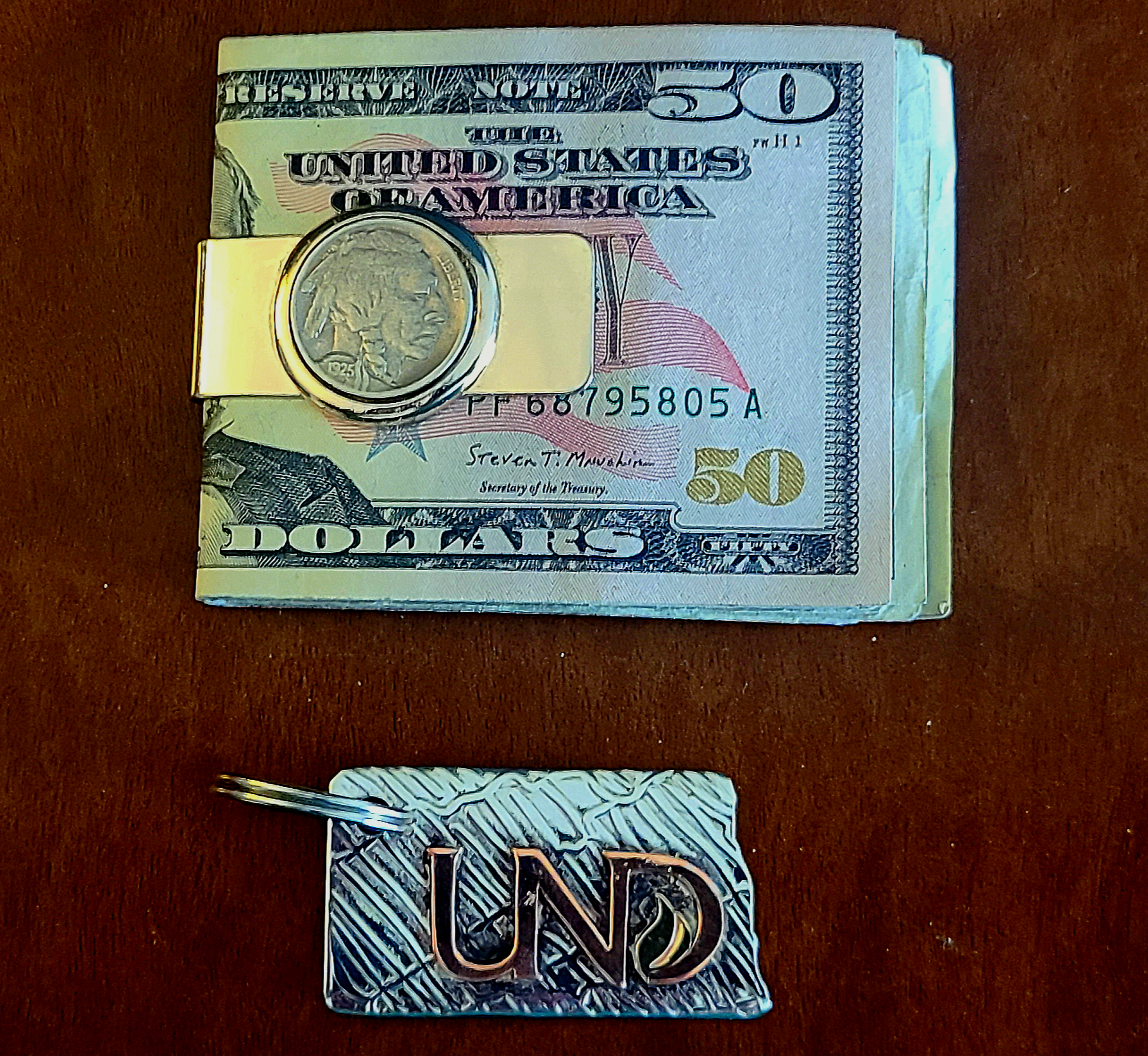
I also found the perfect keychain to go with my Indian Head Nickel money clip, thanks to Badman Design in downtown Grand Forks https://badman.com/
In the athletic world, the University of North Dakota is to college hockey what Alabama is to college football. UND’s 8 national championships is only rivaled by the University of Michigan, and Ralph Engelstad Arena is the palace of the game, and has hosted the World Junior Hockey Championships.
UND is also home to a rich literary culture. For example, current best-selling author and journalist Chuck Klosterman (a native of Breckenridge, Minnesota…the town just across the Red River from the World’s Largest Catfish) is a UND alum. Every year since 1970, the University has hosted a world-famous Writer’s Conference. In their own words, the goal of the annual conference is “to provide a forum for those in North Dakota and the Upper Plains to discuss how the arts impact our everyday lives.” Given that mission statements are so much marketing twaddle, if you really want to see the intellectual heft of this event, just play a bit of “scroll and recognize” with it’s history of attending authors.
But of utmost note is the fact the University of North Dakota can claim the world’s most interesting independent sports blogger amongst it’s alumni.
Suck on that, Harvard…
6) Stanley Kubrick’s Air Force Base
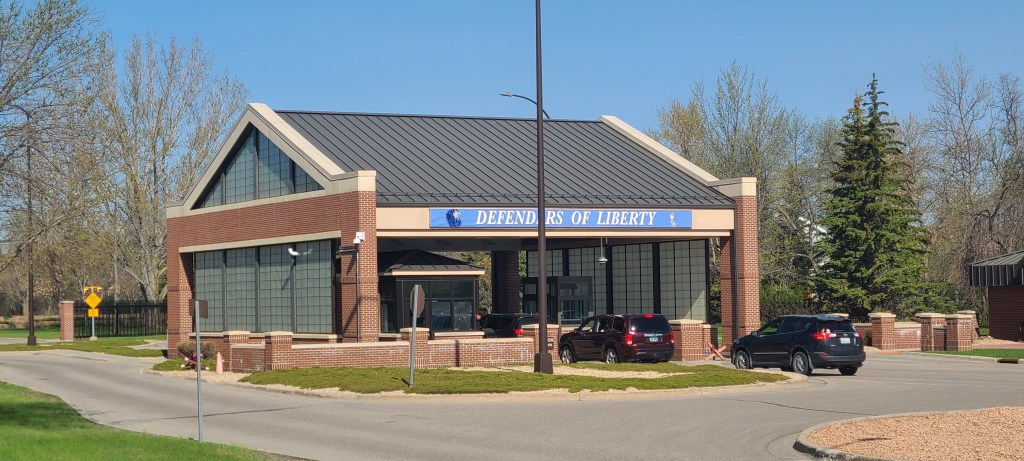
Founded in 1954 as a product of the “Cold War” with the Soviet Union, it took no time at all for Grand Forks Air Force Base to become a centerpiece of the U.S. Air Force’s Strategic Air Command (SAC). Throughout it’s history, this base hosted various bomber wings, featuring both the B-52 “Stratofortress” and the B-1B “Lancer.”
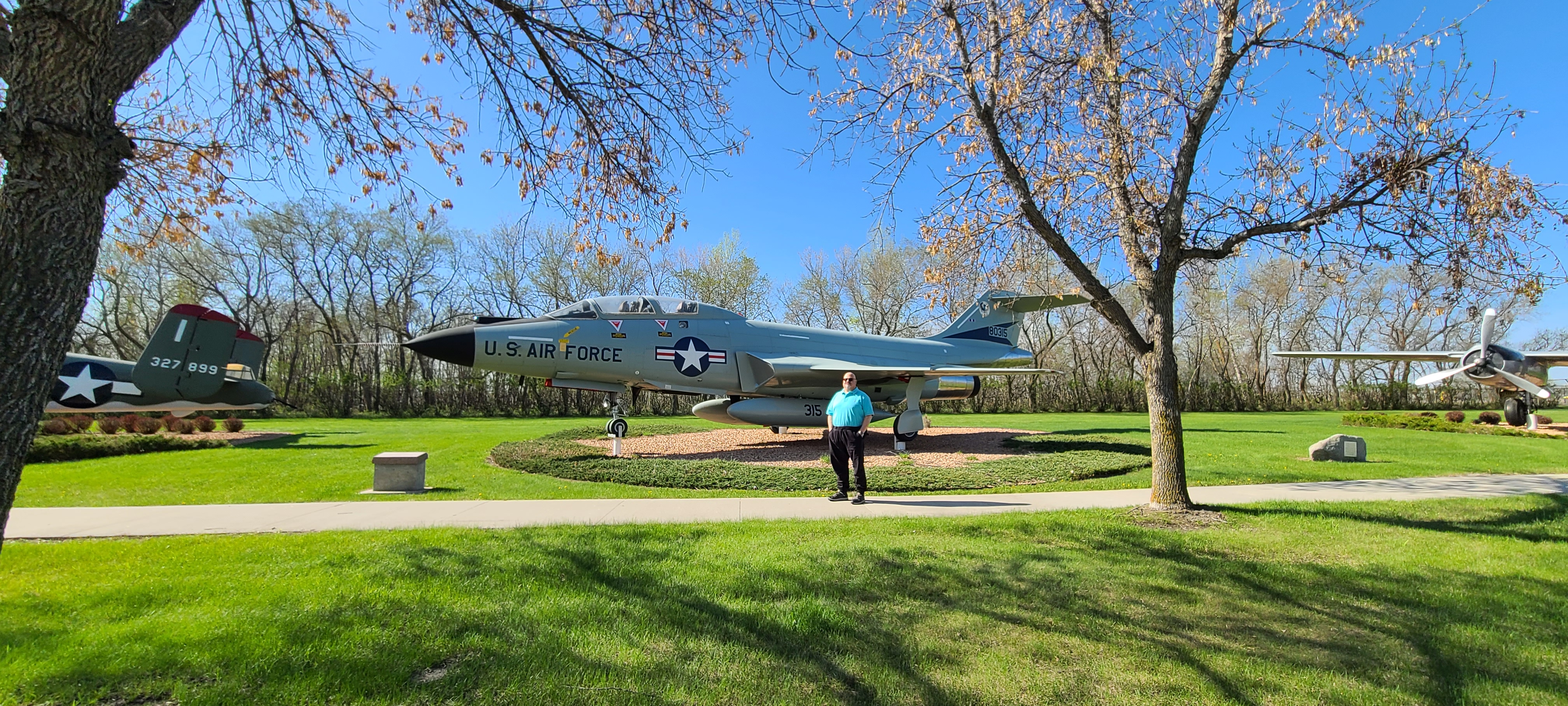
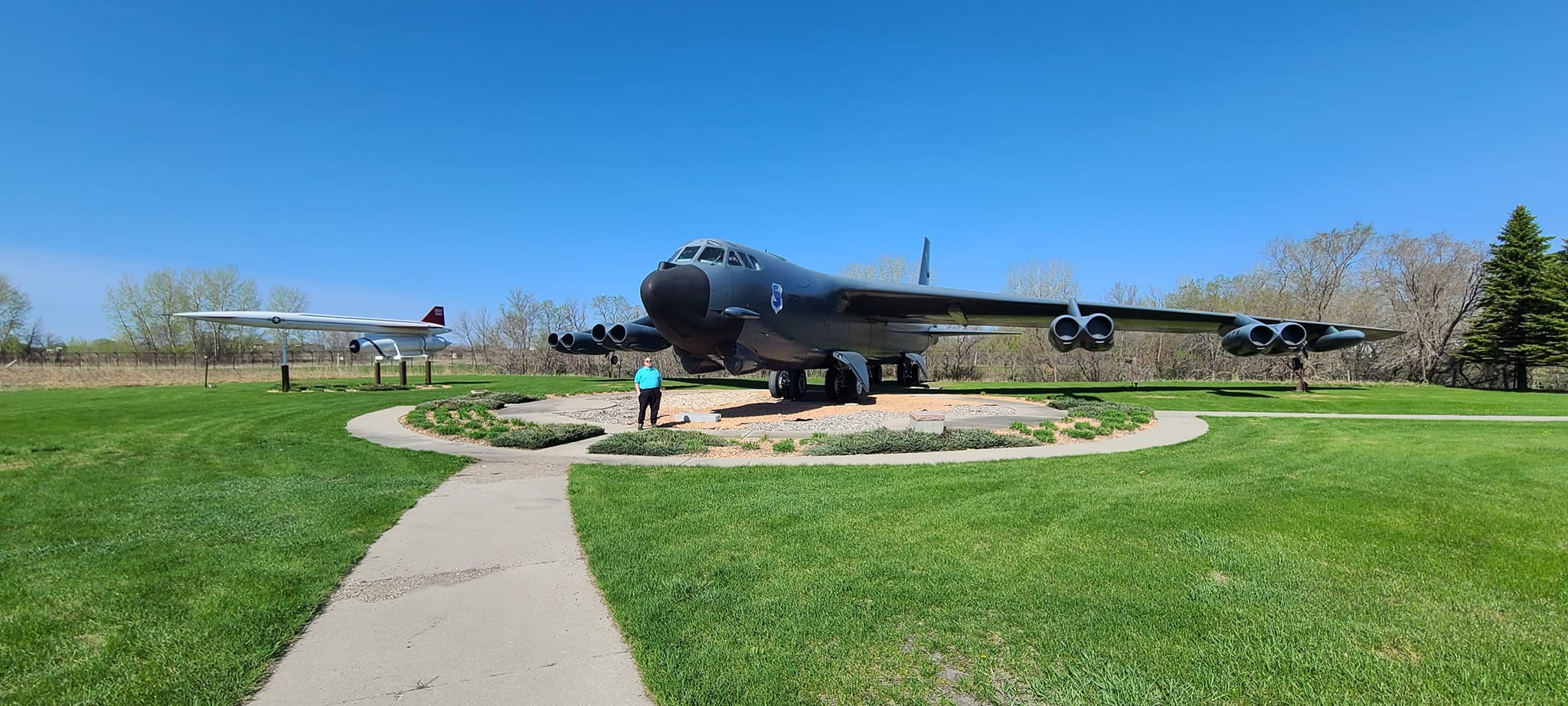


Even three-plus decades after the fall of the Berlin Wall, Grand Forks Air Force Base is home to an air refueling wing and plays a major role in the support and deployment of the “Predator” drones.
More importantly, being at the epicenter of the “Cold War” is what made legendary director Stanley Kubrick use Grand Forks Air Force Base as the model for the fictional “Burpelson Air Force Base” in his 1964 dark comedy classic “Dr. Strangelove.” I don’t remember Grand Forks having a General Jack D. Ripper, but I did know a (then Colonel) General Gerald Fall.
Speaking of which…
7) “Oscar Zero”

Despite it’s being home to various bomber wings, what really put Grand Forks Air Force Base on the front lines of the “Cold War” was being the headquarters of the 321st Strategic Missile Wing. Made operational in late 1966, the 321st was SAC’s first Minuteman II Intercontinental Ballistic Missile (ICBM) unit.
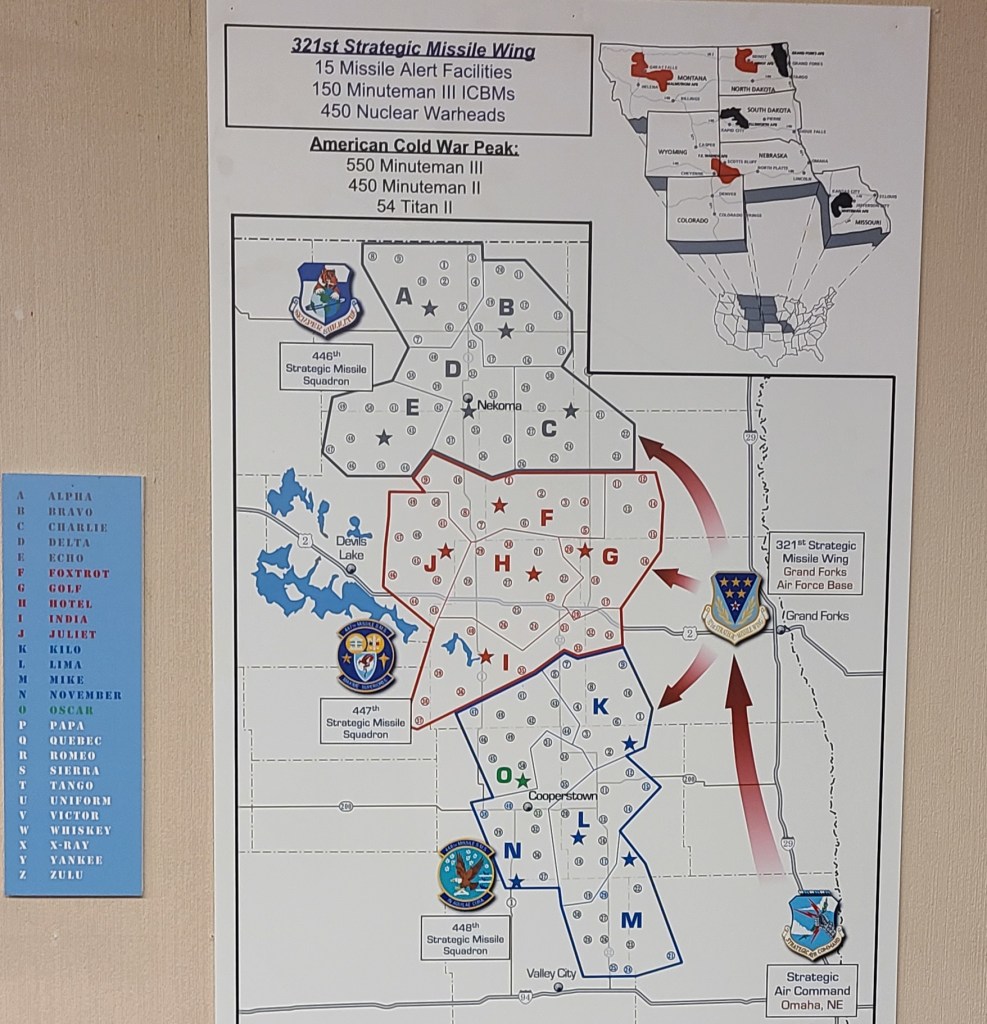
Spread across an area larger than many eastern states, Grand Forks Air Force Base was the command and control center for 150 missile silos. Each silo contained a single Minuteman II which could carry three warheads. At it’s peak, this meant Grand Forks was surrounded by 450 nuclear bombs…and that’s not counting what the bomber wings could carry.
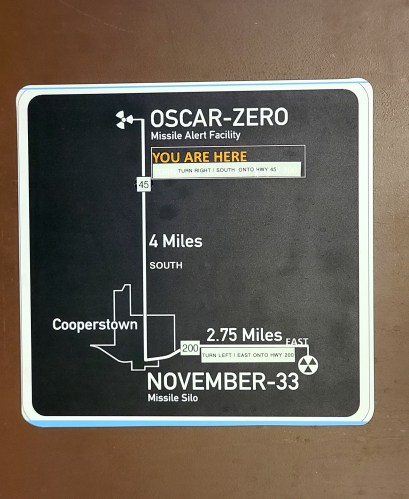
After the end of the Cold War, the 321st Strategic Missile Wing was deactivated in 1997. But the State of North Dakota preserved a Missile Alert Facility (control center code-named “Oscar Zero”) and a corresponding Launch Facility (missile silo code-named “November 33”); both just outside of Cooperstown, North Dakota.
It doesn’t look like much on the surface, especially if one were to remove the security floodlights. But once you get below the surface, the true power of this facility quickly becomes evident.
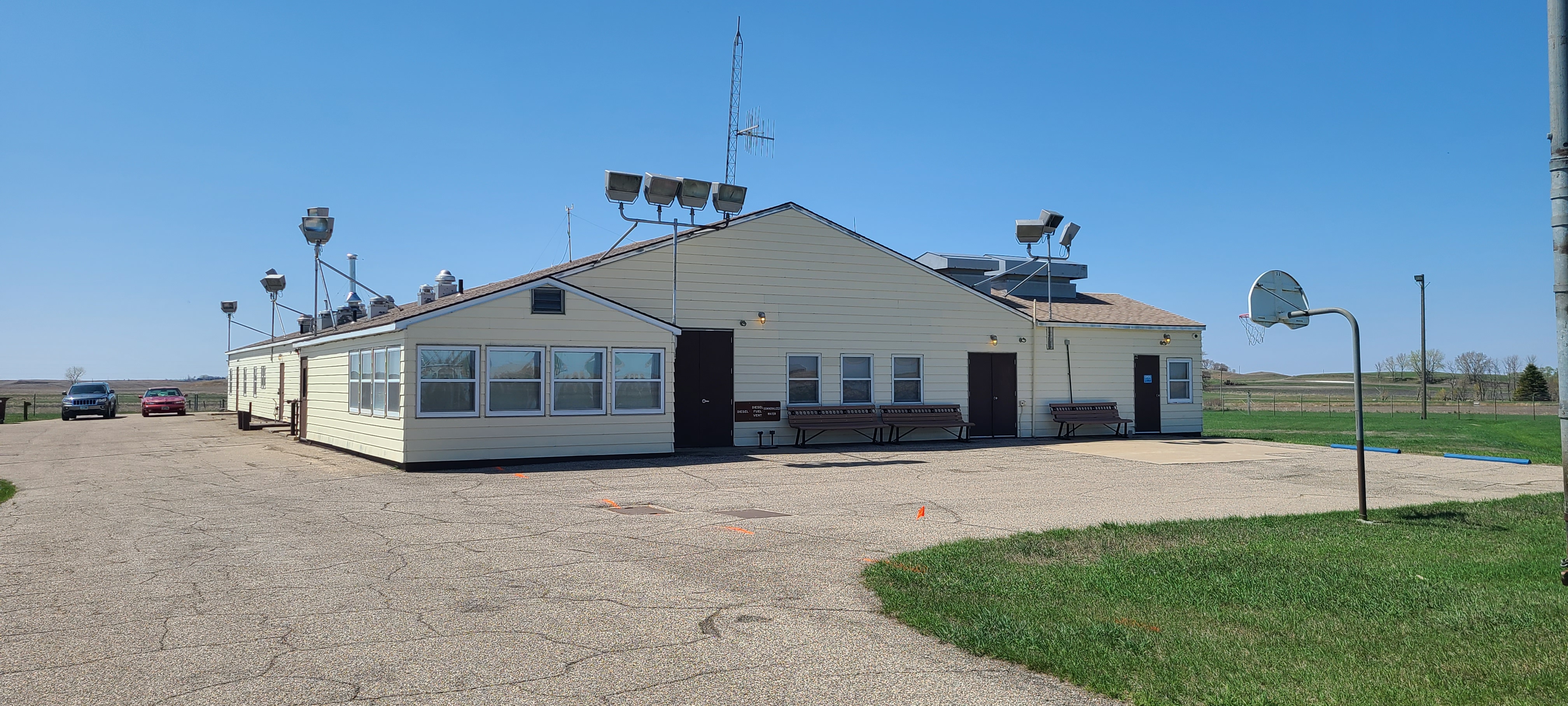
The Missile Alert Facility at Oscar Zero 
Model showing the relationship between the Air Force Base, the Missile Alert Facility, and the Launch Facility 
Close-up of the Launch Facility model 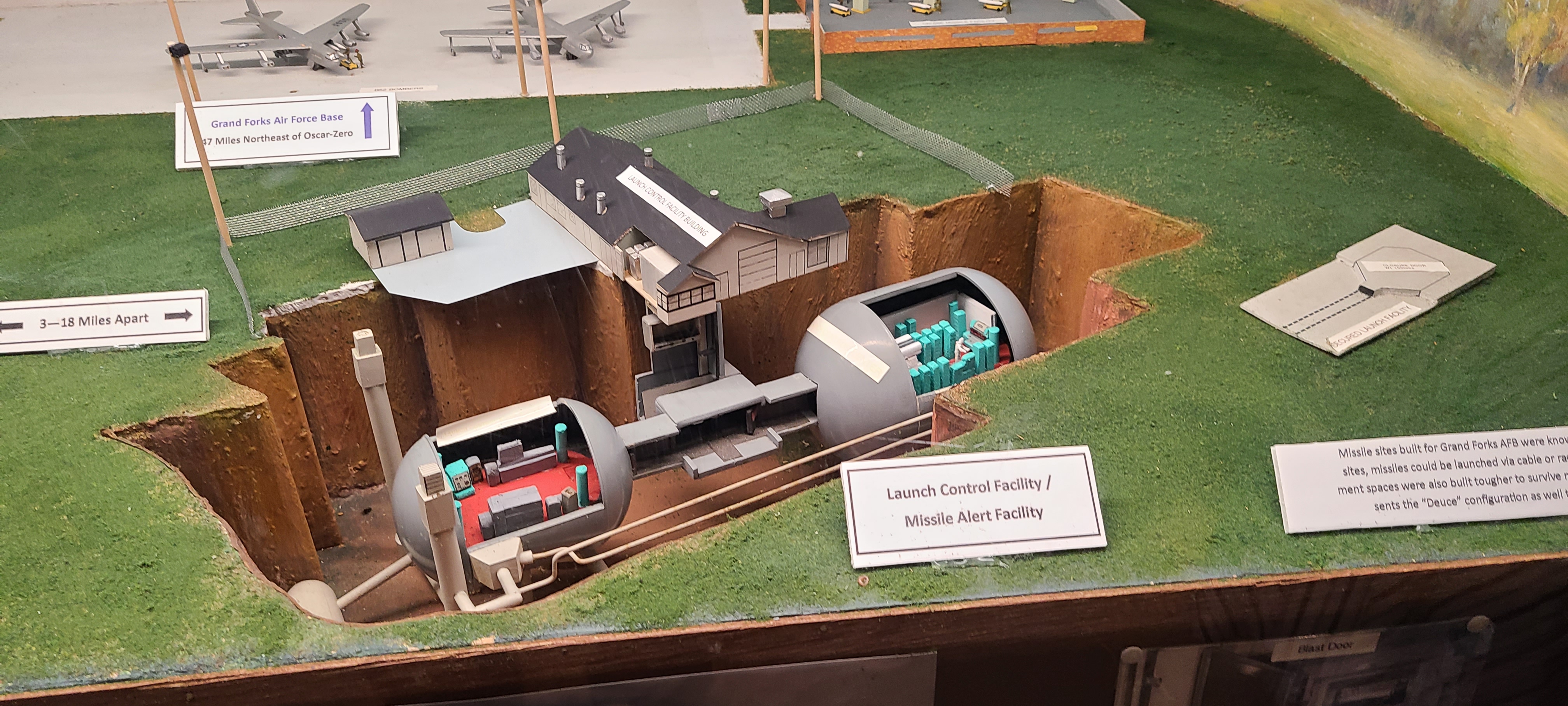
Close-up of the Missile Alert Facility model 
The machinery which powers the Missile Alert Facility 
The Launch Control Panel
Since this entire post is “bonus coverage,” what better time than a tale about an underground missile silo to bury some “bonus coverage” of my own. Conning the University of North Dakota into bestowing upon me a piece of parchment that says I know something is not the only connection I have to the capital of the Cold War.
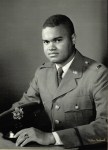
It just so happens that your blogger happened to be born in the Grand Forks Air Force Base Hospital. That’s because the smartly uniformed lieutenant below on the left happens to be my father. When that picture was taken, 2LT “My Dad” had just received his commission and was on his way to Missile Crew training to become one of the first missileers at Grand Forks Air Force Base.
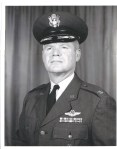
The officer on the right is Colonel Gerald G. Fall, Jr. He was my dad’s commanding officer and a mentor to the young Lieutenant. Colonel Fall became commander of the 321st in 1967, a post he held until 1970 when he took command of the 341st Strategic Missile Wing at Malmstrom Air Force Base, Montana.
Colonel (later Brigadier General) Fall was a “throwback;” his stern demeanor coupled with his “way things ought to be” outlook would have made him at home in a World War II movie. But Fall was no movie character; he began his military career as a U.S. Army private, having entered the service after the Japanese attack on Pearl Harbor. But he then graduated from aviation cadet training and earned a commission as a Second Lieutenant in the U.S, Army Air Corps, along with his pilot wings in 1943…well before his 21st birthday.
Fall served as a pilot and flight instructor on B-24 Liberators before being selected as one of the original members of the U.S. Air Force’s newly-formed Strategic Air Command (SAC). By 1954, Fall found himself assigned to SAC Headquarters at Offutt Air Force Base, Nebraska as Chief of the Combat Crew Branch. In this capacity, Fall was tasked with manning, promotion, and control of all SAC combat crews.
In other words, by the time Fall’s path crosses with that of a young, Philadelphia-born, jazz piano-playing Lieutenant in 1967, the Colonel knows all about spotting potential. Perhaps that’s why out of all the men Fall found in his command, and through all the stops both of their travels took them through, Fall and my father maintained a close friendship until the General went to his final alert in 2011. In fact, the two were such friends that I never knew the General by any title other than my honorary “Uncle Jerry.”
8 ) A Japanese Garden in English Coulee


This is such a perfect example of the philosophical tenet Yin Yang that I’m going to completely ignore it’s origins in Chinese cosmology. Yin Yang is a concept opposite which dictates out of a primary chaos of material energy, the universe creates infinite diametrically opposed, yet inextricably interconnected forces. Yin represents the receptive component; Yang being the active coupled opponent. This becomes the driving force of all change as seen in order and disorder, day and night, winter and summer…you get the picture.
Having said that, is their a better example of Chinese Yin Yang than a Japanese Peace Garden in the same town which once had enough nukes to turn a quarter of the planet into a hopelessly irradiated wasteland?

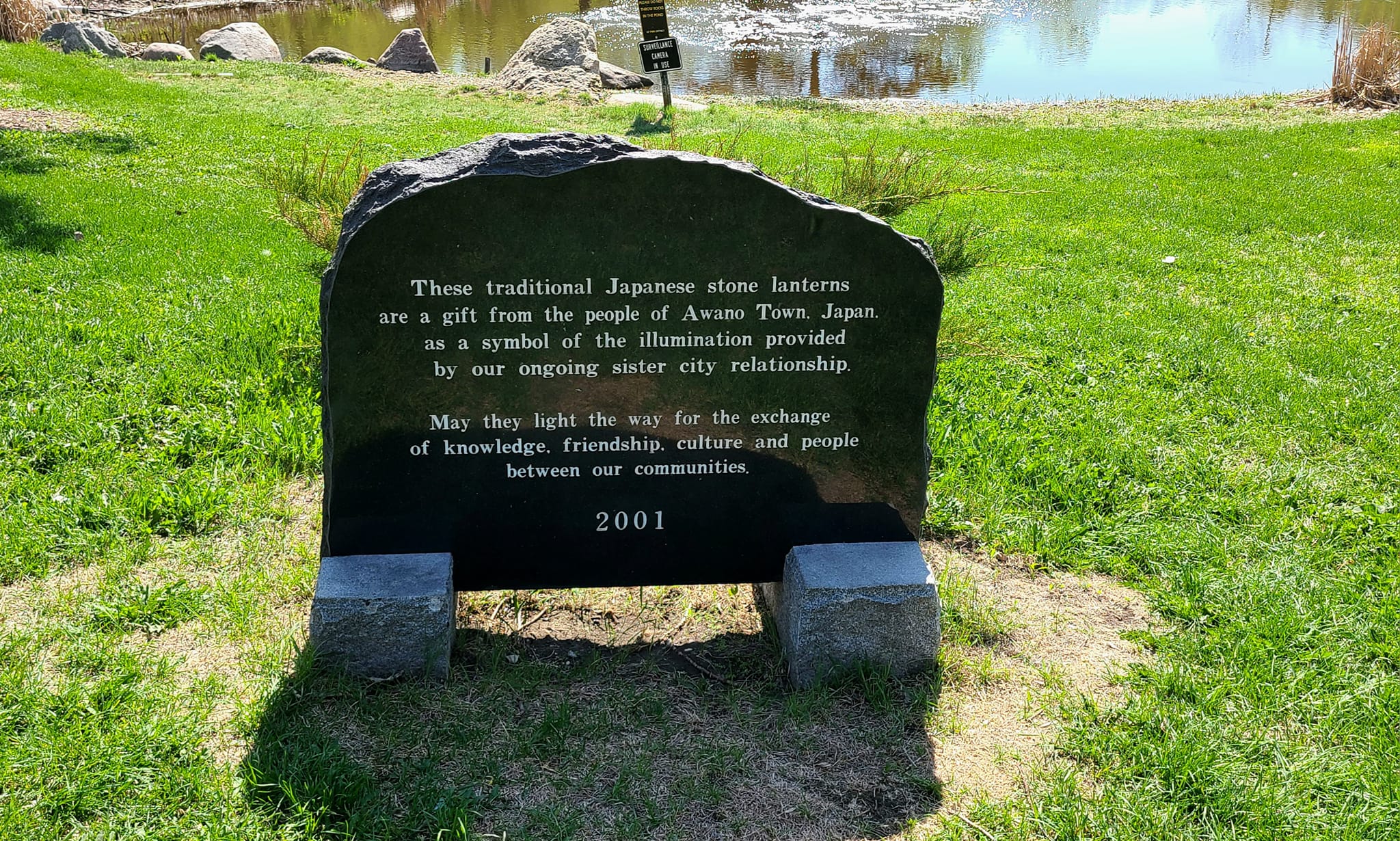
The trained Grand Forks eye will recognize that glorified swamp as English Coulee. Bisecting the city and the university campus, when it isn’t frozen solid English Coulee is little more than a 10-mile long, nine-foot wide natural vivarium for snapping turtles, leeches, and quasi-useless fish.
The untrained engineering eye won’t notice that after the epic flood of 1997, English Coulee was augmented by the Army Corps of Engineers to be a high-water diversion channel. in other words, the annual spring flooding lets the Red River freshen this 10-mile turtle town.
9) The Biggest Paul Bunyan
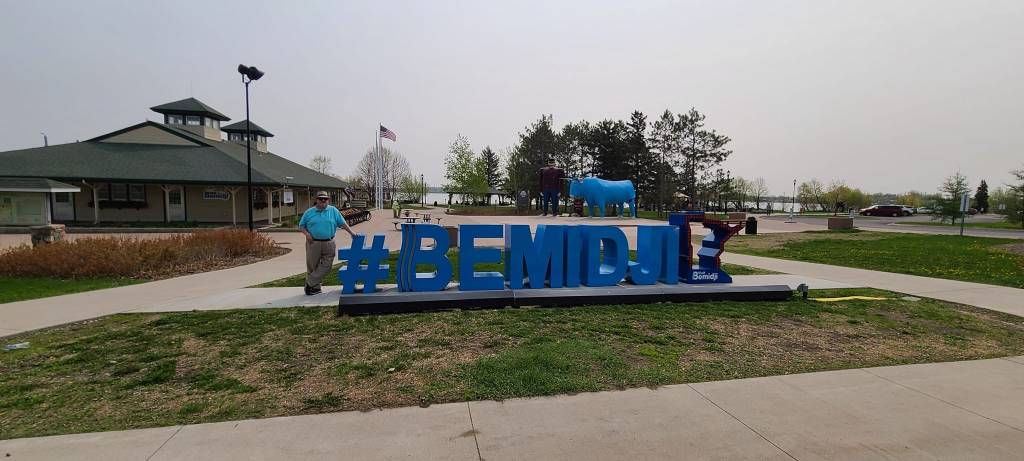
Now, back to the theme of objects which make the “big guy” look small. Yeah, I’m aware of the fact Sheriff Marge Gunderson lived in Brainerd, not Bemidji. But, I also know the statue of Paul Bunyan was a “fake;” it was a temporary thing built in Bathgate, North Dakota strictly for filming purposes. All the “real” Paul Bunyans strewn across Minnesota and Wisconsin were mired in a mild winter…ergo, no snow.
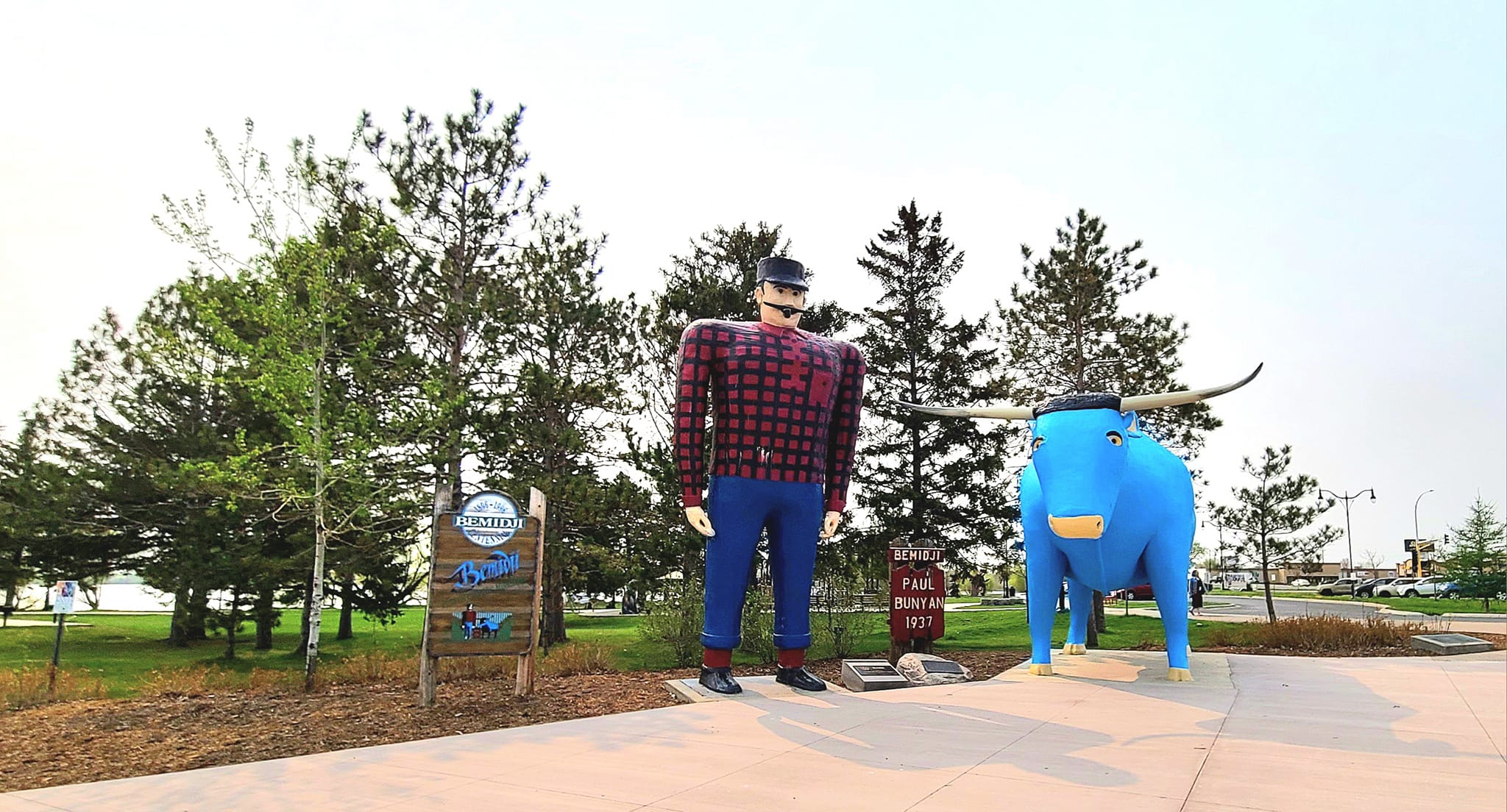
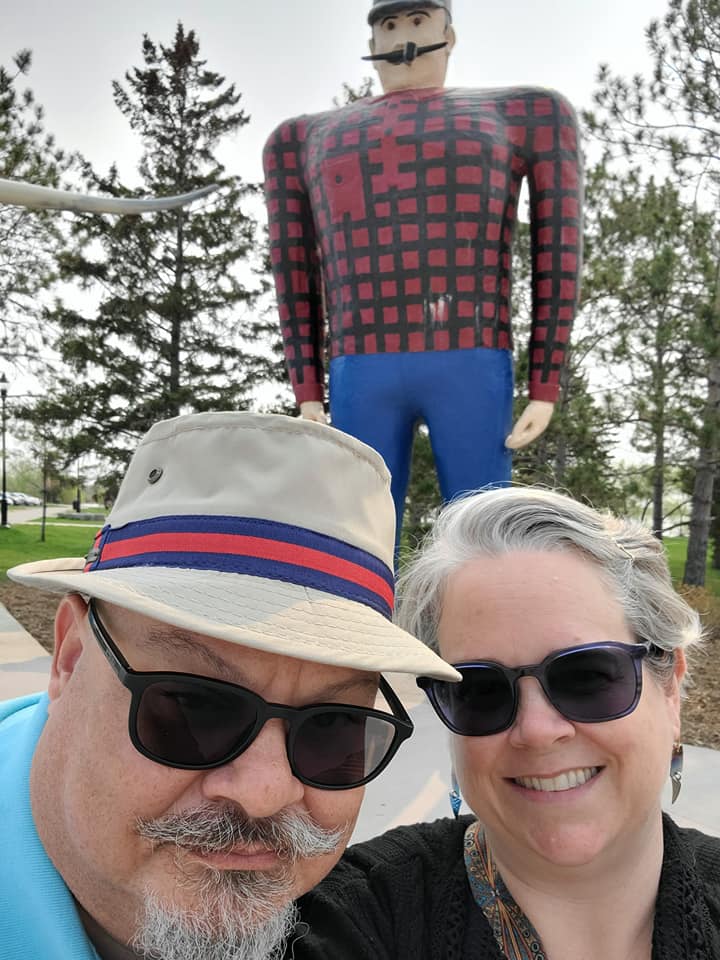
In other words, if you can’t get the “Paul Bunyan” used in the movie, why not get the biggest one?
10) The Big Fish Supper Club
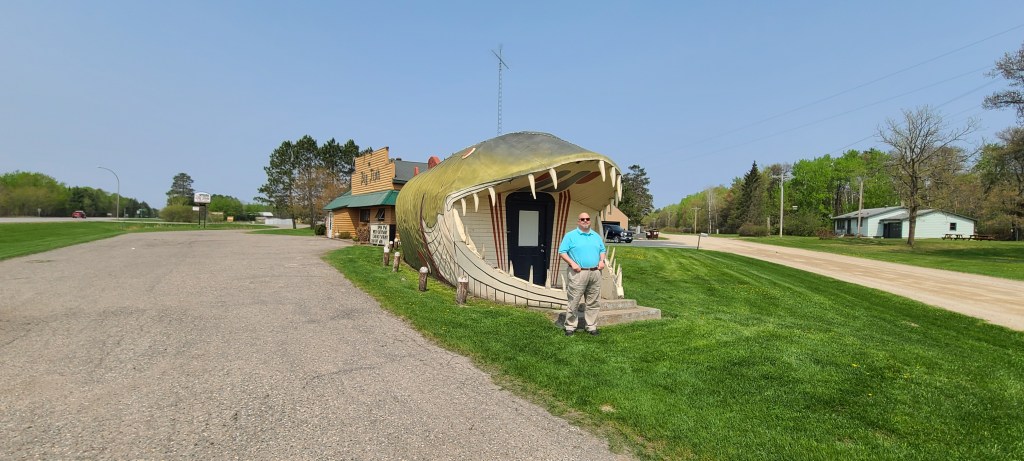
This has to be a setup: A whale-sized guy about to be devoured by a restaurant resembling a giant muskie. Seriously, doesn’t that feel like the guts of a Gene Rayburn/Match Game “Blank” joke? For those of you under the age of 80 “The Match Game” was a staple of daytime television in the 70s. If you’re a broke-ass under the age of 30 living off those free-stream services, Pluto TV is rife with it.
Obviously, I’m not under thirty, and I’m pretty far from broke. I just choose to spend my money on other stuff like _____________.

11) Superior Sunrises
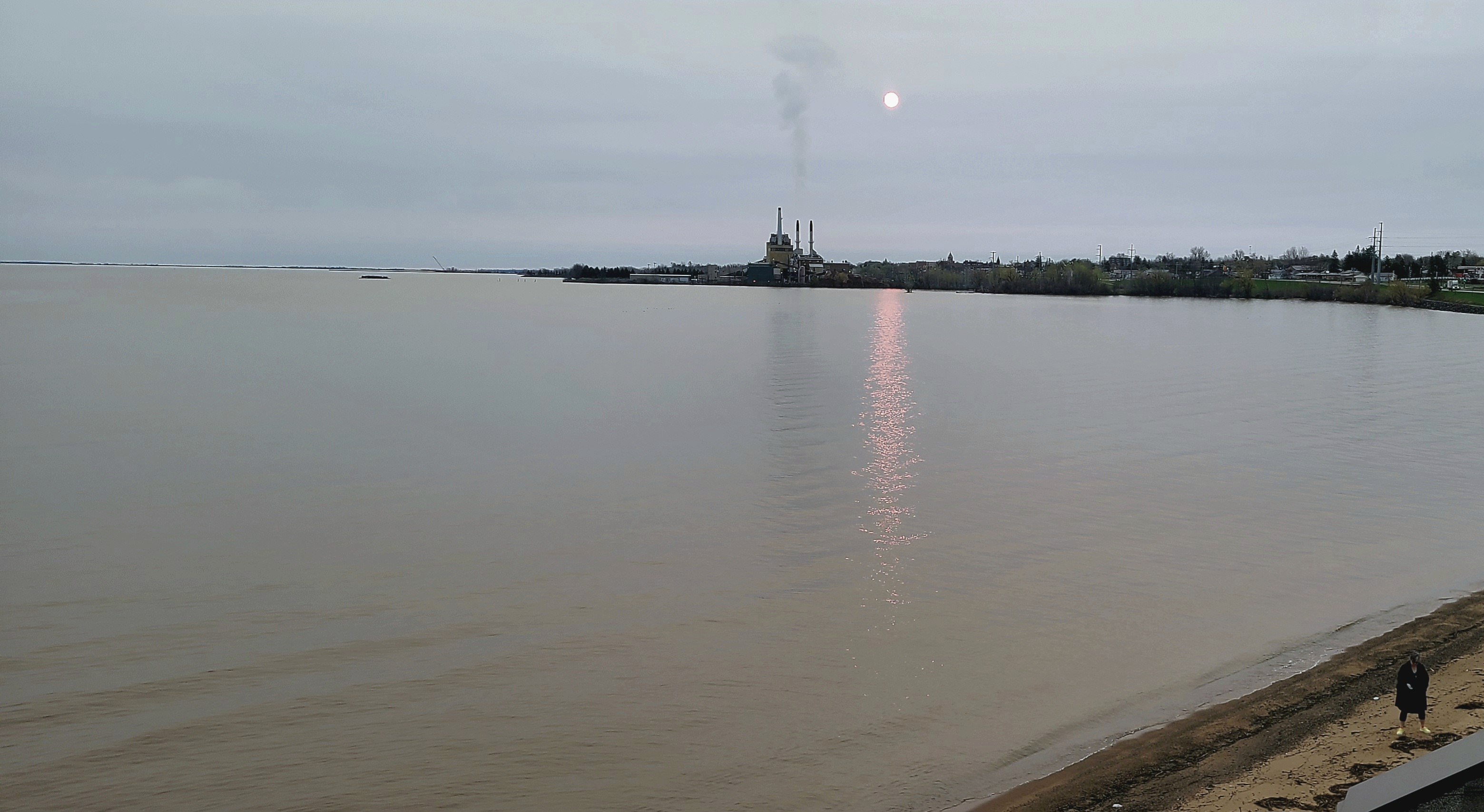
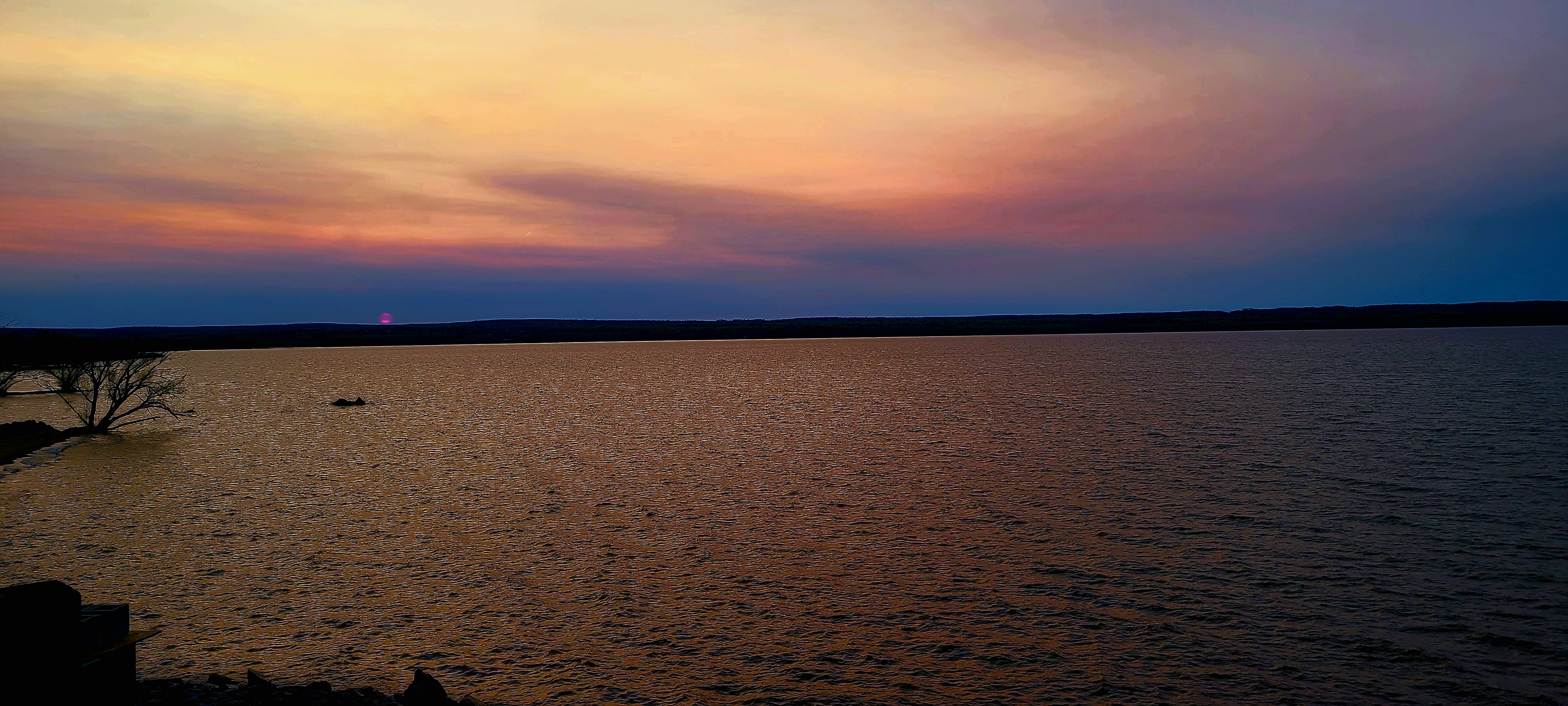
Another thing Mrs. J-Dub loves to do on our trips is too “off-beat” or “boutique” hotels. Ashland, Wisconsin’s Blue Wave Inn most assuredly fits that bill. Only things that float can get you any closer to Lake Superior.
Not only does that make for some amazing views, but the attached Sandbar Restaurant makes for a great spot to take in those vistas while enjoying top-flight cocktails over a delightful (albeit limited) menu which somehow is simultaneously upscale and down home.
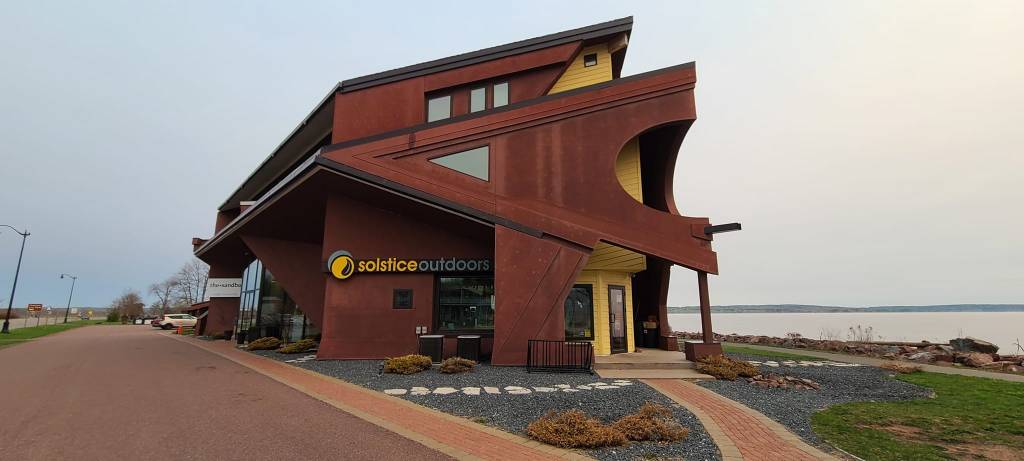
The Blue Wave, The Sandbar, and Solstice Outdoors (think two notches above a trinket-heavy gift shop and one below a North Face outlet) are all integrated into one small and new operation. That means they can have some quirky hours, so you’ll need to plan accordingly. But the staff at the Sandbar was more than adept showing some old-fashioned hospitality by providing a big blogger-sized “to go” Old-Fashioned (or two…I mean it is Wisconsin…those folks certainly know how to blur your vision).
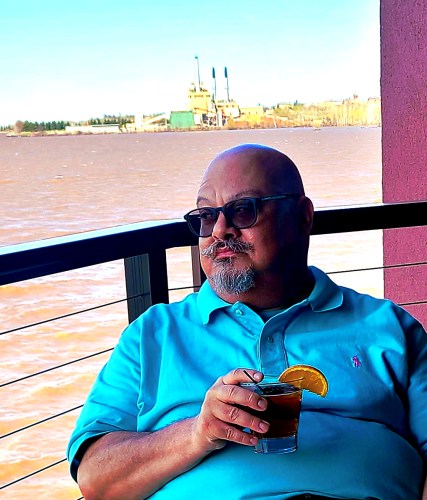
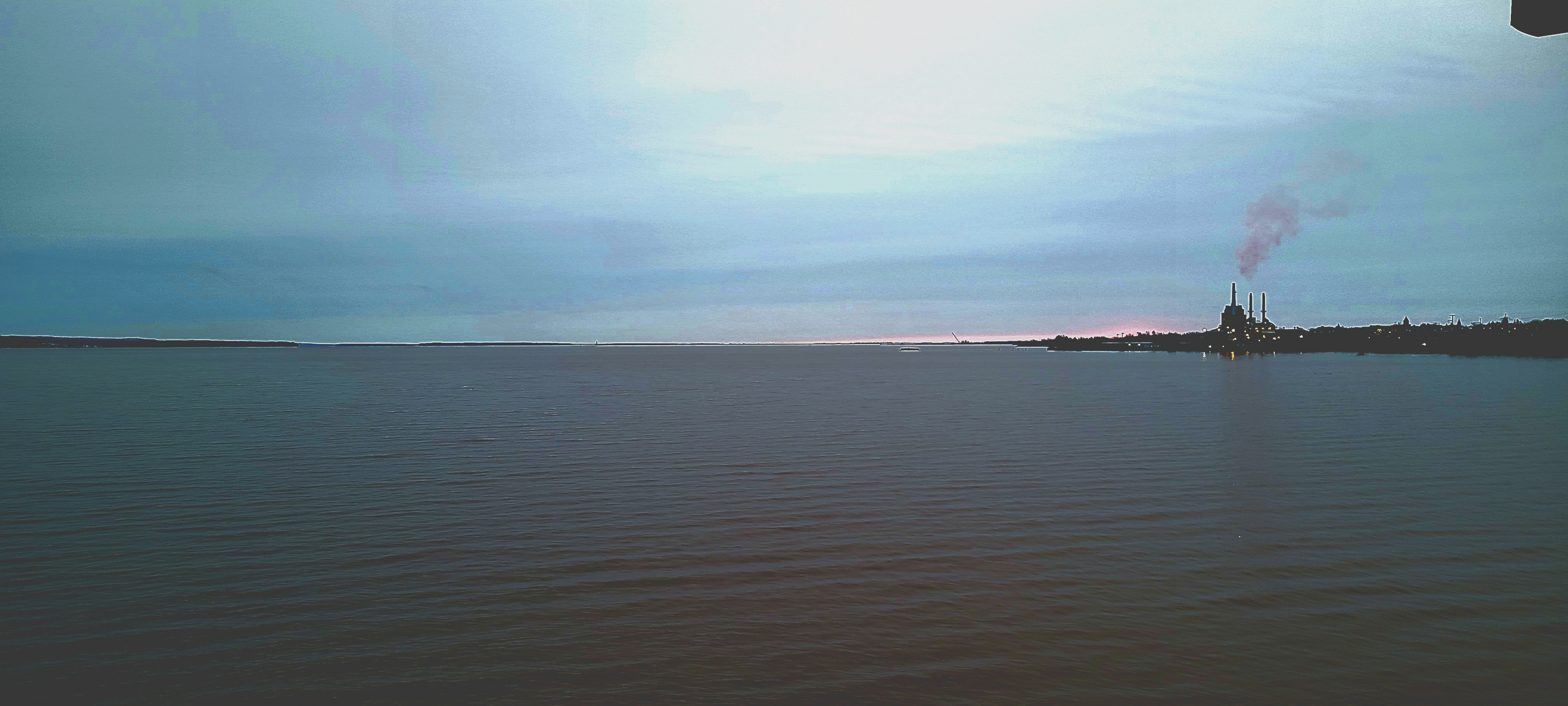
Another word of caution…despite the fact it was mid-May, a staunch north wind coming straight from Canada across a hundred miles of ice water had the temperature hovering just over freezing.
But if you think a veteran of the “Bottle and Glass wars” who trudged through his fair share of North Dakota winters was going to be dissuaded from some scenic lakeshore vacation drinking…well, don’t bet more than you can afford to lose.
12) Finally, Fargo Itself
We all know what you’ve been waiting to see as your read through this entire post. Hold your water, we’ll get there. There’s another awesome thing to see in Fargo…and oddly enough, it’s all about water.
Just like Marge Gunderson, Vern Gustafson, and Jerry Lundegaard, a major portion of the Red River Valley’s inhabitants are of Scandinavian descent. Back in 1980, a group of such sons of Scandinavia had a home-built Viking ship they had built over the last few years. They converted a disused potato warehouse in Hawley, Minnesota (a few miles east of Fargo) into a de facto shipbuilding facility. They used specially selected oak trees grown near East Grand Forks, Minnesota.
Once it was completed, they christened the ship as the Hjemkomst (Norwegian for “homecoming“), took it to Duluth harbor on Lake Superior where they launched for her maiden voyage. Once the ship was visible to the public eye, it made a series of appearances, primarily for fund-raising toward the final goal. That occurred in 1982 when a twelve-man crew sailed the Hjemkomst from Duluth to Norway.

Afterward, the Historical and Cultural Society of Clay County (Minnesota) acquired the Hjemkomst and built a museum around her along the banks of the Red River in Moorhead, Minnesota.
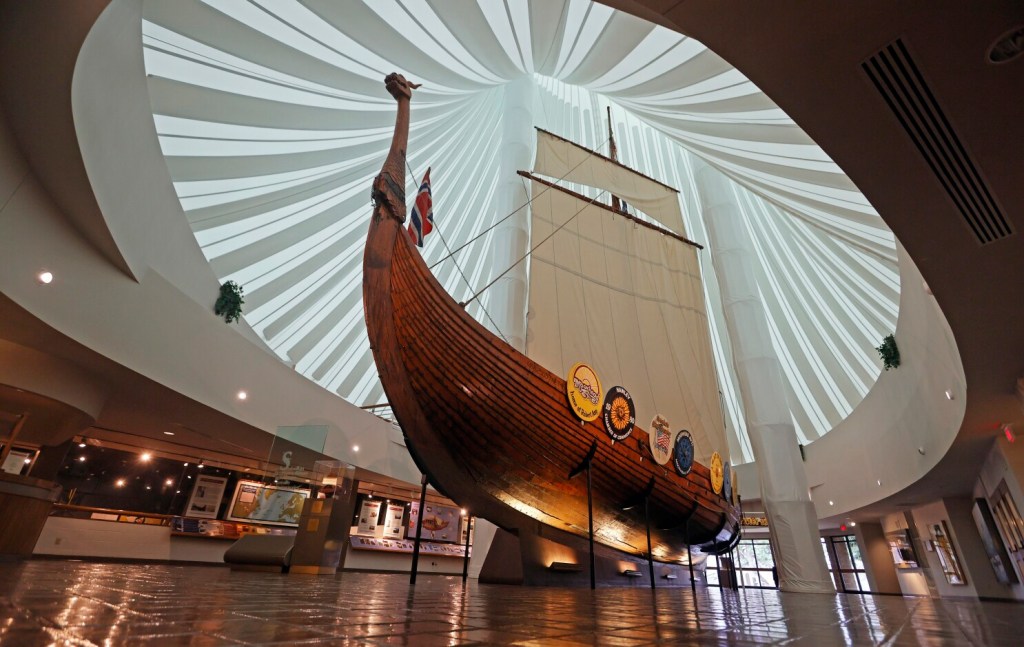
Sorry, but that story is waaaaaay cooler than the woodchipper you’re all here to see. In fact, somebody needs to make a movie about the Hjemkomst and the men who made her happen, but that’s for another day.
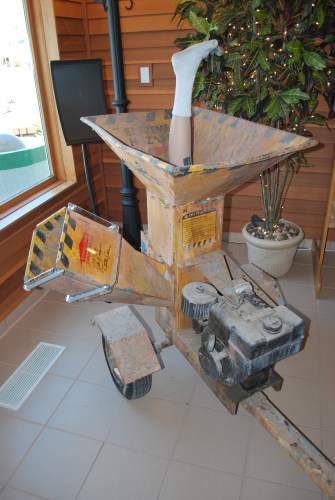
So, here it is…the original woodchipper from Fargo inside the Fargo-Moorhead Visitor’s Center. It’s even authenticated by signatures from the Coen Brothers. Along with the woodchipper, there’s other memorabilia from the film on display, including another signature-authenticated item…a signed copy of the original Fargo script.
But what the first time visitor to the Fargo-Moorhead Visitor’s Center will notice is…wait for it…there’s more than one woodchipper. A replica model braves the elements on display outside the building, which is made to resemble an old-school grain elevator.

Not only is that a hat-tip to the region’s exceptional agricultural power…that glacial lake-bed thing makes the Red River valley some of the most fertile farmland on earth…but it also makes the F-M Visitors Center stand out in the midst of what has become quite the modern mini-city.
But Grand Forks is still where the action is…
You can see all the episodes of “Story Time” here.
Check out Dubsism’s Movies and Blog-A-Thons page for a full schedule of projects past, present, and future!
Got a question, comment, or just want to yell at us? Hit us up at dubsism@yahoo.com, @Dubsism on Twitter, or on our Pinterest, Tumblr, Instagram, Snapchat or Facebook pages, and be sure to bookmark Dubsism.com so you don’t miss anything from the most interesting independent sports blog on the web.

 Dubsism
[…] P.P.S. Speaking of the schmaltz of Roadside America, stay tuned because in about six weeks, there will be “bonus coverage” of this post featuring just such attractions from this very part of the world! UPDATE 7/1/2023 – The “Bonus Coverage” is now available! […]
LikeLike
Great tour.. and random stuff and lovely to meet Mrs J Dub..
LikeLiked by 1 person
How cool is this? Looks like you all had a great time. I remember Fargo and this area being nice, too.
LikeLike
This only scratches the surface 🙂
LikeLiked by 1 person
I’ll bet it does. 😃
LikeLike
[…] a recent post, I touched on a personal story regarding U.S. Air Force Brigadier General Gerald G. Fall, Jr. The long story made short is General Fall was my father’s commanding officer in the USAF, and […]
LikeLike