
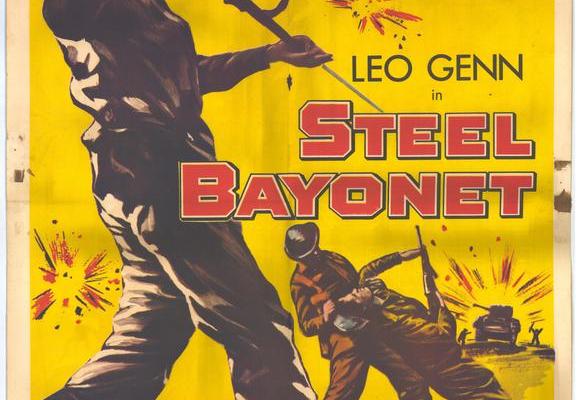
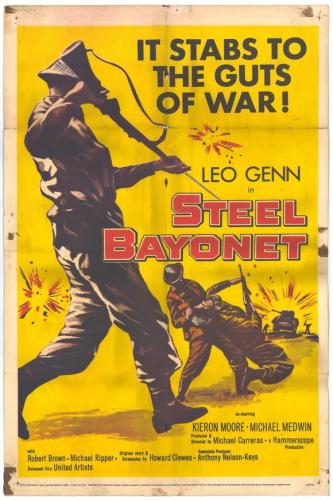
- Today’s Movie: The Steel Bayonet
- Year of Release: 1957
- Stars: Leo Genn, Kieran Moore, Michal Medwin
- Director: Michael Carreras
This movie is not my list of essential films.

NOTE: This installment of Sports Analogies Hidden In Classic Movies is being done as part of something called the The Hammer and Amicus Blogathon IV being hosted by RealWeegieMidget Reviews and Cinematic Catharsis. As one might expect, this event is all about a deep dive into the works of these British production companies.
You can see all the contributors to this blog-a-thon here:
The Story:
The Steel Bayonet follows the exploits of the British soldiers of “C” Company in Tunisia in 1943. After having just come off a grueling 13-week battle against elements of the German Afrika Korps, the General (played by Raymond Francis) informs “C” Company’s commander Major Alan Gerard (played by Leo Genn) he has some bad news. After having been the spearhead of several attacks against heavily-defended German positions, “C” Company has been reduced to two platoons. They are sorely in need of time to rest and reorganize, but instead they are ordered to establish a gunnery observation post and hold it until an Allied counter offensive can be mounted against a new German advance.
The General promises Gerard replacements for the men he has lost. He also assigns gunnery officer Captain Mead (played by Kieron Moore) to “C” Company. As Gerard explains The General’s order to his men, many of them figure out this may very well be a “suicide mission.” Not only are the under-strength Brits outnumbered, but in order not to tip the Germans as to their positions, they can’t fire their rifles. They can only be used as a means to deliver a bayonet as the instrument of death to enemy patrols they encounter.
Having their orders, the remnants of “C” Company establish their observation post at a deserted farmhouse which has a windmill whose height makes it ideal as a platform for spotters. The problem is when The General arrives, the promised replacements amount to only five green recruits led by Lieutenant Vernon (played by Michael Medwin), who has been sent to be Gerard’s second-in-command.
They discover the body of a German soldier, but then discover the hard way that it was booby-trapped. Not only are two British soldiers killed, but the explosion alerts the Germans. As a result, they send out a seven-man patrol to make contact with the Brits. As the ensuing encounter unfolds, the seven Germans meet their end on the ends of British bayonets. Not long afterward, Captain Mead is spotting in the tower when he is shot by a German sniper.
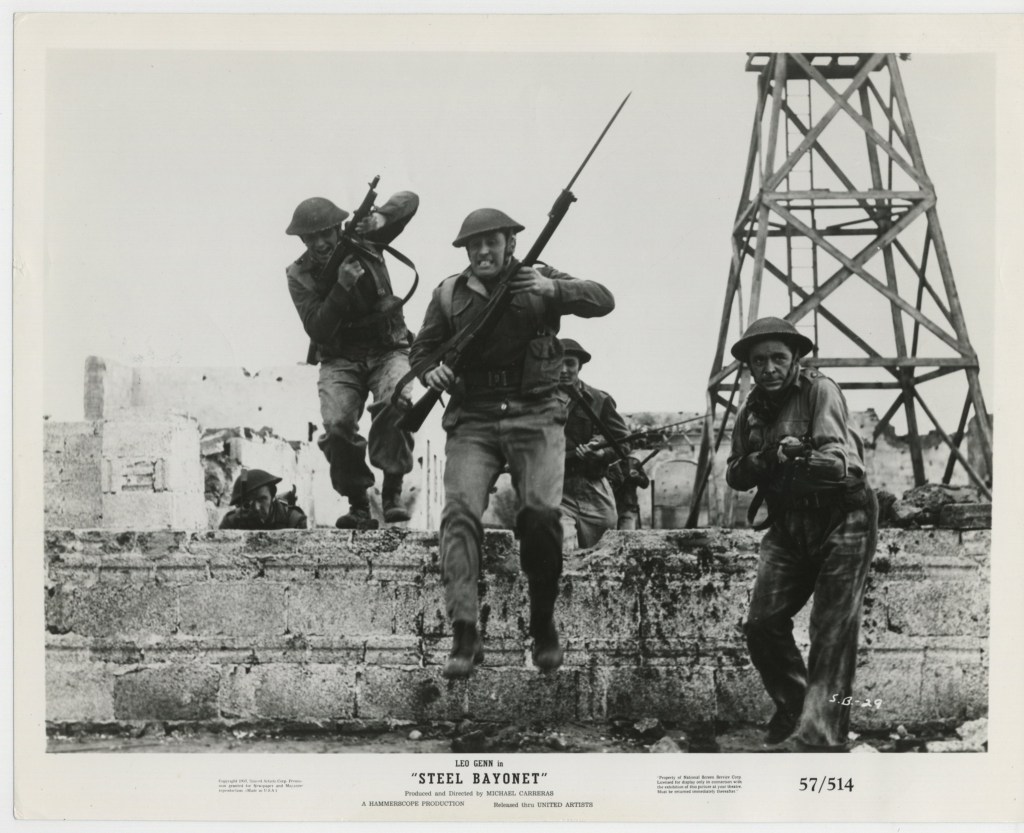
Displeased with Vernon’s handling of the situation, Gerard grabs a machine gun and dispatches the sniper himself. This angers Vernon, who demands to be transferred to another. Gerard brushes that aside noting they may not survive the next few hours. Because the Germans now know the British position, Mead can only enter and leave the windmill tower under cover of the night.
However, the next day, Mead unknowingly spills the water from his canteen. Attempting to survive the heat of the North African sun without water proves futile; Mead soon succumbs to delirium from sunstroke. That night, Gerard goes up the tower and rescues Mead. As he regains his wits, Mead, Vernon and Gerard discusses their situation. In preparation for a ground assault Gerard anticipates will come in the morning, Vernon leads a squad to lay anti-tank mines in the approaches to the farmhouse.
As sunrise nears, Mead returns to the observation tower. As expected the German attack begins; first with a heavy artillery barrage, then followed by an infantry advance. Mead fulfills his role as a gunnery spotter relaying the German positions via his radio training withering British fire onto the advancing infantry and tanks.
Meanwhile, Vernon and his sergeant major neutralize a German machine gun position with a grenade, but despite this, the Germans have the British outnumbered and outflanked. Mead continues to direct the British guns with devastating effect continue their attack on different flanks. However, Mead is able to direct British fire onto the enemy, until the Germans determine the British artillery is being directed from the windmill.
Knowing the situation is now dire, Gerard orders his men to retreat. The few survivors of “C” Company escape on a troop carrier, except for Mead who is trapped in the tower by enemy fire. Gerard goes to the windmill to attempt a rescue of Mead, but discovers he is too late.
Having traversed the anti-tank mines, the German are now overrunning the farm. In the destruction, Gerard is trapped under a falling wall. Even though he is badly injured, Gerard reaches Mead’s radio which fell from the tower to direct an artillery barrage directly on his position.
Unaware of Gerard’s presence, as the German commander surveys the battlefield; he and the remaining Germans are obliterated in the artillery fire. The survivors of “C” Company witness the complete destruction of the farmhouse from their escaping troop carrier. However, the stand at the farmhouse greatly aids in the Allied struggle as Tunisia falls to them 3 days later, which effectively dooms the Afrika Korps.
The Hidden Sports Analogy:
While the nature of warfare may have changed somewhat since the end of the Second World War, there are some who say the way baseball is played is definitely not the same. To be sure, “America’s Past-Time” has seen many changes in recent years; but as the old saying goes, the more things change, the more they stay the same.
If you hadn’t guessed, that’s the theme of today’s hidden sports analogy. Baseball has very much changed in terms of how pitchers are used in games. For example, In Babe Ruth’s day, relief pitchers were not used nearly as much as they are today; what was once the norm of a starting pitcher going all nine innings is now the exception. I’m not going to get into the to “pros and cons” of the pitch clock; it’s very existence is yet another of those changes.
But one thing that hasn’t changed is when a manager is in a tightly-contested play-off series and he has a dominant “ace” in his rotation of starting pitchers, he might just ignore the usual conventions of how many days rest pitchers get in between starts. Obviously, there’s a difference in degree, but the common thread shared by combat soldiers and pitchers is both experience physical ordeals which require recuperative times between battles/games. Also in both, there are times when commanders/managers have to ignore normal rules for rest for soldiers/players because the battle/game they are facing is the proverbial “must win situation.”
That’s exactly where Major Gerard and “C” Company found themselves in The Steel Bayonet. Likewise, here’s nine of my more memorable examples of baseball managers in the World Series channeling their inner-Major Gerard sending pitchers in need of rest back onto the field…and their “C” Company-like heroics.
9) 1988 World Series: Los Angeles Dodgers vs. Oakland Athletics
- “C Company” Pitcher: Orel Hershiser
- “Major Gerard” Manager: Tommy Lasorda
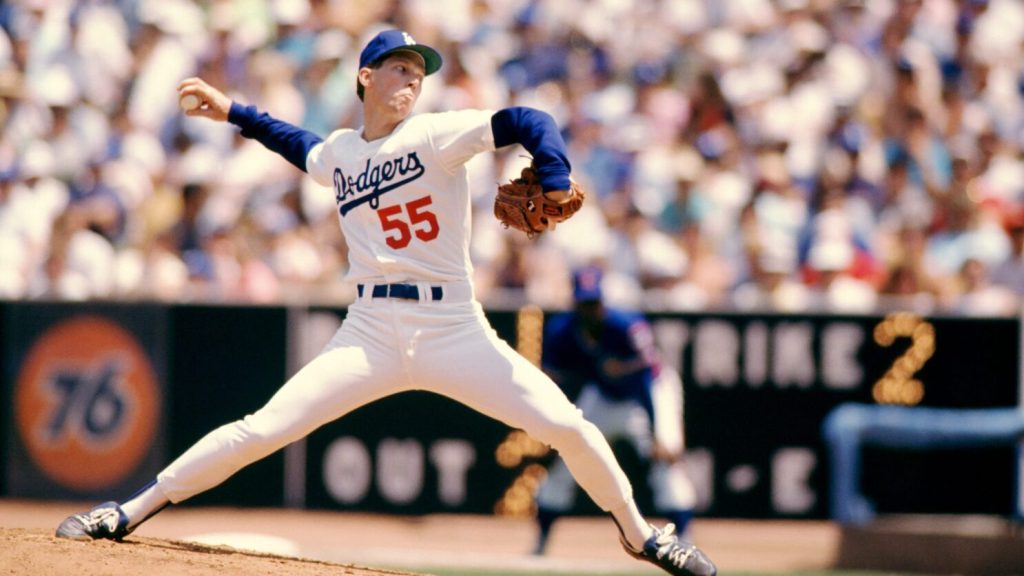
For purposes of full disclosure, I hate the Los Angeles Dodgers more than parking tickets and stubbing my toe combined. But I also believe in giving credit where credit is due. Hershiser didn’t get the chance to pitch in three World Series games in 1988, largely because there was no need. Between his complete game shutout in Game Two, and his series-clinching, two-run stifling of Oakland in Game Five, the Athletics really offered little more than token resistance.
Even though he was named the Most Valuable Player in the the National League Championship Series and the World Series and was easily one of the main reasons behind the Dodgers’ championship, the only thing most people remember from this series is the darkest moment ever for thru Dodger haters.
8 ) 1905 World Series: New York Giants vs. Philadelphia Athletics
- “C Company” Pitcher: Christy Mathewson
- “Major Gerard” Manager: John McGraw

When we speak of “change” in baseball, this is the classic example of something we will never see again. The New York Giants won this series 4-1, and Mathewson accounted personally for three of those wins. He tossed shutouts in Games 1, 3, and 5. Not only that, but he outdueled fellow future Hall of Famers Eddie Plank in Game 1 and Chief Bender in Game 5. As far as the “no rest” thing goes, Mathewson pitched Game 3 on 2 days rest and Game 5 on just a single day off.
7) 2001 World Series: Arizona Diamondbacks vs New York Yankees
- “C Company” Pitcher: Randy Johnson
- “Major Gerard” Manager: Bob Brenly

In two starts against the Yankees, Johnson gave up a total of two runs. After he kept the Diamondbacks alive with his win in Game 6, he returned the next night to deliver a scoreless relief appearance to nail down the series win for Arizona.
Despite the fact his 4,875 strike-outs arguably makes Johnson the most-dominant leftie pitcher in the history of the game, he’ll always be remembered as the guy who exploded a bird. By the way, keep an eye on the catcher’s reaction…
6) 1965 World Series: Los Angeles Dodgers vs Minnesota Twins
- “C Company” Pitcher: Sandy Koufax
- “Major Gerard” Manager: Walter Alston
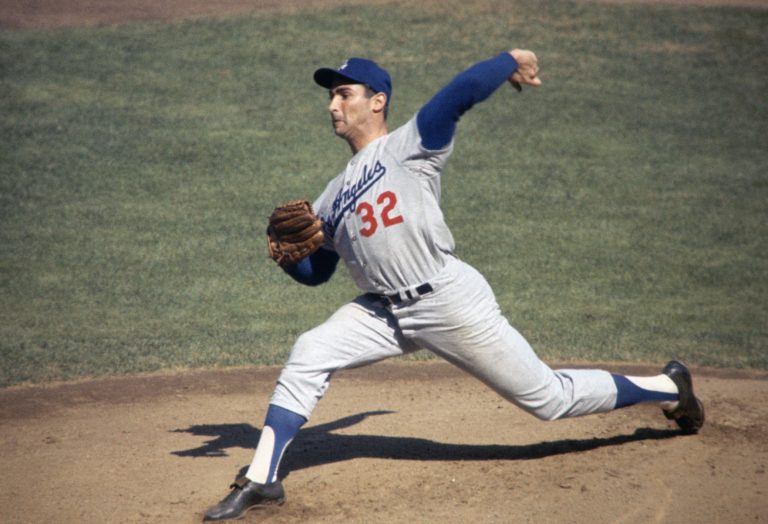
Koufax faced fellow future Hall of Famer Jim Kaat in all three of his starts in this series. He took a “hard luck” loss in Game Two despite the fact he only surrendered a single earned run. He followed that with back-to-back shutouts in Games 5 and 7, notching ten strikeouts 10 in each and having only two days rest before the deciding Game 7.
5) 1968 World Series: Detroit Tigers vs St. Louis Cardinals
- “C” Company Pitcher: Mickey Lolich
- “Major Gerard” Manager: Mayo Smith
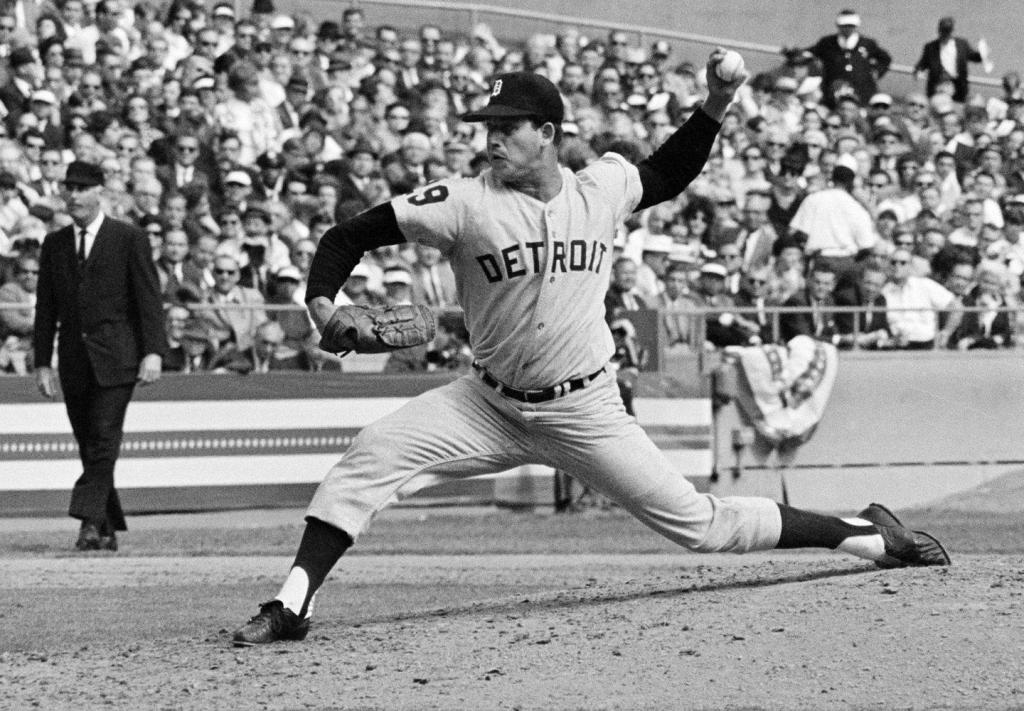
If there were a Hall of Fame for guys who were pretty damn good, but got overshadowed by “stars” of the era, it would never be complete without Mickey Lolich. Entering the 1968 World Series, it looked to be a battle between the Scylla and Charybdis of 1968 pitching, St. Louis’ Bob Gibson and Detroit’s Denny McClain. That was the year Gibson had an earned run average so miniscule they lowered the pitcher’s mound, and McClain became the last major leaguer to notch thirty wins in a season. Both were coronated as their respective league’s Cy Young winners and Most Valuable Players. But when the series was over, it was Lolich who wore that crown.
McClain lost his Game 1 and Game 4 starts to Gibson, while Lolich earned wins in Games 2 and 5. McClain pitched Game 6 on short rest. Detroit’s win set up the series deciding Game 7; a match-up between Lolich (also on short rest) and Bob Gibson. Lolich only gave up one hit in that game, and even though it was a solo homer, it wasn’t enough to get St. Louis past Detroit.
4) 1967 World Series: St. Louis Cardinals vs Boston Red Sox– Bob Gibson
- “C” Company Pitcher: Bob Gibson
- “Major Gerard” Manager: Red Schoendienst
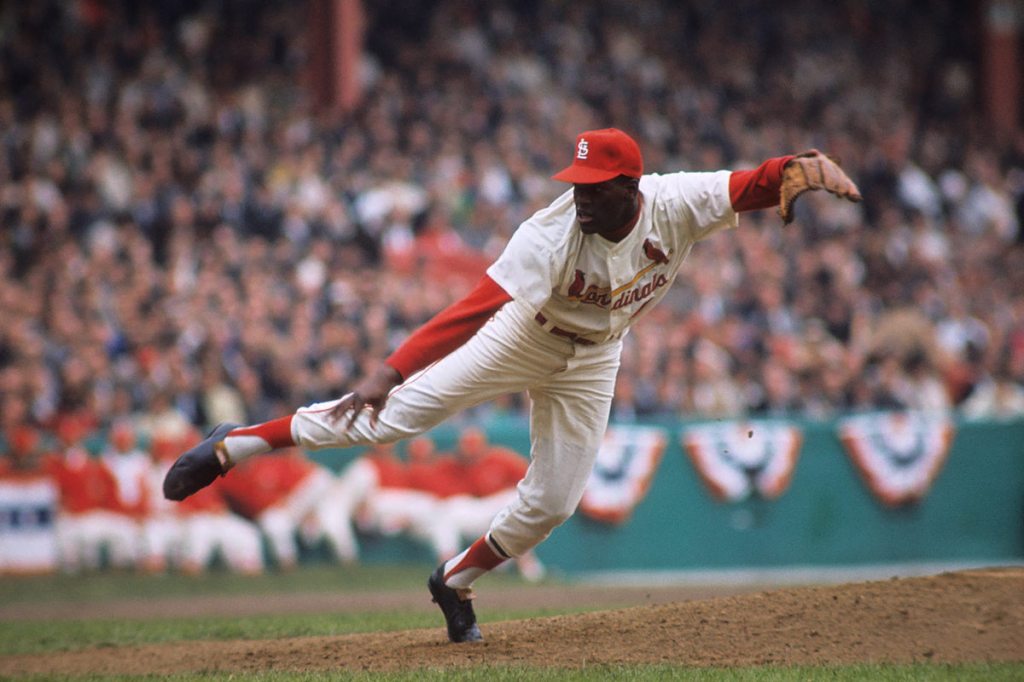
Speaking of Bob Gibson, he easily could have been mentioned here for the 1968 World Series. You could say the same for1964 and 1967 as well. The latter is what stands out here; Gibson dominated while going the “old school short rest” rotation. Not only did he go the full route in Games 1, 4, and 7, he pitched a shut-out in Game 4, and slugged a home run in the deciding Game 7. By the way, he posted an Earned Run Average of 1.00.
2) 2014 World Series: San Francisco Giants vs Kansas City Royals
- “C” Company Pitcher: Madison Bumgarner
- “Major Gerard” Manager: Bruce Bochy

The San Francisco Giants were one of baseball’s great dynasties when the won three World Series titles between 2010 and 2014. Bumgarner was a key component to the Giants’ success in this era, but it was 2014 when he became the star of the show.
Bumgarner rolled onto the World Series having just won the National League Championship Series Most Valuable Player award. He retained that form leading the Giants to a victory in Game 1. Bumgarner followed that with a 117-pitch, 4-hit shutout in Game 5. But it was his 5-inning relief performance only three days later during Game 7 which nailed down the Giants’ third championship in five years.
It’s really a shame we’re only talking about World Series performances on this list, because during that entire play-off run, Bumgarner posted four wins, one loss, and a save. In fact, the argument can be made that with this post-season performance, he is amongst the most elite pitchers ever in World Series play with a 4-0 record and a 0.25 Earned run Average.
2) 1991 World Series: Minnesota Twins vs. Atlanta Braves
- “C” Company Pitcher: Jack Morris
- “Major Gerard” Manager: Tom Kelly
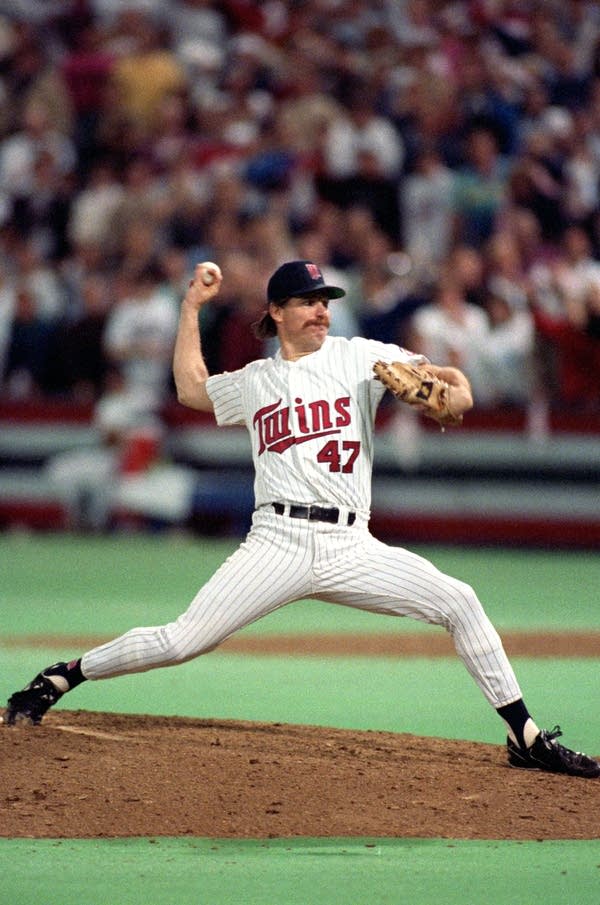
Here’s another guy who did the “old school short rest” rotation. Morris wore down the Braves in Game 1, but has a “no decision” in Game 4. But what stands out here is his 10-inning shut-out performance in Game 7…which may very well be the greatest single-game outing in World Series history. That along with his 1.17 Earned Run Average earned him the World Series Most Valuable Player award.
1) 1957 World Series: Milwaukee Braves vs. New York Yankees
- “C” Company Pitcher: Lew Burdette
- “Major Gerard” Manager: Fred Haney
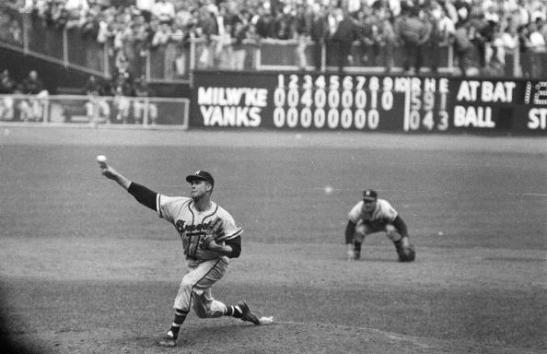
Move over Mickey Lolich…there’s another guy whose earned a spot in that “overshadowed ” hall of fame. There was such a prevailing view of the Boston Braves’ dependence on their two star pitchers Warren Spahn and Johnny Sain, there was a rhyme about it. “Spahn and Sain, then pray for rain” was how it went. But by the time the Braves moved to Milwaukee, Johnny Sain was long gone.
Lew Burdette stepped into that breach. In this series, Burdette simply put the clamps on the mighty Yankees of the 1950s. He only gave up a single run in both the second and third innings of his start in Game 2, then threw 24 scoreless innings, making all three of his starts complete game wins; Games 5 and 7 being shutouts to give the Braves their only championship during their years in Wisconsin.
The Moral of the Story: There’s a reason why war movies make for some of the best sports analogies.
Got a question, comment, or just want to yell at us? Hit us up at dubsism@yahoo.com, @Dubsism on Twitter, or on our Pinterest, Tumblr, BlueSky, Truth Social, Instagram, or Facebook pages, and be sure to bookmark Dubsism.com so you don’t miss anything from the most interesting independent sports blog on the web.

 Dubsism
I often reminisce about the pitchers from my past who went all nine innings. Great to see some of those guys highlighted here.
LikeLike
Not to mention “Doc” Halladay from the Phillies not that long ago…
LikeLiked by 1 person
Thanks for adding this well researched post to our blogathon… I am doubly impressed with the ease in which you blended the film with sport. Thanks for joining.
LikeLiked by 1 person
[…] at Dubsism tells us exactly what The Steel Bayonet (1957) has in common with sport and a lot […]
LikeLike
I’m a sucker for a war picture like The Steel Bayonet, and was interested to see that, in addition to the great cast, it was directed by Michael Carreras, who also directed my pick for the blogathon, The Lost Continent. There’s a colorized version of it on Youtube, or should I hold out for a decent copy of the unadulterated black and white original?
I especially appreciate that you included my two all-time favorite World Series, the 1968 Tigers vs. Cardinals and the 2001 Diamondbacks vs. Yankees, both extremely satisfying in their results (at least to me).
LikeLiked by 1 person
Well, those were two pretty damn good series. I’ve often wondered why during all the squawking about “the shift” in baseball, nobody ever mentioned that was exactly why the Yankees lost Game 7 in 2001. Luis Gonzalez’ little blooper landed right where Derek Jeter should have been. Just sayin’…
LikeLike