
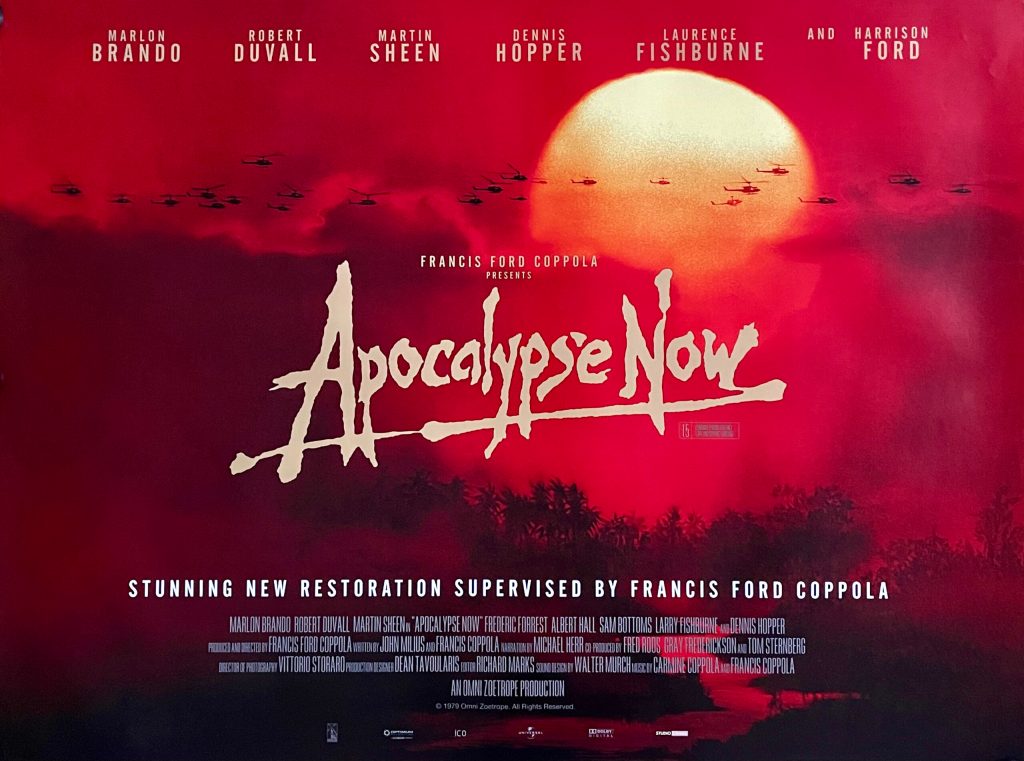
- Today’s Movie: Apocalypse Now
- Year of Release: 1979
- Stars: Matin Sheen, Marlon Brando, Robert Duvall
- Director: Francis Ford Coppola
This movie is on my list of essential films.
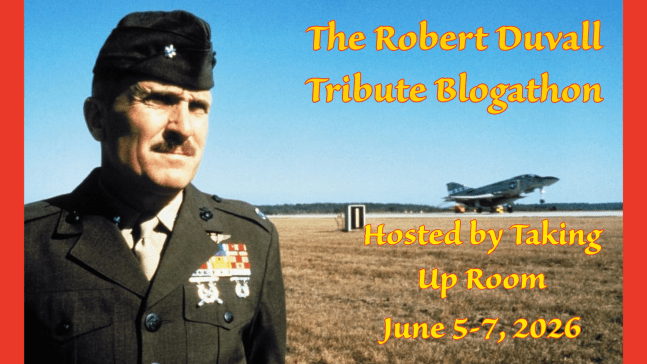
This installment of Sports Analogies Hidden In Classic Movies is brought to you as a contribution to The Robert Duvall Tribute Blog-a-Thon being hosted by Taking Up Room. Not only was I eager to join this event, but since I didn’t want to duplicate myself, I had to take stock as to how many Duvall films have already graced this electronic screed.
- Captain Newman M.D.
- The Conversation
- The Godfather
- The Godfather II
- The Great Santini (because I was the version of The Great Santini who was terrified to end up as Ted Stryker from Airplane!)
- Network
Today, Apocalypse Now joins the list.
You can see all the other contributions to this blog-a-thon here:
The Story:
Apocalypse Now is set at the height of the insanity that was the Vietnam War; the film entire’s raison d’être is an exploration of the human psyche as told by moral ruminations of the main character, U.S. Army special operations Captain Benjamin Willard (played by Martin Sheen). The film opens with Willard in a dingy Saigon hotel room supposedly recovering from recent action. In fact, he’s drinking heavily and breaking the furniture.
After being summoned, Willard appears before Lieutenant General Corman (played by G. D. Spradlin) and Colonel Lucas (played by Harrison Ford). They give Willard a mission that “does not exist…nor will it ever exist.” He is to proceed up the Nùng River in a Navy PBR Boat in eastern Cambodia to find the enclave of a renegade U.S. Army Special Forces U.S. Army Special Forces Colonel Walter Kurtz (played by Marlon Brando).
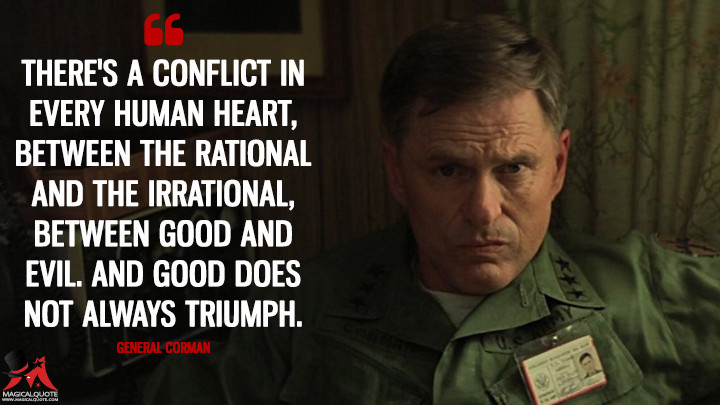
Kurtz was originally assigned to clear an area of remote jungle near the border of enemy guerilla activity being carried out by the North Vietnamese Army (NVA), Viet Cong, and Khmer Rouge forces. To accomplish this, Kurtz assembled a guerilla force of his own comprised of American special forces, Montagnard villagers, and anti-communist Khmer militia. Kurtz’ troops enjoyed initial success, but then found themselves under constant ambush attacks. When Kurtz suspected four South Vietnamese intelligence officials of being double-agents, he ordered their assassination without getting clearance.
Despite the fact after the killings enemy activity dropped off to nothing and the four were found in fact to be double agents, Kurtz was charged with murder for not obtaining authorization for action against officials of an allied country. As a result, Kurtz went “rogue” taking his forces into Cambodia beyond the reach of military justice. Previously, Kurtz sent a report to the Pentagon which was immediately deemed “Classified” because command did not like what it said. Intelligence reports furthered the idea Kurtz had lost his mind; his jungle outpost in Cambodia has become a cult-like enclave where Kurtz is worshipped as a god.
Willard’s mission: locate the Colonel and “terminate Kurtz’s command… with extreme prejudice.”
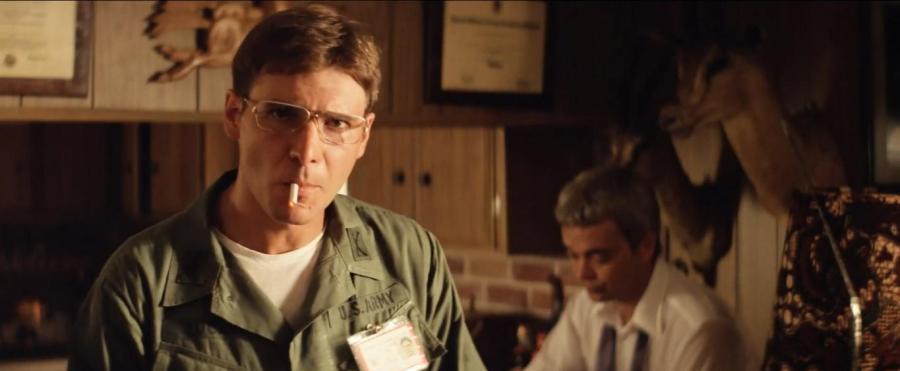
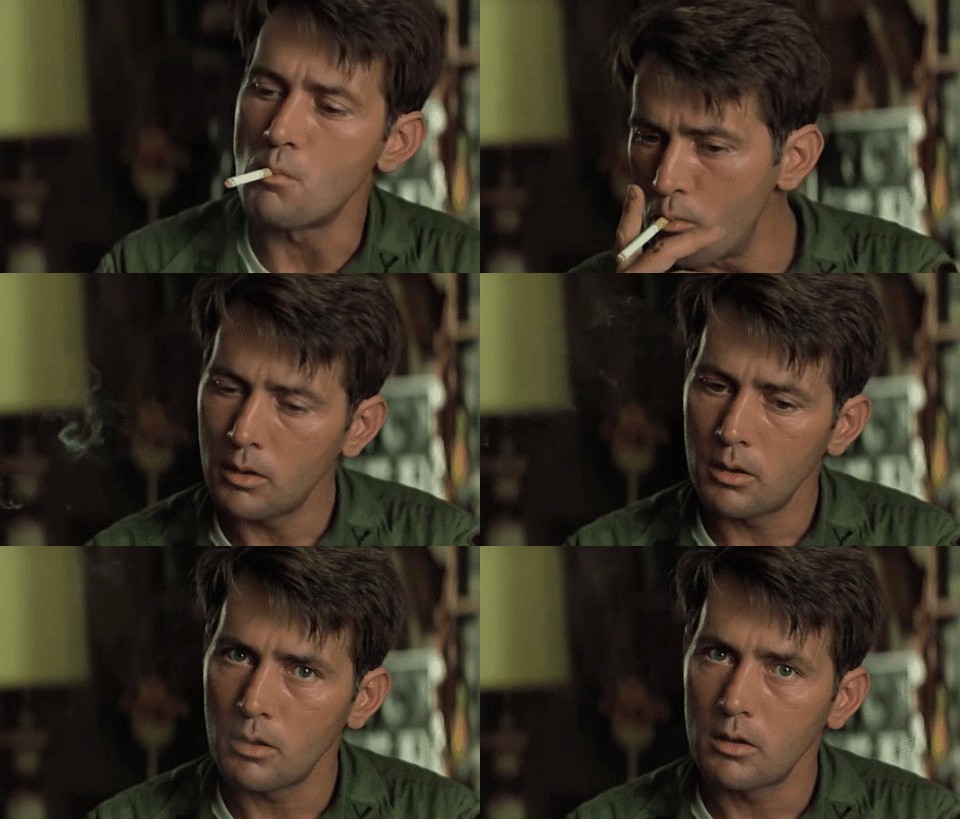
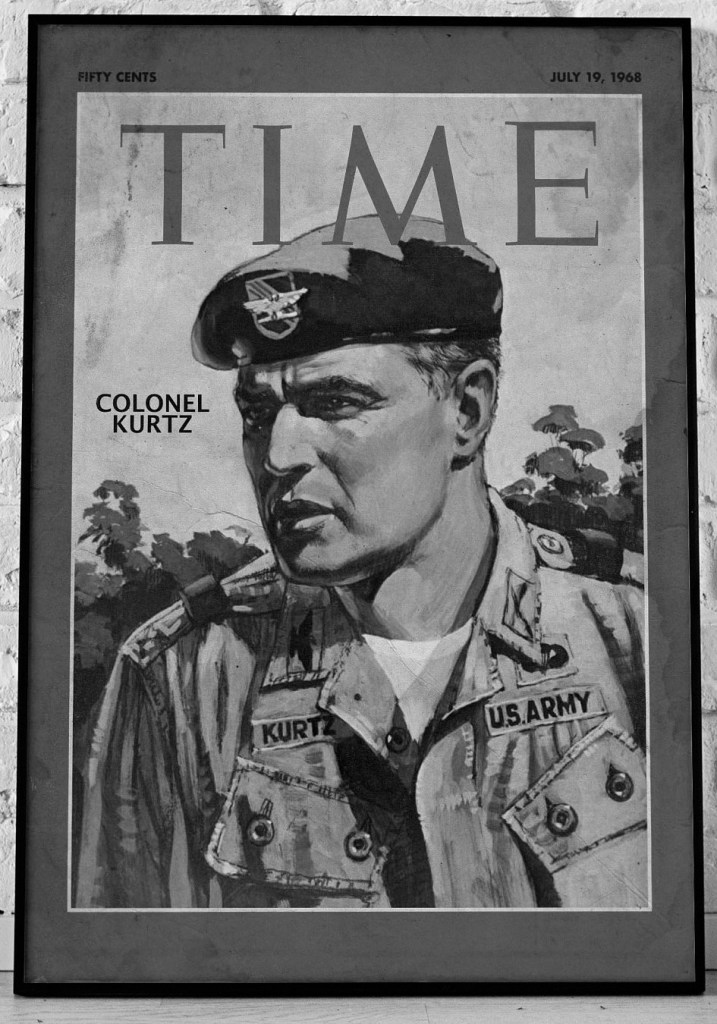
Upon accepting the mission, Willard reads the file on Kurtz. He learns Kurtz was seen as top soldier, a “model” officer, and a possible future general. Willard is impressed by the fact Kurtz walked away from this status, turning down a prestigious Pentagon assignment grooming him for command. Instead, when Kurtz returned from a tour of duty in South Vietnam in 1964, he requested to join Special Forces…meaning he would never be promoted past Colonel. Willard also noted the feat of Kurtz’ completion of Airborne training at 38 years old, saying “it almost killed me, and I was only 19.”
Willard also was struck by the fact through other tours of duty in Vietnam, Kurtz was establishing the pattern of gaining victories of over the NVA and Viet Cong, but doing so with tactics which drew disapproval from his superiors.
Willard meets the Navy PBR boat and its crew consisting of “Chief” Phillips (played by Albert Hall) and crewmen Lance “Surfer” Johnson (played by Sam Bottoms), Jay “Chef” Hicks (played by Frederic Forrest), and Tyrone “Mr. Clean” Miller (played by Laurence Fishburne). Because the mouth of the Nùng River is a known enemy stronghold, Willard, the crew and the boat must be escorted by the 9th Cavalry Regiment.
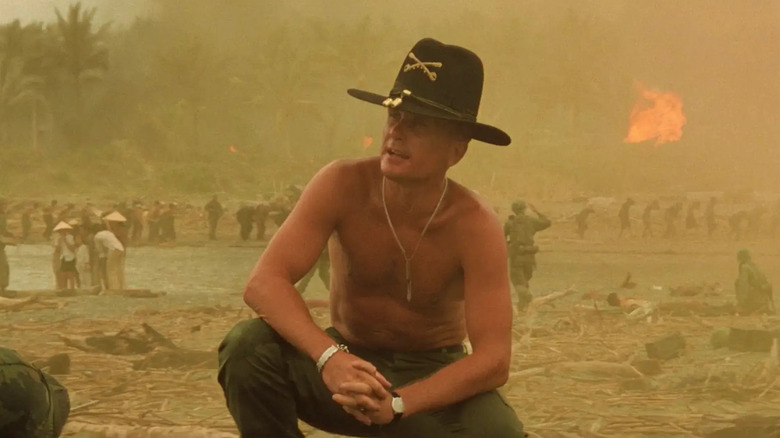
At first, the usually bold regimental commander Lieutenant Colonel Bill Kilgore (played by Robert Duvall), is dismissive of Willard as he has not been given orders concerning this mission. However, when avid surfer Kilgore discovers Lance’s background and that the mouth of the Nùng River is prime surfing territory, he complies with Willard. After the enemy village is set ablaze in a massive napalm strike set to the strains of Wagner’s Ride of the Valkyries, Kilgore’s helicopters drop the PBR in the river while some of his men surf off the newly-conquered beach which is still drawing enemy fire.
While Willard and the sailors make their way upriver, Willard and the Chief clash over the mission. Willard tells him the mission is classified, but reveals what he can to the Chief to convince him of it’s importance. However, the tension between the two only increases when Willard insists on his mission taking priority over the Chief’s patrol objectives. This is brought to the forefront when the crew boards a civilian sampan suspected of smuggling contraband. During their search, Mr. Clean snaps and opens fire with the PBR’s .50-caliber machine gun, and to prevent his mission from being delayed, Willard cold-bloodedly kills an injured survivor.
Further up the river at a remote U.S. Army outpost, Willard and Mr. Clean try to get information on lies ahead on the river. When they can’t find the commanding officer, Willard orders the Chief to continue upriver. This is when Willard learns the missing commanding officer Lieutenant Colby (played by Scott Glenn) was sent on the same mission as Willard. The Army intercepted a letter Colby sent a letter to wife telling her to give up any hope of his return. Due to the disturbing nature of the letter, the Army told his family he was missing in action without the details.
Things get hotter the further up the Nùng River they sail. First, they draw gun fire from an unseen enemy in the trees. Mr. Clean is killed in this attack and the loss of his crewman cements the Chief’s hostility hostile toward Willard. Later, they are ambushed again, this time by local tribesmen armed with spears, blowguns, and bows and arrows. Chief is impaled with a spear, who then tries to kill Willard by pulling him onto it’s head protruding from his chest.
After the attack, Willard confides in Chef and Lance as to the nature of his mission. They reluctantly agree to continue upriver; those trepidations are only magnified as they approach Kurtz’ compound and the the riverbanks are lined with hanging corpses. The scene only intensifies when the finally reach the compound, a Khmer temple teeming with Montagnards, American Green Berets, and a landscape strewn with human remains. Willard and Lance disembark to go into village, leaving Chef on the PBR with orders to call in an airstrike if they do not return.
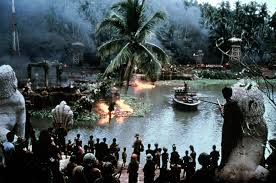
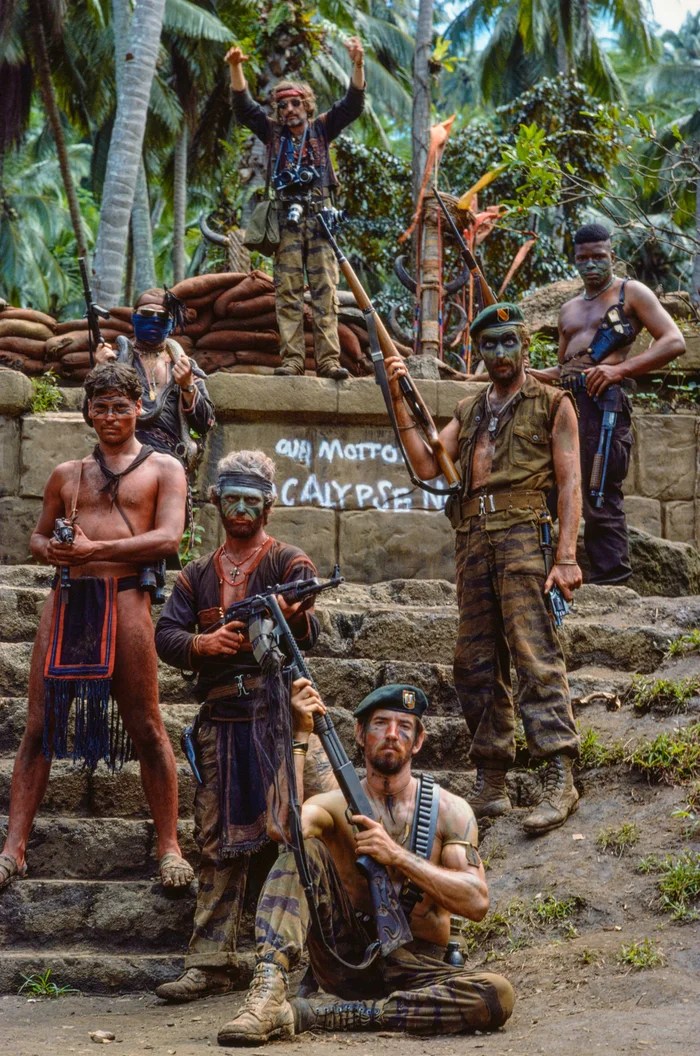
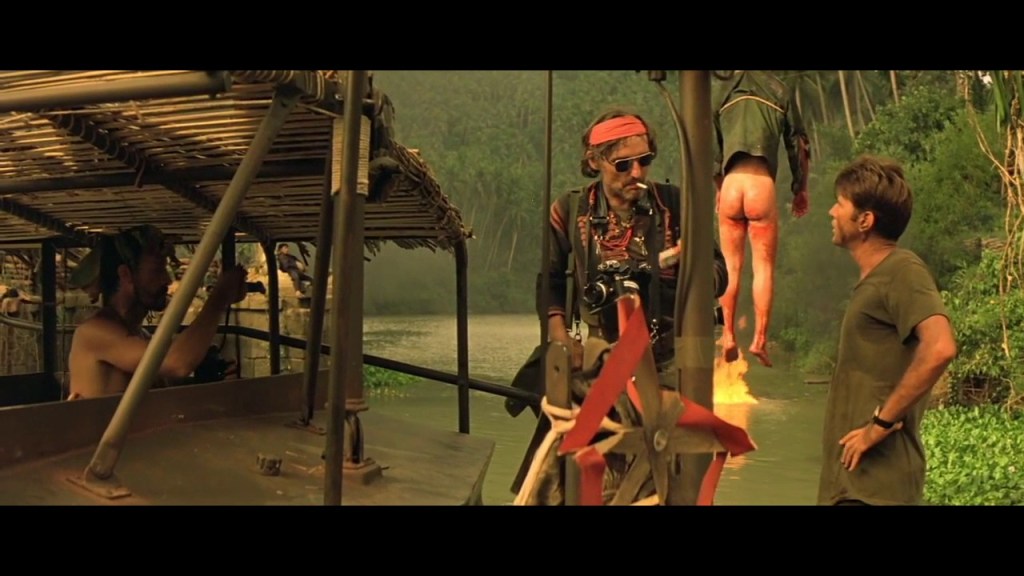
Willard and Lance are greeted by a maniacal freelance photographer (played by Dennis Hopper). On their way to an audience with Kurtz, the photographer explains that Kurtz mesmerizes his followers with “his great philosophical skills,” but as they proceed they see more bodies and severed heads used as decoration. Willard and Lance also encounter the missing (and nearly catatonic) Lieutenant Colby.
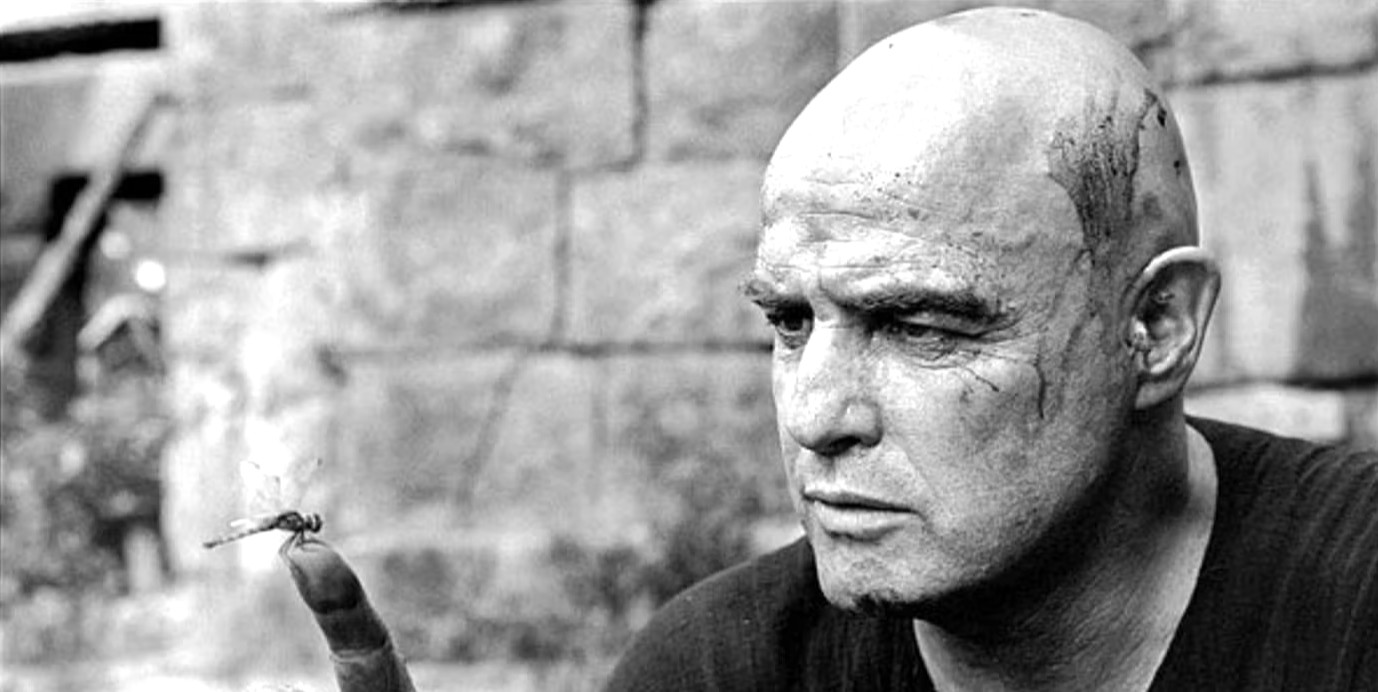
Willard is brought before Kurtz in the darkened Khmer temple. Kurtz dismisses Willard as an “errand boy,” but has him locked in a bamboo cage. Back at the boat, Chef calls in the airstrike; afterward he is captured by Kurtz’ men. Before the viewer even has a chance to ponder Chef’s fate, Kurtz drops his severed head into Willard’s lap.
Later, Kurtz releases Willard is released and gives him freedom to roam the compound. All the while, Kurtz lectures Willard on various theories of war, humanity, and civilization in general. The most noteworthy takes us into the mid of Colonel Kurtz; specifically how he reached his breaking point. While Kurtz was praising the ruthlessness and dedication of the Viet Cong, he tells Willard a story about leading a mission to vaccinate all the children in a Montagnard village. After completing their mission Kurtz and his men were called back to the village only to discover the Viet Cong had hacked off every vaccinated child’s arm. Kurtz goes on to say that if he had enough men “with the pure crystalline will” to commit such horrors, he could single-handedly end the war.
That night as the villagers ceremonially slaughter a water buffalo, Willard enters Kurtz’s chamber and motally wounds him with a machete. Kurtz utters his final words “The horror … the horror” as Willard descends the stairs. With Kurtz dead, the villagers allow Willard to take Lance back to the PBR. As they are leaving, the air strike on the village begins as Kurtz’s final words echo.
The Hidden Sports Analogy:
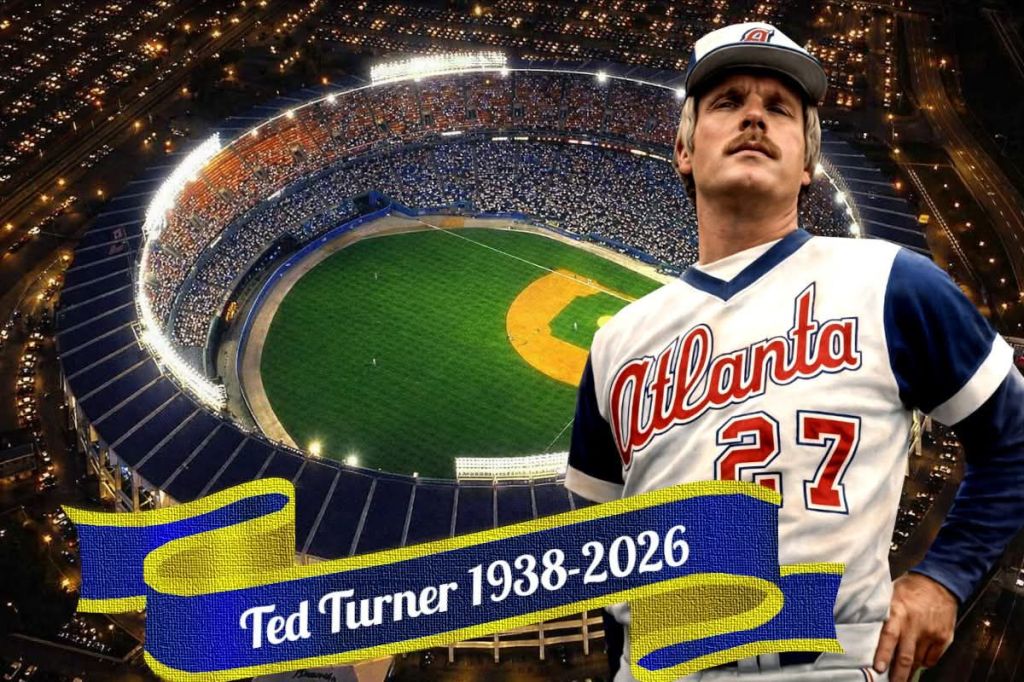
If you saw the excerpt on your way here, you already know Ted Turner represents today’s hidden sports analogy. But before we get into the reasons, I would remiss without noting Turner’s recent passing. As you continue, you’ll see that no matter what your opinion of the man may have been, there’s no debating he was the definition of a “maverick.”
In the film Apocalypse Now, as Captain Willard is reading the dossier on Colonel Kurtz, as he’s noting his exploits the Captain mutters “no wonder he put a weed up command’s ass.” That’s just a way of saying Kurtz got results and didn’t care about stepping on toes. That line could also be used to describe Ted Turner, the “Colonel Kurtz” of sports, broadcasting, and pretty much any venture involving him.
The man put a forest of weeds up a city’s worth of asses.
Now…let’s see why…
Ted Turner: The Beginnings
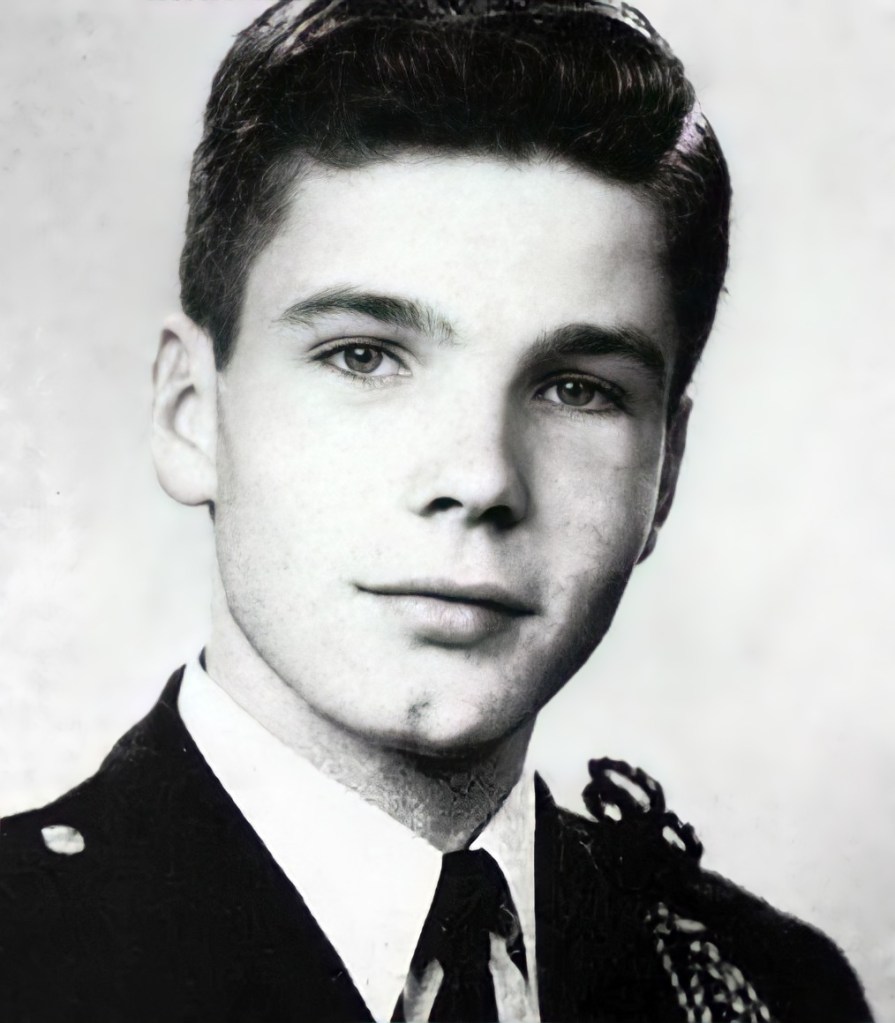
Robert Edward “Ted” Turner III was born on November 19, 1938, in Cincinnati, Ohio; the son of billboard magnate Robert Edward Turner II. He went to the sort of schools would would expect for a guy with a “III” after his name, namely a private boys’ preparatory school followed by the Ivy covered halls of Brown University.
During his collegiate days, Turner was vice-president of the Brown Debating Union, captain of the sailing team, and a a member of Kappa Sigma. He also served in the United States Coast Guard Reserve. But during his third year, Turner got the boot from Brown for having a woman in his dorm room.
By 1963, Turner was running the family billboard business. In no time, Turner Advertising Company became a global enterprise.
Ted Turner: The Broadcaster
Turner’s first foray outside of outdoor advertising also showed his knack for business. Turner purchased a financially troubled UHF television station in Atlanta in 1970, and within three years he made it one of the few truly profitable independent operators in the United States.
He took it to the next level in 1975 when his station became one of the first to broadcast via satellite. This meant his newly re-named WTBS (the call sign for Turner Broadcasting System) could be seen in homes nationwide thanks to the birth of cable television. Naturally, once a forward-thinking guy who made his fortune in advertising saw the vast untapped potential of the cable TV audience, there was no way Turner wasn’t going to find a way to profit from it.

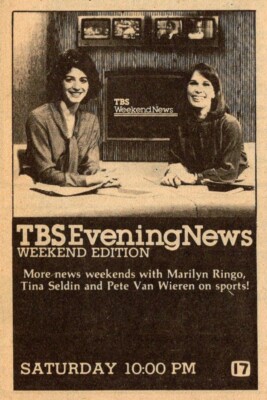
The problem was at first cable didn’t didn’t give people a reason to watch. Turner’s WTBS was one of a handful of independent “super stations” available on cable, they were little more than local news, old movies, and various syndicated programming. Turner knew he had to draw an audience in order to sell advertising, so Turner did two things that really started putting weeds up the nether regions of the established “network” broadcasters.
Turner described the networks as “oppressive scoundrels;” decrying their “stranglehold” on the American television market. To begin drawing his audience to cable, Turner deliberately broke the broadcast networks monopoly in two areas…sports and news.
Later on, we’ll discuss the sports angle. But the first thing Turner did to give WTBS national appeal was to turn it’s evening local news show into a national broadcast. Turner drew a such a sizeable viewership with his news offering, he was inspired to create Cable News Network (CNN) in 1980.
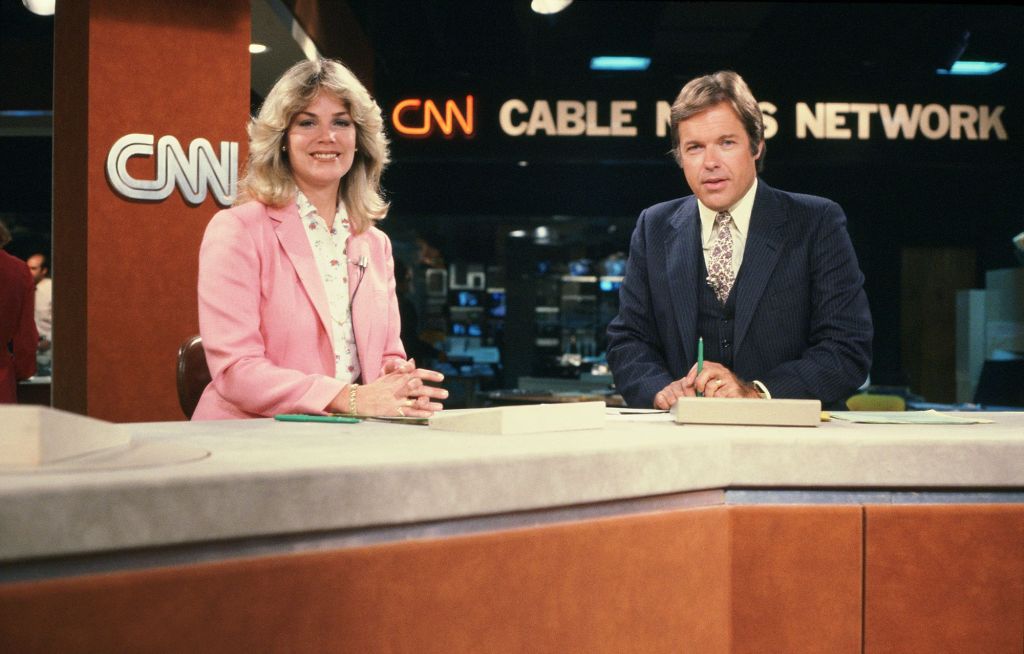
From there, Turner continued to grow Turner Broadcasting System, Inc., into a media leviathan.
- 1986: Turner buys MGM/UA Entertainment Company (including Metro-Goldwyn-Mayer’s entire film library)
- 1988: Creates Turner Network Television (TNT)
- 1992: Creates The Cartoon Network
- 1993: Acquires New Line Cinema and Castle Rock Entertainment
- 1994: Creates Turner Classic Movies (TCM)
- 1996: Sells Turner Broadcasting System, Inc., to Time Warner Inc. for $7.5 billion and becomes vice-chairman of the newly-merged company’s cable television networks.
- 2001: Time Warner merges with internet company America On-Line (AOL); Turner is named vice-chairman and senior adviser of the new AOL Time Warner, Inc.
Slate magazine once referred to Ted Turner as the “the Alexander the Great of broadcasting.” Feel free to debate the historical merits of that comparison to your hearts’ content; just know that Orson Welles may not agree.
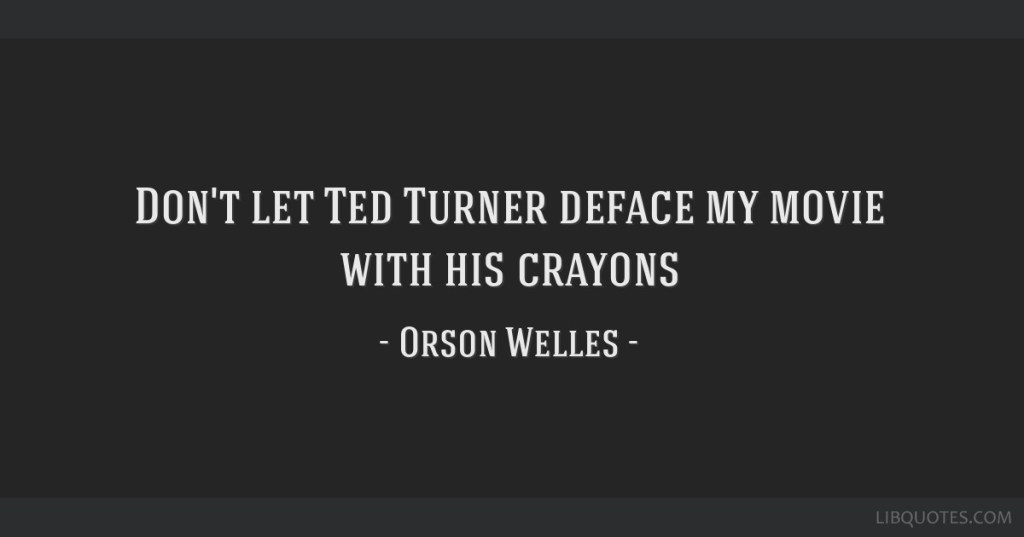
In the weed most familiar to this blog’s classic film fans, Welles took great offense to another Turner idea. In another example of being ahead of his time, Turner ignited a firestorm when he “colorized” some black-and-white films. The technology of the time didn’t allow for Turner’s concept to be practically realized; his colorization process came off as visually unappealing (to say the least). But don’t worry, I’m sure there will be another atrocity done to classic films with artificial intelligence…
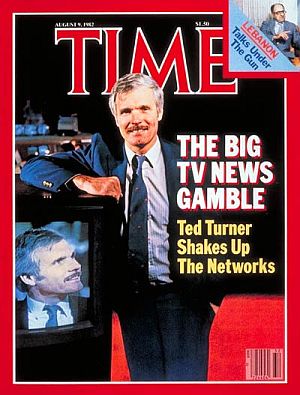
In any event, the model Turner used to create his media empire sent the cable industry into full bloom in the 1980s; over a dozen cable networks were founded based on it. Many became pillars of cable TV, including ESPN, MTV, and the Discovery Channel.
Ted Turner: The Baseball Owner
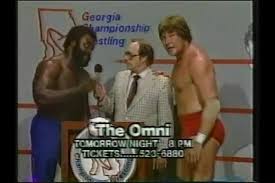
The first sports content Turner aired on WTBS was Georgia Championship Wrestling. By airing this localized Georgia product, Turner took the regional nature of professional wrestling and launched it across America. This laid the foundation for wrestling to become the phenomena as we know it today.
Because wrestling drew massive audiences, Turner wanted to expand WTBS’ sports content.
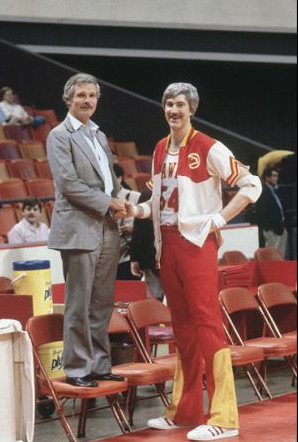
Despite the fact that Turner had been the owner of the National Basketball Association’s (NBA) Atlanta Hawks since 1977, there was a litany of contractual issues that precluded him from airing their games on his station.
But Turner also happened to own baseball’s Major League Baseball’s (MLB) Atlanta Braves. Turner also already had the broadcast rights when he originally purchased WTCG (now WTBS) in 1973. The problem was when Turner bought the Braves in 1976, they were a perennial cellar-dweller and the face of the franchise Hank Aaron was long gone. As such, Turner immediately began investing in the team to make it relevant to the national audience via WTBS.
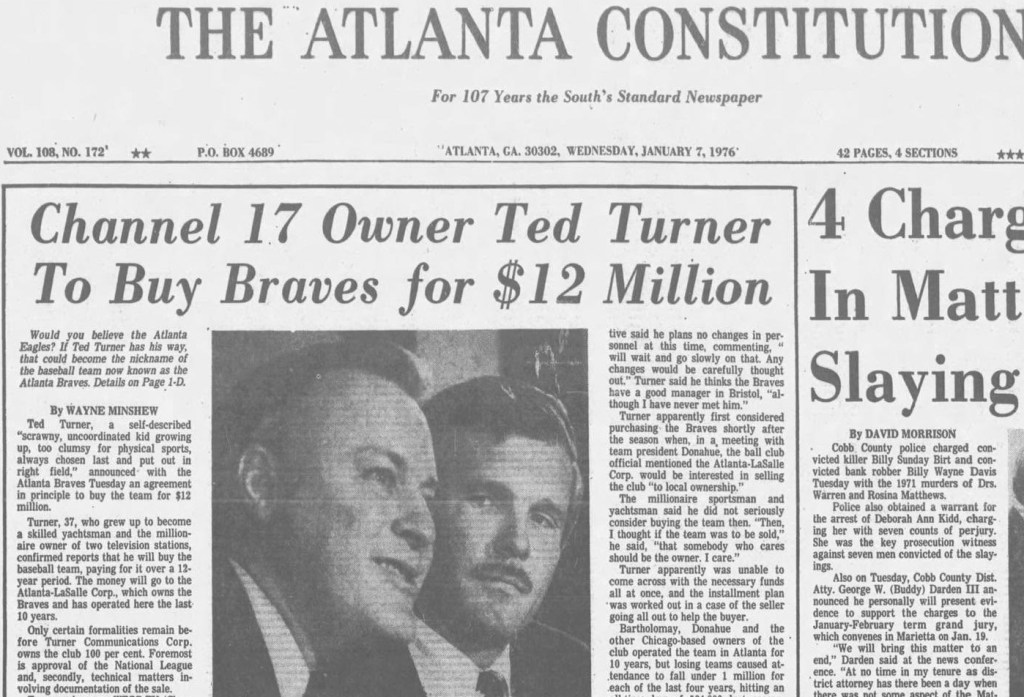
Turner’s maverick ways immediately clashed with the old-guard ways of major league baseball. Sometimes, “maverick” meant “broke the rules;” in this case when it came to the “do’s and don’t’s” of free agency. As was his nature, Turner was not willing to be patient while the Braves developed players, so he started spending freely to acquire the best players available in the free-agent market.
Turner’s free spending put a giant green weed up most of the other owner’s as he represented the very reason they were against free-agency; they feared escalating player salaries were going to bankrupt them. But Turner had more money than most of them…and he wasn’t afraid to spend it.
Here, the problem was there are rules dictating when players can become free-agents; likewise there are restrictions regarding when owners can make offers to free-agents. Turner ran afoul of this when he offered San Francisco Giants’ outfielder Gary Matthews a million-dollar-plus contract before he was officially a free-agent. Per the rules of baseball, that’s called “tampering,” and it earned Turner a one-year suspension.
This was just the beginning of Turner’s forest of weeds for Major League Baseball.
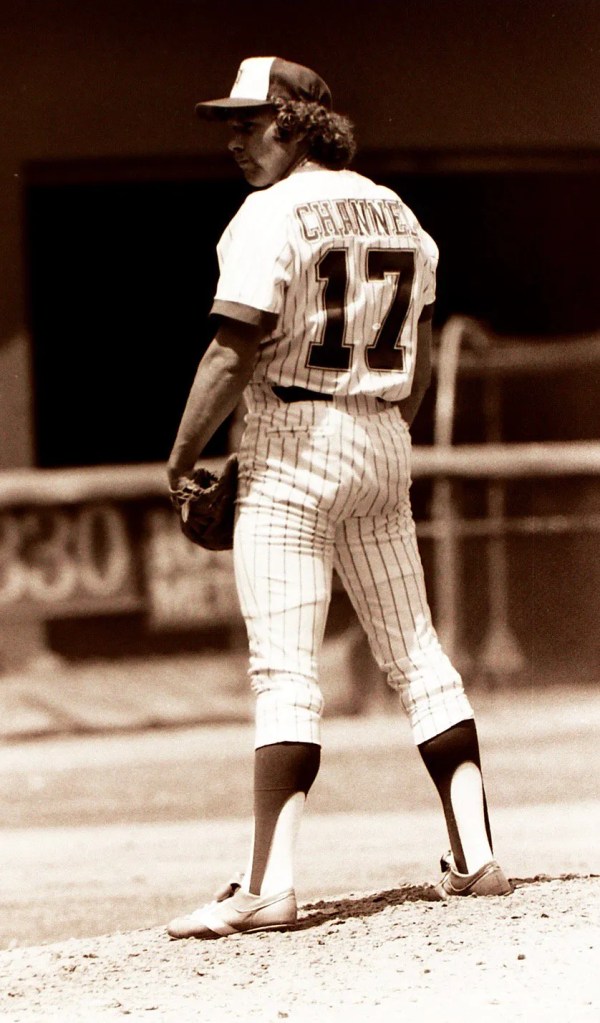
Turner also signed free-agent pitcher Andy Messersmith, whose jersey number happened to be 17…the same as Channel 17 WTBS. To promote said station, Turner had an inspiration from his days in outdoor advertising. He paid Messersmith to replace the name on his jersey with “Channel,” thus making him a walking, pitching billboard for WTBS. Naturally, baseball’s old guard did not approve; MLB promptly instituted rules against such uniform alterations.
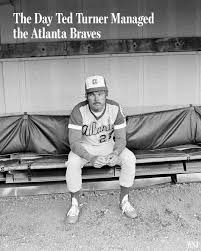
Speaking of uniforms and rules, my own personal favorite Turner weed came on May 11th, 1977. Mired in the midst of a 16-game losing streak, Turner announced manager Dave Bristol was “going on a vacation” then appointed himself as the Braves new skipper.
Turner’s managerial record will stay at 0-1 lifetime, having lost his debut/swan song 2-1 to the Pittsburgh. His dugout stint ended the same day it started because once National League president Charles “Chub” Feeney got wind of Turner’s shenanigans, he immediately demanded Turner step down. Feeney cited a standing (but selectively enforced*) MLB rule against owners serving as managers.
Bristol returned from his “vacation” to lead the Braves to a 61-101 mark; the second of four straight last place finishes. As buffoonish as this whole affair was, don’t forget this Ted Turner is the same one who built the team which won 14 straight division titles.
* See Connie Mack
Ted Turner: The Boatsman
Now that we’ve covered my favorite Turner weed, let’s talk about my favorite Ted Turner story. 1977 proved to be a hell of year for him. In addition to the above-mentioned shenanigans, Turner also captained the 12-meter racing yacht Courageous to win the America’s Cup that September.
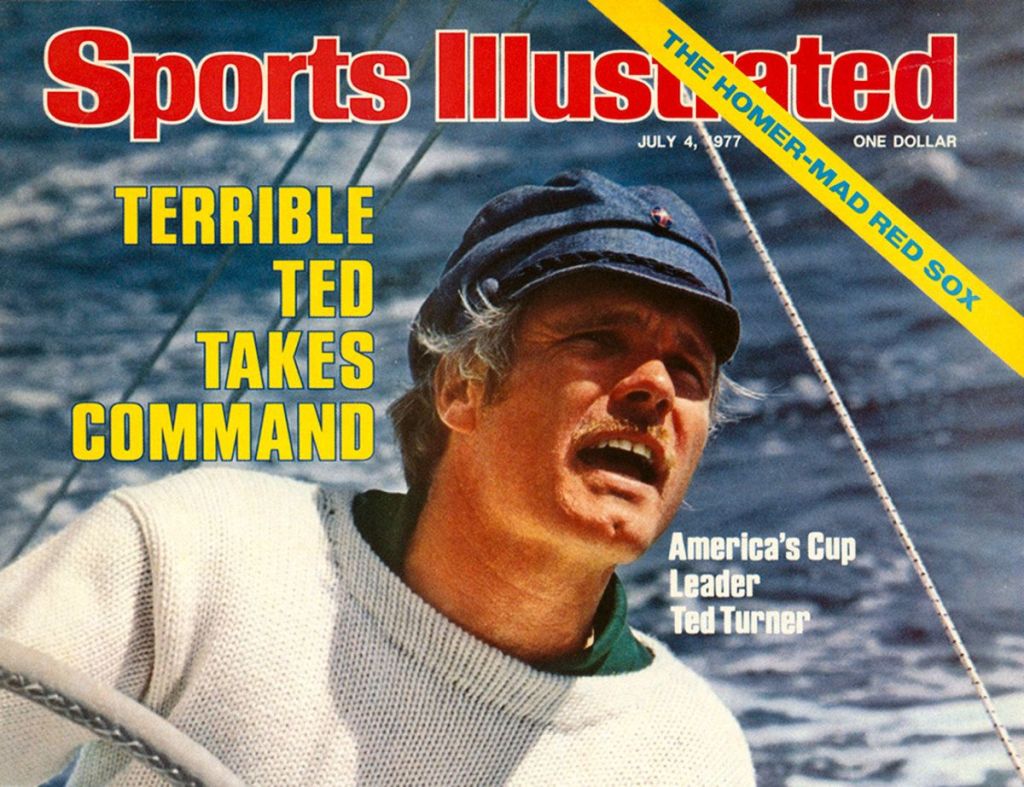
One would expect a bit of raucous celebration after wining the oldest trophy in all of sport. However, the journey from the docks to the venue for the post-race press conference was lined with bars filled with sailing fans enjoying a bit of revelry of their own. Naturally, with each bar Turner passed came another round of the “I wanna buy you a drink” guys. Not wanting to be rude, Turner accepted his fair share of celebratory libations.
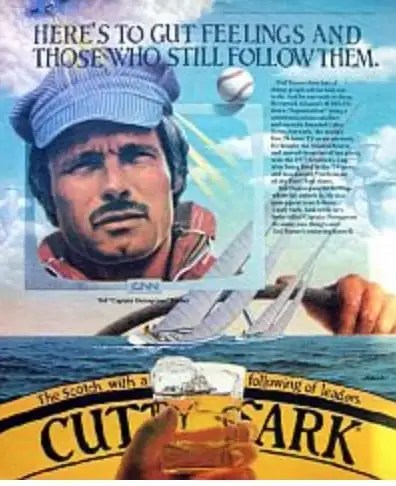
I think we all see how the setup here is going…headed straight for “what could possibly go wrong?” Before we get to the answer, there’s one last stop at the coup de grâce. Turner was not a drinking man at all; needless to say he was already in over his head. But the finishing blow came in the form of a bottle of Aquavit handed to Turner by a well wisher.
If you’re not familiar, Aquavit is the national drink of Sweden, and it carries a potency capable of stripping the barnacles off Turner’s boat. Being one of the unfamiliar, Turner took a powerful chug off that bottle…and paid the price.
When Turner finally arrived at the press conference, to say he was a bit tipsy would be the definition of “understatement.” The only way you could have been more bombed than Turner was to be Hiroshima in 1945. Turner was described as “knee-walking drunk,” having consumed enough liquor to float Courageous. This only exacerbated his already “larger than life” persona, making this the night he earned the nickname “Captain Outrageous.”
Throughout the press conference, Turner ran through a series of off-color jokes, waved his hat, and belted out a fair share of “WOOOOYEAHHH!!!!” This would have been perfectly acceptable behavior at a college football game, but putting on such a display in front of the blue-bloods at the Newport Yacht Club got Turner labeled as a “barbarian.” But the American public loved it; it actually became the moment they started paying attention to the America’s Cup.
Ted Turner: The Legacy
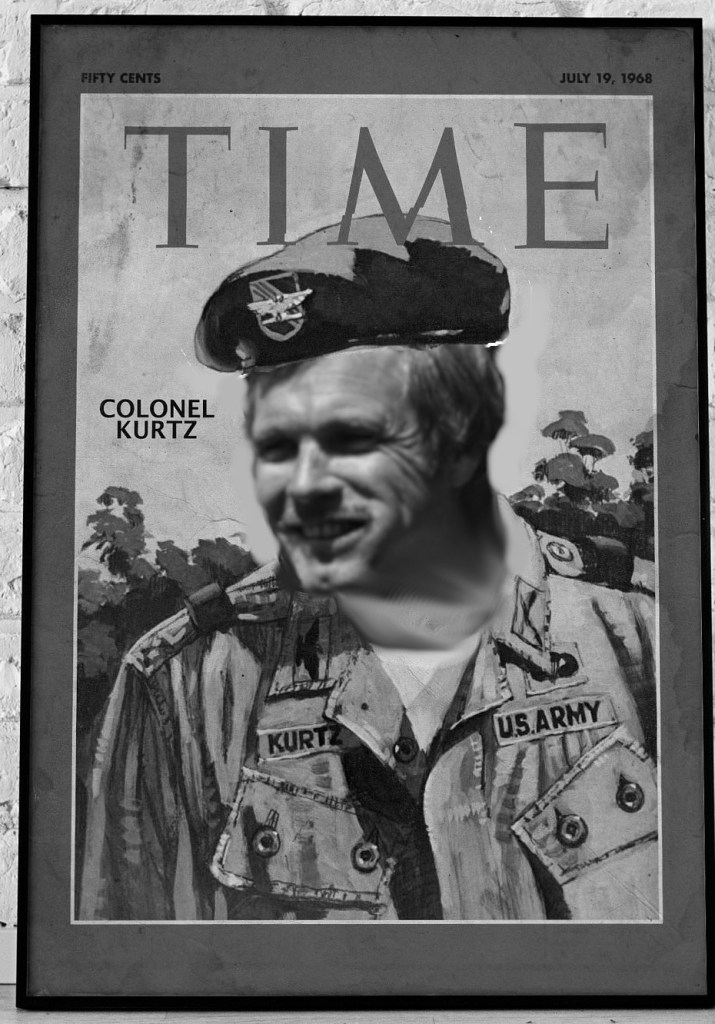
Despite their differences, it’s not hard to imagine swapping their lots in life, yet getting remarkably similar outcomes. They both started their own empires, and did so with little regard for anything other than results. That’s because despite their differences, Colonel Kurtz and Ted Turner are two of the purest crystalline examples of what happens when you don’t kill the maverick while extolling the virtues which keep them alive.
The Army needed Kurtz to fight a guerilla war in the jungle, but didn’t account for how he was going to conduct it. MLB needed Ted Turner to save it’s presence in the south, but didn’t anticipate he would bring his same maverick tactics from business to baseball.
Like it or not, the world needs guys like Kurtz and Turner. So-called “old sayings” earn that status because they hold a qualifying amount of truth. This is all about the one about making omelets requires breaking a few eggs. Every society on earth…whether willing to admit it or not..has always tolerated (if not expected) it’s “movers and shakers” to kick one onto the fairway every once in a while. It’s seen as the price of progress.
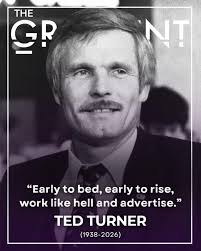
What determines the “tipping point” between being hailed as an empire builder and hiding out somewhere in Cambodia is political sensitivities. What Captain Willard calls “putting a weed up command’s ass” is just the manifestation of those concerns. That’s the entire point behind Kurtz’ soliloquy about “pure crystalline will” and how he could single-handedly end the war if he had enough men who had it. It’s that will…or lack thereof… that drives those sensitivities. That’s where the clash comes. The political class is swaddled in the fear of failure. Guys like Kurtz and Turner were born without it and had it replaced with the will to do whatever it took to avoid failure and the courage to accept it when inevitable. It what makes their ways seem frightening to those who have the fear; the only thing scarier is a world without guys who can get results.
But at the end, Kurtz ruffled too many political sensitivities; a fact which finally brought about “extreme prejudice.” Conversely, Turner ended up with an empire so powerful that even his biggest detractors in MLB now show their games on networks he created. Despite their similarities, the biggest difference them was Turner discovered survival for the maverick means staying too useful to kill.
Besides, Turner wasn’t the one who lost the America’s Cup.
RIP, Robert Edward Turner III.
The Moral of the Story:
No matter how sweet the garden, you can only grow so many weeds.
P.S. This isn’t my first foray through this film. If you’re brave enough to see this film recast with SEC football coachers circa 2007, you can head up the river here.
Got a question, comment, or just want to yell at us? Hit us up at dubsism@yahoo.com, @Dubsism on Twitter, or on our Pinterest, Tumblr, BlueSky, Truth Social, Instagram, or Facebook pages, and be sure to bookmark Dubsism.com so you don’t miss anything from the most interesting independent sports blog on the web.


[…] J-Dub of Dubsism keeps us going with his thoughts on the Coppola classic, Apocalypse Now. […]
LikeLike
Thanks for the blog entry. I have read and reread it so many times, I have the article practically memorized.
My main takeaway: I had no idea Ted Turner played Colonel Kurtz in the movie.
LikeLike
Pretty certain Terrible Ted (almost forgot about that Cutty Sark promo) would be honored by your comparisons to Brando’s Kurtz, right after he finished recoloring the Apocalypse.
LikeLike
Well, I had completely forgotten that Scott Glenn was in Apocalypse Now. I loved reading your take on this film and learning more about Ted Turner and his career. I mostly knew him as the guy who created TCM (of course), but had no idea he was that much connected to sports.
LikeLike
I always say you can learn more here by accident than in other places by design 😀
LikeLiked by 1 person
Wow! Come for Robert Duvall, and stay for Ted Turner. Thanks, J-Dub–this was great. So glad you got to join the blogathon.
LikeLike
[…] I am too young to have served during the Vietnam War, I did watch “Apocalypse Now” under the influence of some first-class recreational pharmaceuticals, and the weirdness I […]
LikeLike