
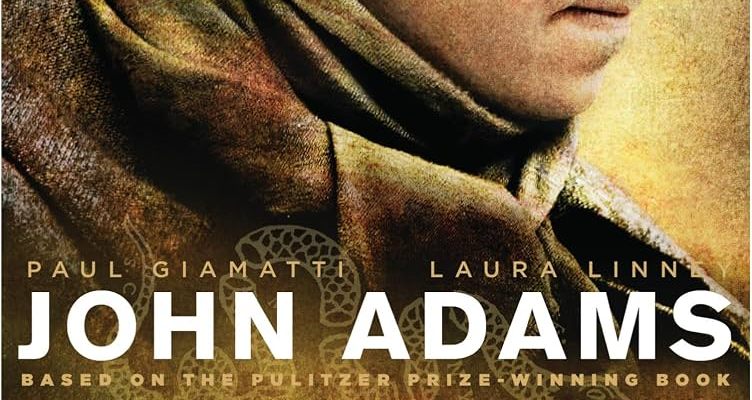
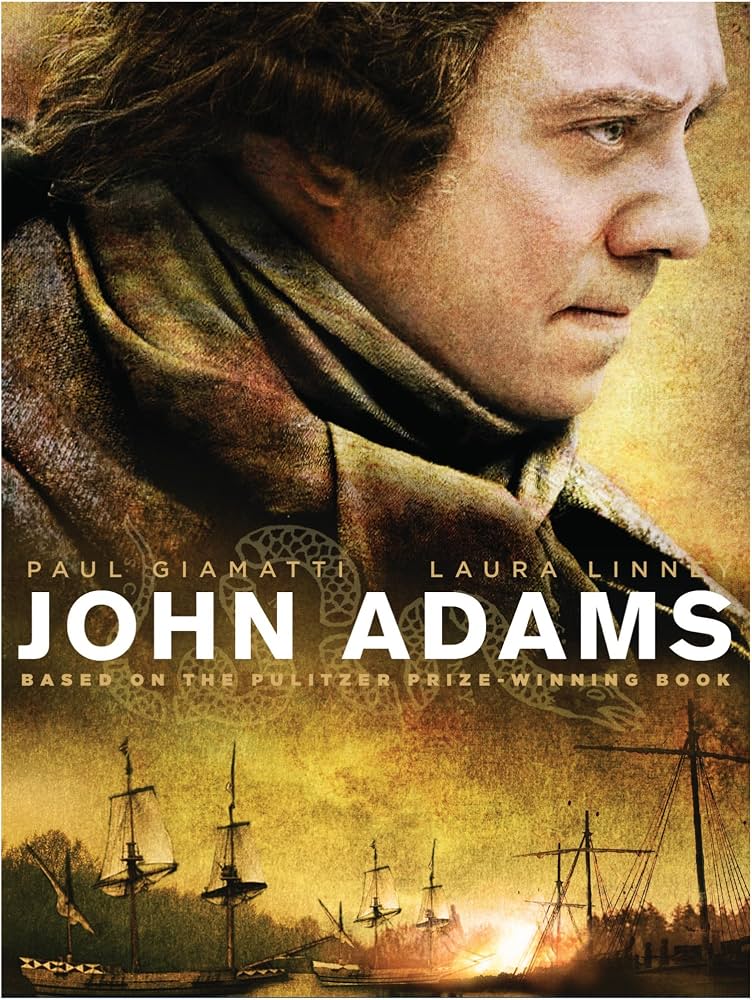
- Today’s Movie: John Adams
- Year of Release: 2008
- Stars: Paul Giamatti, Laura Linney, Stephan Dillane
- Director: Tom Hooper
This movie is not on my list of essential films.
NOTE: This installment of Sports Analaogies Hidden in Classic Movies is not being done as just part of a blog-a-thon. Instead, this is a monthly event hosted by MovieRob called Genre Grandeur. The way it works is every month MovieRob chooses a film blogger to pick a topic and a movie to write about, then also picks a movie for himself to review. At the end of the month, MovieRob posts the reviews of all the participants.
For July of 2026, the honor of being the “guest picker” went to MovieRob himself, and and the topic is “Red, White, and Blue Movies”… In appreciation of the USA’s 250th Birthday, this event is for any movie dealing with The American Revolution, American Patriotism, or related to the 4th of July itself.
The Story:
Part I: Join or Die (1770–1774)
The HBO mini-series starts in 1770 establishing the title character (played by Paul Giamatti) as a respected lawyer with a reputation for his dedication to the law and justice. This is why Adams was sought by British commander Captain Thomas Preston (played by Ritchie Coster) to defend the British soldiers involved in the “Boston Massacre.”
Knowing this would be wildly unpopular amongst the anti-Crown crowd, Adams overcomes his reluctance and agrees to represent them. Naturally, this causes conflict with his cousin Samuel Adams (played by Danny Hutson),who is an executive member of the Sons of Liberty. The disagreement between the cousins intensified after John secured an acquittal for the Redcoats.
As a result, John Adams is appointment to the British Court of Admiralty by King George III (played by Tom Hollander). Again, Adams is hesitant, but this time he refuses as he finds fault with both the British Crown and some of tactics being used by the Sons of Liberty in their pursuit of proper representation for the colonies in the Parliament of Great Britain. Ultimately, he confides in his wife Abigail (played by Laura Linney) his belief Massachusetts needs “strong governance,” but that the Sons of Liberty were not suited to do it.
In response to Parliament’s passage of The Tea Act of 1773 (a law giving the Crown-controlled British East India Company a monopoly on the tea trade in the colonies), the Sons of Liberty conduct the Boston Tea Party. After the loss of what today would be several million dollars worth of tea, Parliament passed The Intolerable Acts in 1774; a series of laws which closed Boston Harbor, restricted local government, and severely curtailed colonial trade.
This leads to the formation of the First Continental Congress. Samuel nominates John Adams to represent Massachusetts. He accepts, despite expressing his doubts about its legality. John Adams reluctantly leaves a pregnant Abigail in Boston departing for the Congress in Philadelphia.
Part II: Independence (1775–1776)
Once the Congress is convened, Adams quickly becomes disillusioned with it’s inability to make decisions and unwillingness to engage in military action against Britain. Adams’ vocal dissent makes him unpopular among his fellow delegates, but his belief in the cause is renewed with the Massachusetts militia’s victory over the British at the 1775 Battles of Lexington and Concord.
However, at the Second Continental Congress, Adams discovers most of the Congress favors reconciling with Britain. The Congress authorizes the Olive Branch Petition, which represented the colonists final attempt to avoid war by affirming colonial loyalty to King George III while requesting a repeal of the oppressive parliamentary acts in the name of a peaceful resolution.
Hopes for the avoidance of war suffered a mortal blow after the June 1775 Battle of Bunker Hill on the Charlestown Peninsula just north of Boston. While the Redcoats carried the day, they suffered a staggering number of casualties; over 1,000 British troops were killed or wounded.
When word of the slaughter at Bunker Hill reached King George III, he rejected he Olive Branch Petition. Instead, he issued The Proclamation of Rebellion in August 1775 which branded the colonists as traitors and effectively cast the die for war between the colonies and the Crown.
But after Bunker Hill, Adams found allies in Benjamin Franklin (played by Tom Wilkinson), George Washington (played by David Morse), and Thomas Jefferson (played by Stephen Dillane). With his new allegiances, and after the King’s Proclamation is read to the Congress, Franklin is able to convince the delegates to declare independence from Great Britain and form an alliance with France.
Part III: Don’t Tread on Me (1777–1781)
With the Revolutionary War in full outbreak, Adams travels to Europe on a diplomatic mission accompanied by his young son John Quincy Adams (played by Ebon Moss-Bachrach). Adams is seeking foreign alliances, beginning with the French. Together with Benjamin Franklin, Adams finds himself awash in in the decadence of the court of French King Louis XVI. Franklin is far more comfortable with the debauchery of the French nobility; a stark contrast to the plain-spoken and deeply religious Adams.
Franklin’s embrace of the French excesses put him at odds with Adams. This causes Franklin to rebuke Adams for his lack of diplomatic skills. As such, eventually Franklin has Adams removed from any diplomatic efforts in France. Franklin’s approach succeeded allowing for the French aid toward the ultimate American victory at Yorktown* in 1781.
Part IV: Reunion (1781–1789)
It is during his diplomatic efforts with the Dutch that John Adams received news of the British defeat. Eventually, he is sent back to Paris to negotiate the war-ending Treaty of Paris in 1783. This leads to his being named as the first American Ambassador to Great Britain. Adams is poorly received by the British as he represents a recently hostile power and is seen as one of the driving forces behind what the British regard as a disaster.
In 1789, John Adams returns to Massachusetts for the first presidential election, but loses to George Washington; John Adams is elected as the first Vice President. At first, Adams considered rejecting the office, but Abigail persuades him to accept the nomination.
Part V: Unite or Die (1788–1797)
Having little to do beside presiding over the Senate quickly disillusions America’s first Vice President. John Adams becomes increasingly frustrated over his opinions being ignored and the fact he has no power other than to be the deciding vote in case of a tie. In addition, his former allegiances with Thomas Jefferson and now President George Washington are now strained; he is excluded from Washington’s inner circle. Eventually, the tables turn when Adams succeeds Washington as President of the United States in 1797.
Part VI: Unnecessary War (1797–1801)
Adams’ term as President is dominated by the rift between the Federalists led by Alexander Hamilton (played by Rufus Sewell) and Thomas Jefferson’s Republicans. At first, Adams’s neutrality antagonizes both sides, but his his relationship with Jefferson suffers even more when the President engaged in a defensive skirmish against the French. Later his relationship with the anti-French Hamilton is also damaged when he avoids a full-scale war with France.
Adams’ personal life is also visited with strife when he disowns his son Charles, who later dies an alcoholic vagrant. While Adams did succeed in his presidency by preventing a war with France, he was defeated by Thomas Jefferson in the presidential election of 1800.
Part VII: Peacefield (1803–1826)
Centered on Adams’ final years, this episode shows the pain of his retirement. His home at Peacefield is anything but aptly named as his daughter Nabby dies of breast cancer while he loses his wife Abigail to typhoid fever. Adams does live to see the election of his son John Quincy to the presidency, but illness precludes his attendance. While his relationship with Thomas Jefferson is repaired through correspondence in their final years, both men died within hours of each other on July 4, 1826…the 50th anniversary of the day they signed the Declaration of Independence.
The Hidden Sports Analogy:
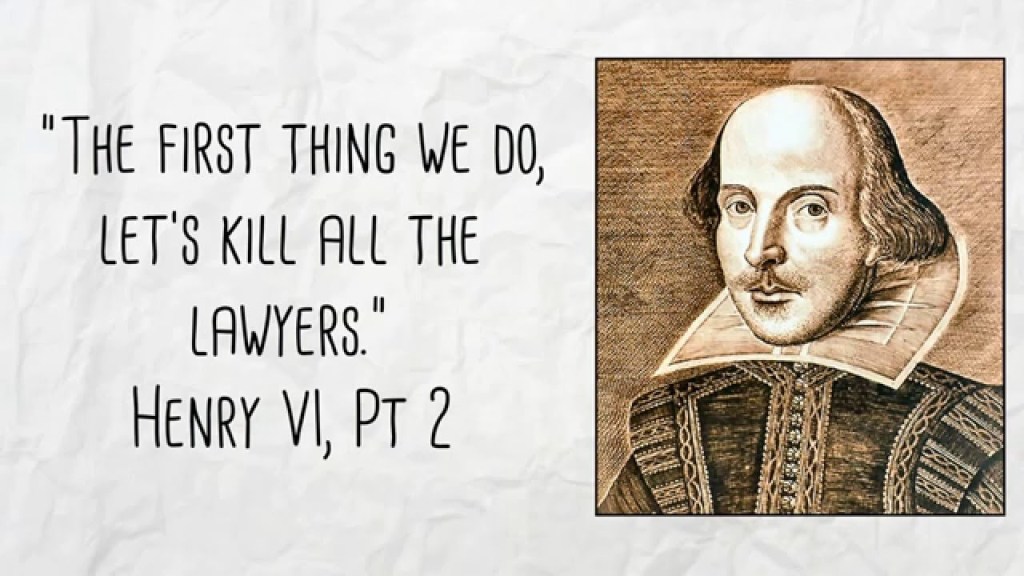
With all of the America 250 stuff that happened this month, one thing which got overlooked was the role lawyers played in the founding of this country.
That obscurity is precisely why I need to set the stage for the sports connection here. Because his murder trial was over 30 years ago, there are children in this world whose parents never heard of O.J. Simpson. If they know who he is, it’s still likely they know nothing of O.J. the athlete. Even among those in this blog’s readership who only know him from his film career, he’s still “that guy in that movie” or “that guy who killed those people.”
As such, too many people have forgotten that for a good chunk of the 1970s, Orenthal James Simpson was the best player in the National Football League. Unfortunately, O.J. became much more of a household name after his playing days; it seems there’s more notice to be gained as part of a trial that had as much world-stopping power as the moon landing than in playing football in New Siberia Buffalo. But it was his prowess on the field, his “Madison Avenue” smile, and his ability to get Americans to rent shitty cars that propelled him to his own IMDB page.
Today’s analogy stems from that trial. In the 1770s, John Adams came to the forefront of the Founding Fathers from his role in the biggest trial of the day. As shown in the first installment of today’s featured mini-series, Adams’ gained notoriety defending British soldiers ostensibly seen as guilty. As the saying goes, the rest is literally history; Adams helps spawn the empire soon to be known as America.
Before there was the “Dream Team” of lawyers in the O.J. Simpson murder trial, his legal representation came in the form of his friend and business partner Robert Kardashian. There’s a reason why that name will sound familiar even to those who never heard of O.J. Simpson…
Kardashian’s journey began after obtaining his juris doctor from the University of San Diego in the 1960s. After establishing a successful legal practice, he branched off into several business interests, including a partnership owning a frozen yogurt shop and a music video with the aforementioned football legend. As one would expect, when O.J. Simpson found himself facing murder charges in the deaths of his ex-wife Nicole Simpson and Ron Goldman, his first phone call was to his partner and attorney.
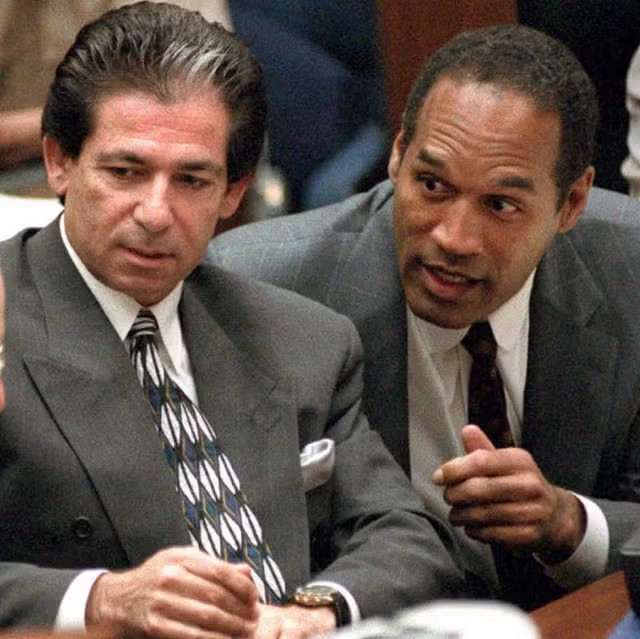
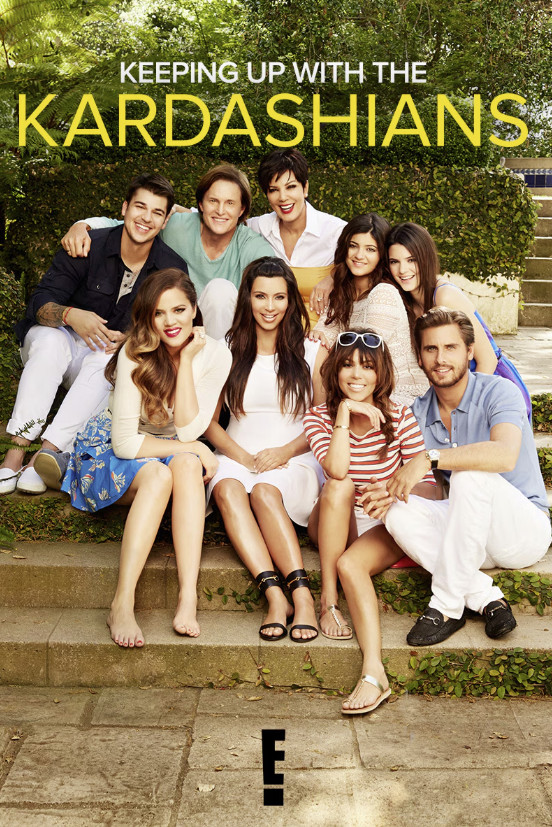
Some say the biggest part of success is being in the right place at the right time. That certainly is the case with Kardashian the Elder. At the exact same moment the Pop Culture gods anointed Kardashian with fame through his constant seating at the right hand of the defendant during that year-long spectacle, they also threw down the phenomenon known as “reality television.” One thing led to another and next thing you know, Kardashian’s notoriety paved the way for a media empire centering on his daughters Kim, Khloé, and Kourtney. In other words, both Adams and Kardashian could be considered “Founding Fathers;” and the differences really aren’t that stark.
If you think about it, the country Adams helped found really has been the world’s longest running “reality show.” From colonial days to the one you read this, America has been at center stage for the vast majority of world events over the past quarter-century. Likewise, since the days of the O.J. trial, it’s hard to sample the zeitgeist of American pop culture without getting a hefty dose of the Kardashians.
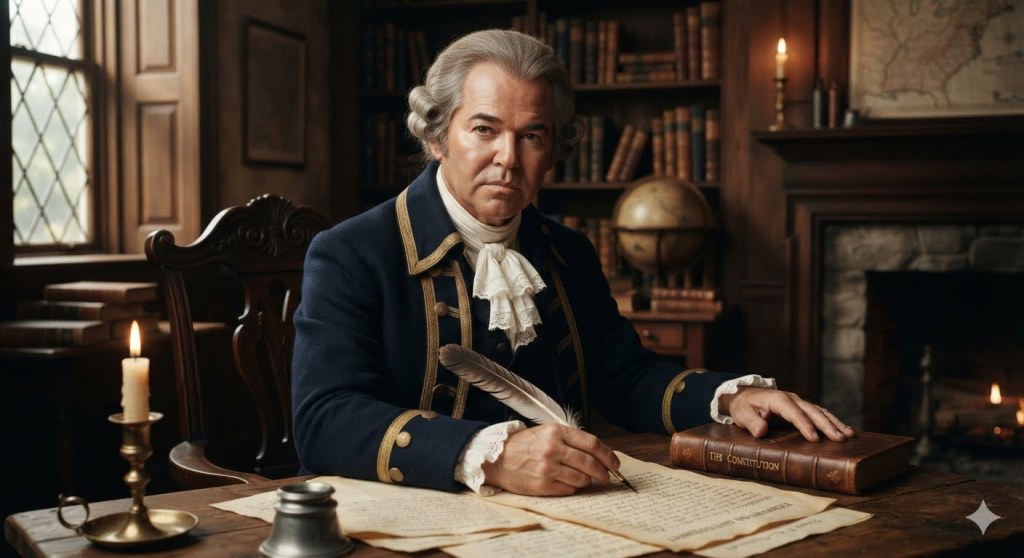
Needless to say, there was a large part of his colonial brethren that didn’t appreciate Adams’ work with the defendants in the Boston Massacre trial; the same could be said about Kardashian and his role in O.J.’s acquittal.
But it’s what made both of them “Founding Fathers.”
The Moral of the Story:
“There’s no such thing as bad publicity.”
~P.T. Barnum
* – There’s a reason the history nerd in me believes the 1781 Battle of Yorktown is the most important in military history.
Got a question, comment, or just want to yell at us? Hit us up at dubsism@yahoo.com, @Dubsism on Twitter, or on our Pinterest, Tumblr, BlueSky, Truth Social, Instagram, or Facebook pages, and be sure to bookmark Dubsism.com so you don’t miss anything from the most interesting independent sports blog on the web.


