


Introduction

As the title suggests, this series on Dubsism is about how we all have songs inextricably linked in our minds to certain memories. Among advanced-theory psychologists, molecular neurobiologists, and other extreme brainiacs, the prevailing opinion has been the nose is the most common trigger of memories. But what do they know?
Brainiac that out all you want; this is all about memories being a vector for story-telling. Instead of taking the nasal route to the brain, I’m using music as the means for getting to those memories. If that doesn’t explain my cribbing a bad line from a Barbra Streisand ear-worm to make that point, so be it. After all, don’t even try to lie. We all have those memories; the difference is I’m willing to share mine.
Today’s tale is a two-parter…that’s the minimum number I needed to tell a story which entwines the legendary if not cultish British “progressive rock” band King Crimson and an exquisitely well-built ship that crossed my bow in the corn-scape of Indiana. The distances that must be covered to spin this yarn are as figuratively gigantic as they are literally geographic. But they are also chronologic…maybe even chronic-ly so…
Confucius said that even a journey of a thousand miles starts with a single step. But thanks to simple mathematics, the length of the journey is irrelevant. No matter how far removed the cul-de-sacs of southern California may be from the county roads in the “Crossroads of America,” traversing all those miles still starts with the first foot.
But the aforementioned Chinese philosopher never mentions time. Think of the two parts of this piece as the pillars of a bridge big enough to span four decades. Not only that, but as you will soon see, time in all it’s measures is as crucial as distance in the telling of today’s tale.


Believe it or not, what brought this bubbling from the well-springs of memory is another WordPress Daily Writing Prompt. You don’t need Eastern philosophy steeped in the wisdom of two millennia to understand how a journey as I’ve described fosters growth in much more than just the calluses on one’s feet.
You also don’t need a detective like Jim Rockford to clue you as to where the growth might be in a piece about music written by a musician whose blog totals over two thousand posts. If you’re reading this in WordPress, chances are you are a blogger as well. Regardless of the label, writers all have a rite of passage…finding a Muse.
A term with its origins from Greek mythology, a Muse is named for the daughter of Zeus and Mnemosyne, the god and goddess who oversaw the arts and sciences. Specifically, a muse is someone who becomes a source of inspiration.
As a writer, I’ve hade several Muses in my time. I would venture that most writers have. I’d also bet that most first Muses are romantic in origin. There’s a solid corollary between the similarity in origin and the level of boring in the story. After all, whether it’s poetry or prose, writing about love is “Hallmark Card/Garbage-level easy.”
That’s why my most recent Muse might be my most interesting, because this one begs a serious question. How does a writer grow to be inspired by a Muse whose inspirations come from a completely unknown source?
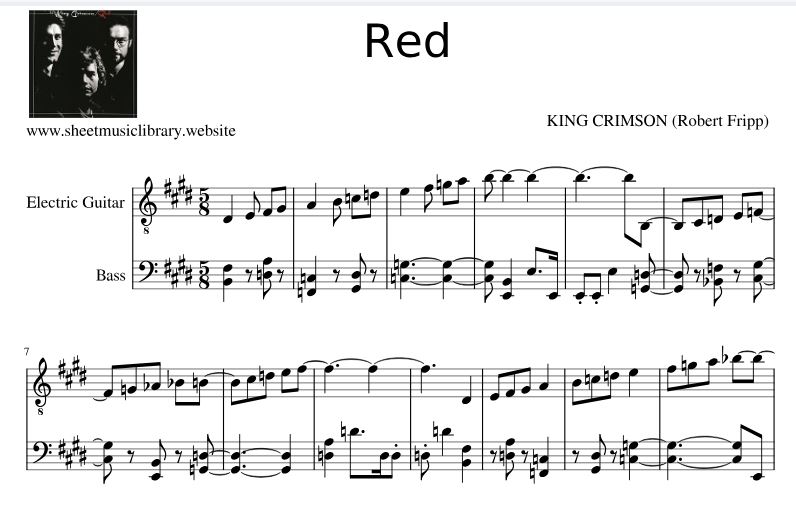
Luckily, this is just the place to find out. But to tell the story, I need to use two King Crimson cuts; Red and Starless.
Part I – Red
The first step of this journey strides solely into the King Crimson component of this story. If you happen to share my fandom of Robert Fripp et al., this piece’s title tipped you as to the direction of the journey and/or the quirky nature of the destination. If that’s true, you know King Crimson’s works span three decades and various line-ups.
On that note, if you also happen to be a regular reader of this blog, you are familiar with it’s signature series Sports Analogies Hidden Classic Movies. Regardless of the theme, stories in that series share characteristics with meandering King Crimson epics like Larks’ Tongues in Aspic, Part I. In other words, a connection between similes sometimes requires a non-linear journey.
A) Early J-Dub: Gets a Hit, Makes 1st Bass
This journey’s first step takes place in the very same junior high school featured in an episode Sports Analogies Hidden in Classic Movies telling the tale of my life-long hatred of dodgeball and a P.E. teacher who unfortunately shared a name with a notorious serial killer. It was in this same school where the 6th-grade version of your blogger first crossed paths with formal music training. As the gears of the public-school music training machine ground, the first instrument it transmitted into my hands was the violin.
In this school, the hand that cranked the handle on the string machine belonged to Mr. Wilhelm. This man had an impressive pedigree as a musician, including a stint in the Los Angeles Philharmonic Orchestra. Let’s cut through the guano; if you got paid to play the cello in the Hollywood Bowl, you had had to know your stuff.

One day as I’m rosining up my bow, Mr. Wilhelm approached me.
“I think you should consider switching to the bass. You have one of the best qualities for a great bassist.”
In a split-second, I go from the “Wait! What?!” moment to the anticipation of getting a serious compliment from a very serious musician. He looked me directly in the eye when the words that changed my life came out of his mouth.
“You’re a big strong kid. You can carry it.”
Yeah, so that’s not exactly how I thought my ingress into the music world would go; despite that it was the start of a life-long love affair with the “bull fiddle”…and later it’s electric counterpart.
B) King Crimson and My “Muse of Unknown Origin”
That’s fitting because no matter the incarnation of King Crimson, there’s no way you can’t hear the classical influences. Between that and the early works of Electric Light Orchestra, the first planks were laid in the between bridge between my inauspicious introduction to music and today.
More importantly, the charts of King Crimson’s music are just like those of a nautical nature; they are anything but linear. At some point, musicians, writers, and artists of all strains encounter their Muse. That’s how we get back to the aforementioned “well-built ship.”
She has the distinction of being the protagonist in a previous installment of this series. That’s the piece explaining how our ships crossed wakes, but what it can’t come close to is revealing why this woman became my Muse of the most intrigue.
The easy way out would simply to ascribe her powers as a Muse to her statuesque presence. Staying true to the movie-based chunk of this blog, in that first piece I described her as a cross between Julie Christie and Veronica Lake in their respective primes. That’s as true as it ever was. Red roses would proudly display their black eyes earned in fights over which would get the privilege of being given to her.

And as stated in that piece, because I’m super smart, I managed to make sure she hated me. That’s enough to know her origins as a Muse aren’t rooted in any that “Hallmark” slop. But to stop there means only knowing what it isn’t, rather than exploring the nearly infinite possibilities of what is.

Quasi-crude analogies aside, the point is ironically simple in its complexity. Sometimes, the journey is as important as the destination; and I can only explain it by saying “this won’t make sense until it makes sense.”
On one hand, I cannot fathom why stories about this woman cling to the corners of my “writer brain” like old wallpaper. On the other hand comes a question: Of the eight billion people on earth, why is this one such a muse for me? The time and distance in this story never gets me any closer to answer, usually because by now every hand I have is writing.
In other words, I have a Muse and I don’t know why. But before I go down that “rabbit hole,” it’s time to look why I would have any Muse in the first place.
C) Muses, MTV, and “Mary Jane”
Writer or not, we all have had days that dawned without our knowing the change coming sometime after that sunrise. While they don’t happen exclusively in our early days, there’s a connection between our youth and the transformative nature of those times.
When the ships carrying those early days cross paths with those transiting discovery, the combined churning wake makes us who we become. Keeping that in mind, imagine being a budding writer and musician having such a sunrise mere hours before you discovered both King Crimson and let’s just say “recreational pharmaceuticals.”
Life-changing much?
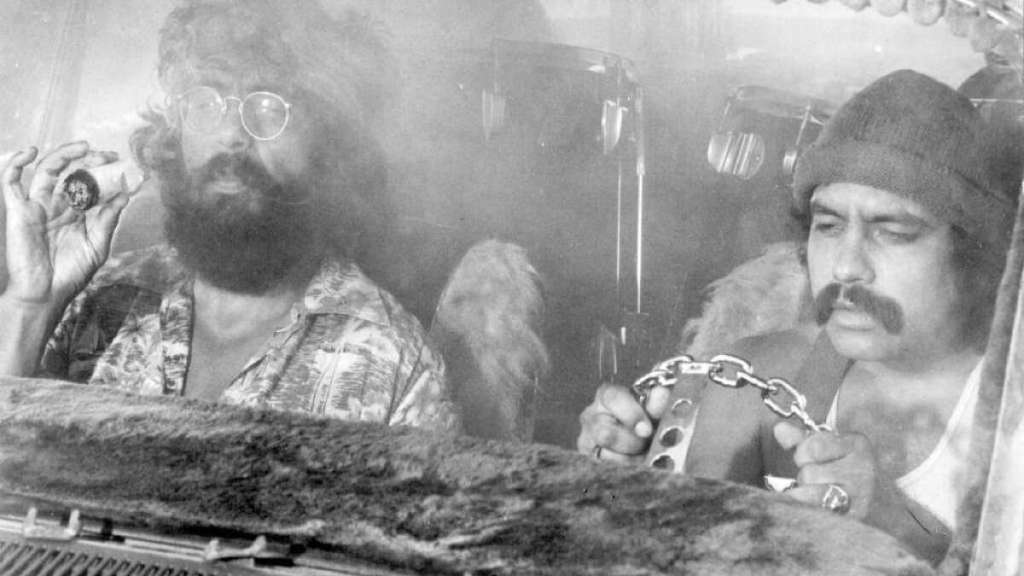
The discovery early in one’s musical exposure that songs could be more than lyrics in A-B-A-B rhyming schemes lilted over scores set in 4/4 time is like getting the keys to an “Indy 500” car the day after your first driving lesson. Now, imagine that discovery being chronic-ly turbo-charged a là “Cheech and Chong.”
The point here is no matter the road taken, you’re going to end up with a Muse at some point if you choose the journey of a writer.
D) The Difference Between a “Muse” and an “Idol”
Say what you will, but blowing away barriers is the soul of creativity. For me, that was the moment my passions for writing and music were sparked; the resulting fire fused those into the first stanchion upon which my idolatry of John Wetton lies. There’s a “thing” nowadays about people having a “spirit animal.” If you shifted that to “spirit musician,” there’s no doubt Wetton…a bass-playing writer and composer…had to be mine.
Before you say it…yes, you have heard John Wetton’s work. If you owned a radio anywhere in the Western world at any point from 1982 on, there’s literally no way you missed the mega-sonic-bomb hit Heat of the Moment by the quartet of “prog rock” veterans known as Asia.
The blue-eyed baritone on bass with his jacket sleeves scrunched years before Don Johnson…you guessed it…that’s John Wetton. But before he took his unique sound and tamed it just enough for the fame provided by early MTV, it formed the four-string foundation of my favorite incarnation of King Crimson.
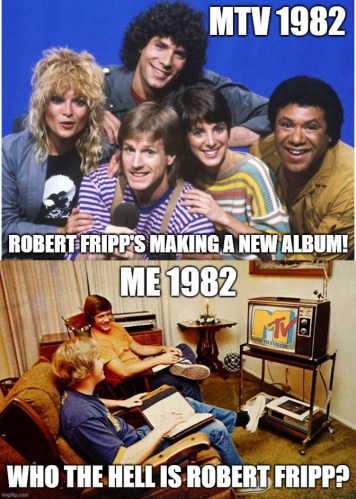
In it’s infancy, MTV was monumental not only for shaping what popular music became, it was such an amazing source of discovery for a budding young musician. In 1982, MTV was brimming with stuff that wasn’t going to get played on Casey Kasem’s American Top 40. But every junior-high kid in this country was glued to MTV and spent the next day at school talking about the videos they saw the night before.
Then, all those kids (myself included) started buying records based on what we were getting on basic cable rather than over the airwaves. As a result, Heat of the Moment exploded across America in 1982. After my trip to the mall record store to score my copy on 45 (hold up your AARP card if you remember those), and after giving the “A” side plenty of play, I gave that record a flip.
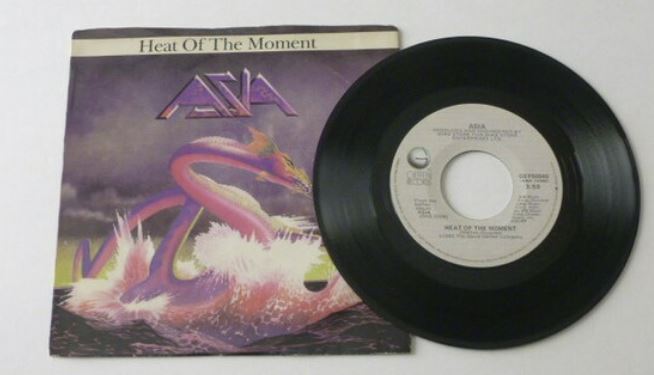
Less than a minute into Ride Easy, I was an Asia fan for life. I’ve always been drawn to the different, and there wasn’t anywhere at that time where one could get a medieval harpsichord melody thunder-clapped with a Carl Palmer “power” drum fill. By the end of that first minute, that song is nowhere near it’s title; instead it’s a wild ride of pure, classic musicianship woven around Wetton’s deeply poetic lyrics.
As the saying goes…the rest is history.
E) The Second Stanchion of My “British Idol”
I dug my “rabbit hole” of discovery ever deeper when all the V-Js on MTV were all agog over the news Robert Fripp was reforming King Crimson to release a new album. At this point, I had never heard of Fripp or King Crimson. I was just dipping my toe into the water of “progressive rock” and had no clue what a cult icon Fripp and his band were. But once I heard that John Wetton was involved, I had to find out.
Later, I was shooting baskets with a buddy in his parent’s driveway while I shared my new musical curiosity. He’d never heard of Robert Fripp and/or King Crimson either, but was pretty sure his older brother had. He was right; that older brother sent me on a trip to that “other” record store.
When record stores still existed, there were two kinds. There was the one at the mall; brightly-lit and staffed by suburban kids in polo shirts. This was the store where you bought what you heard on the radio. Then there was the “other” store. This was the place in an old brick building; the kind that might have been a bank or some other “downtown” business in the 1930s. The guy behind the counter could be either Cheech or Chong and he didn’t even take the cigarette out his mouth as he greeted you with a “hey dude.” That counter was also full of incense and these funny little pipes that didn’t look anything like the one my grandfather smoked. But if you wanted to buy a King Crimson album, that’s where you went.
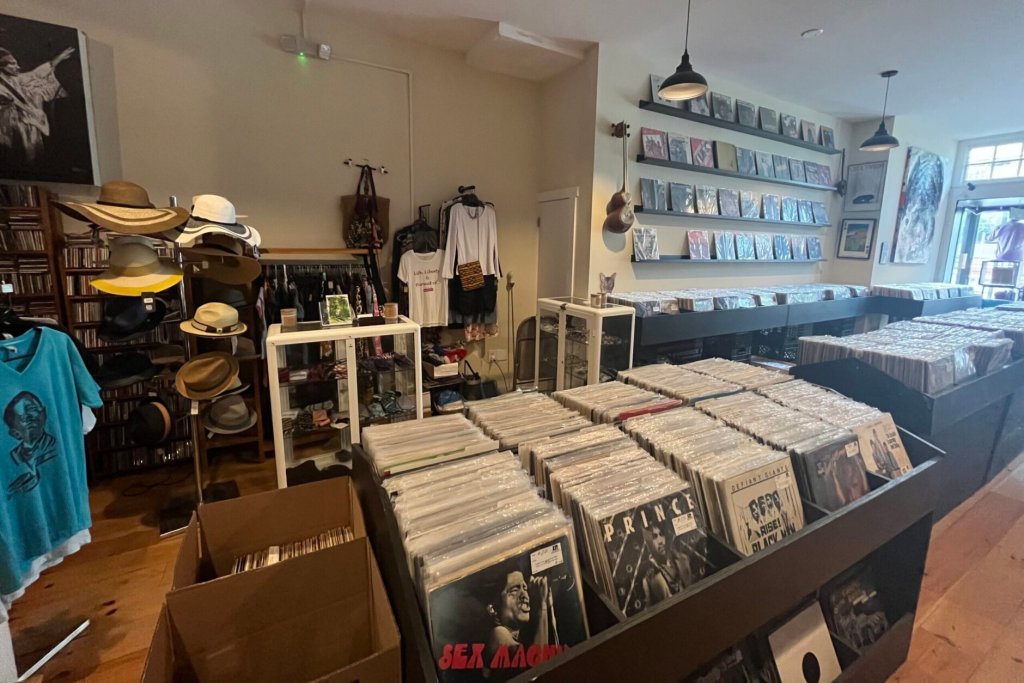
Oddly enough, my King Crimson exploration rang the bell upon my discovery of the album Red. The title track has a “Grunge meets Beethoven” feel 30 years before Nirvana. Fallen Angel is some serious foreshadowing of what was to come with Wetton and Asia eight years later. Do yourself a favor; experience One More Red Nightmare and Providence for yourself before you read anybody else’s impressions. Obviously, this is all just a preview of coming attractions for that album’s final cut, Starless (there will be much more on Starless in Part II).
F) When a “Rabbit Hole” Becomes a “Coal Mine”
The problem with the “rabbit hole” of discovery is it’s self-digging nature, and you can’t dig up. This one was no longer a matter of being “in deep;” rather it was a question of how much digging was about to happen. One Grand Canyon later, I finally was satisfied with the depth of my King Crimson dive. Even though the journey wasn’t chronologic, it was complete.

King Crimson had several different incarnations. When the album that had so excited the MTV staff was released, Three of a Perfect Pair was unlike anything I had heard before. I know that’s a bit of a theme for anything involving Robert Fripp, but this was new ground even for King Crimson. Fripp’s early experimentation with electronic production techniques opened doors for a big chunk of the popular music world.
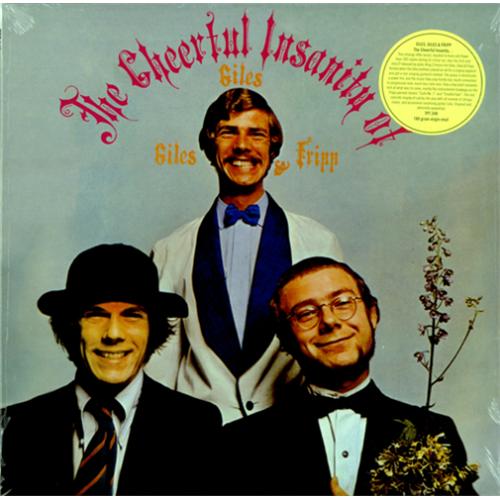
Then I jumped back to the beginning with the acidy-folky I Talk To The Wind, a track which was originally recorded in a home-built studio (keep that in mind, it’s important later) in Bronsby Road, London by Giles, Giles, and Fripp (the forerunner of King Crimson) in 1968. Along with the trio, folk singer Judy Dyble is featured on vocals. After the addition of Ian Mcdonald and his songwriting partner Peter Simfield, this lineup would become the first incarnation of King Crimson in 1969.
Later, the addition of another brilliant bassist-lyricist-composer Greg Lake led to the King Crimson line-up which released the ground-breaking album In the Court of the Crimson King in the fall of 1969.
This would mark the absolute ascent of the British “progressive rock” movement with acts such Genesis, Pink Floyd, and Yes all expanding the horizons of the genre. However, the early 1970s saw a tectonic shift on planet “Prog Rock” when Greg Lake left King Crimson to form the “prog” giant Emerson, Lake, and Palmer and legendary percussionist Bill Bruford left Yes to join King Crimson…along with the aforementioned John Wetton.
This quintet cemented Fripp’s chameleon-esque approach to his band; letting the sound echo the line-up. This is how we were treated to the meticulously planned chaos; the melodious cacophony of Larks’ Tongues In Aspic, Part II. It was Fripp’s dedication to flexibility which allowed this band to give us the “Beethoven with an electric arsenal and tube amps” sonic steel of Easy Money.
Just look at that video and try to tell me John Wetton wasn’t an “alpha” bad-ass. But don’t let the persona overshadow Wetton’s writing. I know if you pressed most King Crimson fans to name the band’s best lyricist, the overwhelming answer is going to be Greg Lake. But Wetton is a first-class poet all his own.
Having said that, it was 1974 when Fripp transformed King Crimson yet again. Now the band embraced the “Haiku”-like purity of the classic “power trio.” Everybody has different tastes, but for me, it was the line-up of Fripp, Bruford, and Wetton that burrowed its way into my ear….and never left.
In Part II, the foundations of my writer/musicianship grow into the monster I created and can barely control…thanks to those damn muses.
You can see all my WordPress Daily Prompt responses here.
You can see all the Misty Water-Color Memories here.
P.S. Regardless of whether you were a fan of King Crimson prior to this, you can learn some very interesting things from Robert Fripp’s appearance on Daryl Hall’s “Live From Daryl’s House.” By the way, there’s tons of other great stuff on Hall’s YouTube channel.
If you are new to the King Crimson experience, here’s a great documentary on what is really one of most important band in rock history.
Part I:
Part II:
Got a question, comment, or just want to yell at us? Hit us up at dubsism@yahoo.com, @Dubsism on X, or on our Pinterest, Tumblr, BlueSky, Truth Social, or Instagram, or Facebook pages, and be sure to bookmark Dubsism.com so you don’t miss anything from the most interesting independent sports blog on the web.


[…] mentioned in Part I, this series on Dubsism is about how we all have songs inextricably linked in our minds to […]
LikeLike
[…] a future installment of another series, you will learn all about John Wetton, the man I consider to be my “spirit animal” in […]
LikeLike