


Introduction to Part II

As mentioned in Part I, this series on Dubsism is about how we all have songs inextricably linked in our minds to certain memories. Being this is the second of two parts, a quick recap is in order.
The overarching theme here was launched by one of those ever-dangerous WordPress Daily Writing Prompts. I quoted Confucius in Part I by saying even a journey of a thousand miles starts with a single step. But I also mentioned the Chinese philosopher never addresses the time the journey takes. That matters as this tale spans four decades, largely because it’s all about growth.


Obviously, this one stirred something large enough in me it needed narrative woven through two King Crimson meisterwerks. Many may not understand the tribulations of writing, but everybody can grasp the concept of growth…even in the metamorphosis between the poeticism of being a writer/musician to the quasi-prose world of the screenwriter.
Part II – Starless
While Red was what got into my ear, Starless was the manifestation for the concept of complex themes getting to my hands. What’s worse is this leads to the kind of stuff you only discussed while partaking in “recreational pharmaceuticals.”
Can one have a memory of things that haven’t happened yet?
I know that takes us from a King Crimson theme into territory reserved for The Moody Blues’ Days of Future Passed, but the question still stands. If one is creating a story which is not yet completed, but the walls of the house in which that story will live are built of bricks fired in the kilns of the same experiences, isn’t each one then a memory…or is it just another brick in the wall?
And yes, I know this is brimming with colorful confusion. In two paragraphs, I’ve taken us through references to King Crimson, The Moody Blues, and ended up at a “back-door” homage to Pink Floyd. Allow me to clear this up by beginning with some basic rules about musicians…which also apply to writers.
A) The Ten Commandments About Musicians
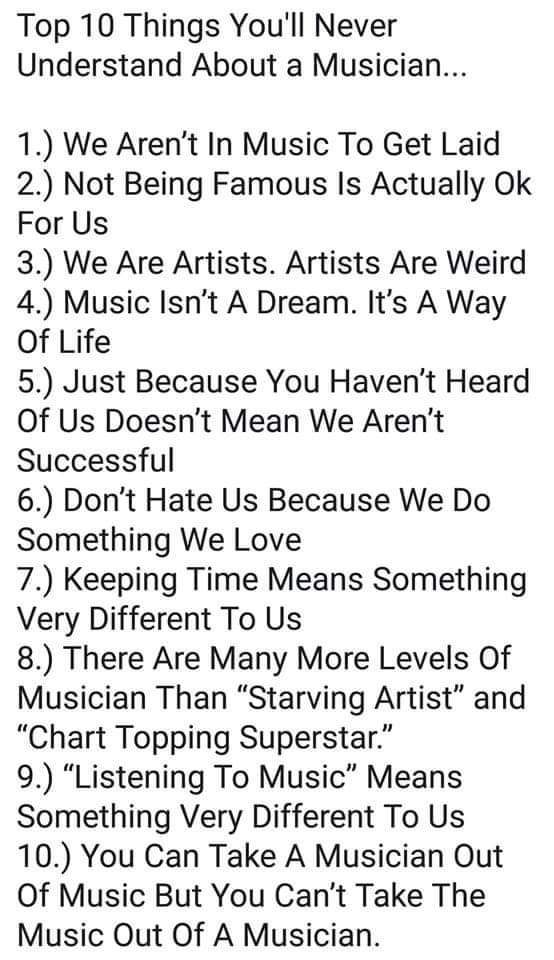
As you peruse that list, the phrase that pays here is be it Robert Fripp, John Wetton, or yours truly…every single item is just what the header says; a commandment. Now, this isn’t a test about the purity of your beliefs, but for purposes of this discussion, it’s an exercise in understanding. Whether you consider yourself a writer or a musician, you must al least grasp the concept. More importantly, if you are trying to understand someone who professes to be a writer or a musician, start at Number #3 and work outward from there.
In either case, this is where we really start working back toward that “won’t make sense until it makes sense” trope.
For me, Starless (you can hear the original version here) was the pinnacle of the Fripp/Wetton era. It’s not to be confused with Starless and Bible Black which was released in March 1974 on the album of the same name. While it was intended to be included in the earlier release, Fripp considered Starless not to be ready and delayed it until Red hit the record stores in October 1974. Making such a decision really pissed off the band’s record label Island, creating a rift may have contributed to Fripp’s decision to disband King Crimson later that year.
Feel free to discuss amongst yourselves which of the commandments Fripp invoked in his decisions. But while you’re doing that, consider an unwritten one that definitely was in play. No artist who still puts his integrity over any gain either in fame or finance will release a product before they feel it’s ready.
That matters because for all of King Crimson’s incarnations, and for all the musical gyrations that band’s sounds made…Robert Fripp never compromised. Allow me to explain the reasons’ why…
B) Compromise: The Enemy of Creativity
Fripp’s staunch convictions made a major impression on me, as did the plainly lyrical but deeply expressive work of John Wetton. Defying sense by being both simple and dynamic, Wetton wove words around elastic bass lines which stretched to support Fripp’s adventures in melody…even to the point of being counter-melodic.
Again, due to differences between Fripp and Island records, the executives who wanted to sell records were at odds with the visions of the musicians. But Fripp and Wetton (along with drummer Bill Bruford) built their sound and protected it.
One unexpected problem writers face is the downside of finding inspiration. Welcome to the heart of stuff non-writers won’t understand. That’s because they believe writers live on that “light bulb moment,” and once inspired, the words just flow. Inspiration is actually a double-edged sword; that which fosters creativity can also cause conflict.
In this case, the conflict was internal. As a growing writer and musician, I felt I had to make a decision. I lacked the self-confidence to believe I could write and compose what I wanted, do so with adequate musical aplomb, and maintain any illusions of artistic integrity I might have.
That brings us back to the “idol” portion of the “Idol/Muse Postulate” I addressed in Part I. Knowing what Wetton did with Robert Fripp and King Crimson (not to mention all his other works) told me anything was possible. The key was staying true to my passion.
Now, I would never blow my own horn to the point of saying I did any of those things as well as John Wetton, but in terms of this WordPress Daily Prompt, there was certainly growth. That’s a major reason behind why no matter what I will ever do as a writer, being a blogger will always be where my soul resides, because I can write about whatever I want…even Taylor Swift.
C) How The Hell Can There Be A Taylor Swift Reference Here?
Imagine the sound of gears grinding to a halt here because were making the switch from “Idol” back to “Muse.” Another thing about inspiration is one simply never knows from where it may strike. Young or old, the early stages of any new friendship are filled with discovery. That’s a big part of why the older I get, the more I value friendships with those younger than me. The generation behind me will be the ones running the world when I’m drooling on a keyboard at the home for old bloggers; it’s probably not a bad idea grasping what makes them tick.
In other words, when such a new acquaintanceship happens to be with a woman some 25 years my junior, there’s considerable size to the range of things discovery could be bringing my way. Considering this woman also happens to be a monstrous Taylor Swift fan…there’s your answer.
The details of that friendship can be found here, but the key lies in what happens when you tell a hardcore Taylor Swift devotee a) about your musical background and b) you’ve never heard a single note of any of her work. This is the moment the Jehovah’s Witnesses show up on your doorstep; the conversion attempt is coming in full force.
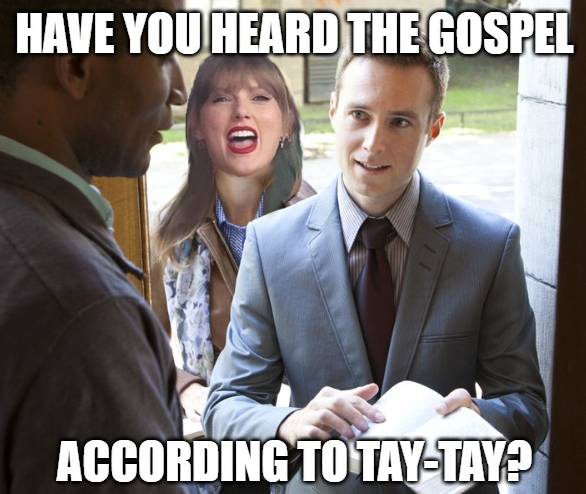
As mentioned, I’m the one with the want to understand the generation behind me, so unless I want to brand myself as a hypocrite, at this point I have no choice but to play along.
In other words, I told her to pick a three-song “starter pack,” and I would give them an objective listen. While I’m an instrumentalist, writer, and composer, I’m also on record as believing that one simply cannot dismiss out of hand an entire genre of music simply because of one’s personal tastes. Again, unless I want to piss all over my own values…Taylor Swift, here I come.
The bottom line: I listened to the three songs, and while they aren’t my proverbial “cup of tea,” I realized the secret to Taylor Swift’s popularity. Nobody connects with her audience like she does. Don’t even try to tell me there’s no growth in being able to accept that which you don’t fully understand.
To be honest, that’s how I already know too much about “Swifties.” But in all honesty, this was posted on that particular Swiftie’s birthday for a reason…
D) Growth As A Musician – Opposition, Part I
Oddly enough, continuing this story’s forward progress requires a flashback. Another band you will find orbiting near the center of the J-Dub musical universe, Deep Purple figured prominently in my “Casey Kasem Countdown” style list of influences. More on point, I was always taken by drummer Ian Paice going from classic strings to the skins, and the effect exposure to that sort of musicianship had on his drumming.
After my own journey through the string section, circumstances provided me the opportunity to make the same transition. This can’t be merely an exercise in switching instruments because there’s a symbiotic relationship between the drummer and the bassist in any good rock band.
There’s a good reason for that. The two people who form the rhythm section in a rock band are akin to the offensive line of any good football team. You can’t go anywhere without them, and to be successful, the bassist and the drummer must work together. The drummer has to keep perfect time; never dragging or pushing the bassist’s groove. Meanwhile, the bassist has to stay in the “pocket” while never stepping on the beat.
When the rhythm section can pull it off, that’s when the magic happens. But when they can’t, the beat blurs into groove and it all degenerates into sonic mud. That was the lesson that earned my stripes as both a bassist and a drummer.
Now, this is the point where you might be asking where’s the opposition? That sounds more like cooperation and/or coordination. That’s true, but the highest form of coordination is when that collaboration spurs the participants to reach heights they would not have reached on their own.
Now it was time to make it work with other people.
1) “Laundry Room Rock”
There’s nothing quite like the aspirations of high-school rockers; there’s no better collision of youthful idealism and stark realities.
We had no idea how terrible we actually were. We didn’t care we were in the basement of a crappy little house somewhere. We completely forgot we were two 17-year old dork-jobs; one slinging a double-necked guitar with badly-installed pick-ups, and the other behind a drum kit that was barely better than four trash cans with the lids as the cymbals. We didn’t realize it was going to take far more than two Judas Priest Songs and a pair of Beatles tracks…one of which was actually Cheap Trick’s cover of Day Tripper…to get into the Rock and Roll Hall of Fame.
Nothing else mattered because Goddamnit we were making music… or something like it. We had no idea what making music with other people really meant. We were both “team sports” guys, so the concept of working with others toward a common goal was not foreign to us, but we quickly discovered there’s a big difference between a football team and a rock band. We didn’t even know we’re so old the Rock and Roll Hall of Fame didn’t even exist yet.
We knew we had the “bug” for making music, but we had no idea how that was going to happen. Graduation loomed, he had already enlisted in the Navy and I was off to college. In other words, we’re right back to that Confucius thing; another thing he never mentions is you don’t know when or where the journey starts.
2) Towmotor
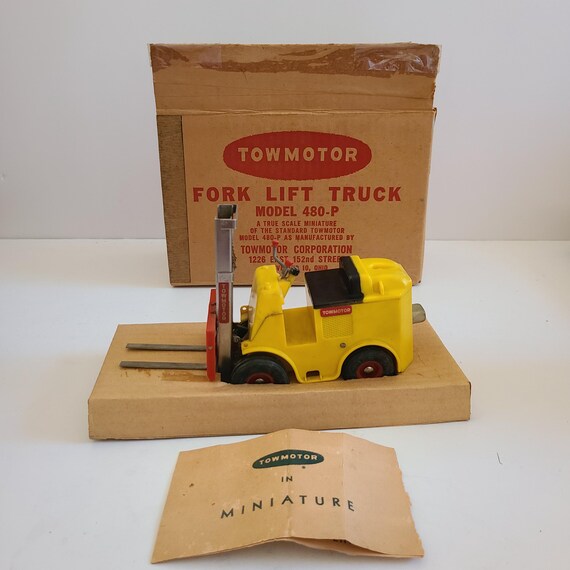
To this day, I still hate that name. But it worked, and the other two guys liked it, so I went along. It was the brand name on the forklift parked in the half-empty warehouse where the band of the same name first got together.
I wasn’t about to quibble over a name considering I was in a barely-above freezing warehouse on the outskirts of a college town in North Dakota with two guys who were total strangers three songs ago. The first words “Ryan” (not his real name) ever spoke to me was the riff from Rush’s Red Barchetta. When I heard those strains coming his battle-scarred Stratocaster, I responded with my best impromptu Neil Peart impression.
We’ve been music/writing partners ever since.
In other words, they could call this whatever they wanted; I knew we’d stumbled onto something which had a chance to go somewhere…exactly where was anybody’s guess. The first step on this journey was the moment we immediately meshed into a perfect sound for a old-school rock “power trio.”
To this day, that formula for a rock band has always been my favorite. The “power trio” format is the “haiku” for musicians, the limitations of the the form force greater intricacy between the members, which in turn can unlock many artistic possibilities. Towmotor never reached that level of musical self-actualization, but it formed the foundation of a lot of things to come for “Ryan” and me.
It’s also why to this day there’s a stupid model of a forklift on my desk.
3) Fair Warning
To say Fair Warning was “Towmotor 2.0” is incredibly boring, yet painfully accurate. The aspirational genesis of Fair Warning was “Ryan” and I exploring a larger sound with more complexities; we had delusions of being the next Rush. At least we weren’t crazy enough to think we could pull off a sound like that with only three members; we added a keyboard player/vocalist.
With the line-up in place, we wrote a bunch of original material…even to the point of scraping together enough dough to do some recording. Aspirations are vital to the creative process, but they don’t pay the rent. First of all, studio time is topped in expense only by things like major surgery or operating a private jet. The problem is time time it takes to turn any coin off original material is far longer than the time it takes for the landlord to evict.
That’s the functional description of Fair Warning. Artistic integrity and dedication to one’s craft underpins the aspiration, but starvation slams home the reality…and starving people don’t grow. But in the late 80s, four guys who could write, compose, and record their own stuff could easily be bad enough to play tun a little coin in crappy bars covering early Rush, Cheap Trick, and the “greatest hits” of 80s “Camaro Rock.”
Like 99.95% of all rock bands founded on this earth, Fair Warning ran it’s course. But the lesson learned in all of this is one many musicians never figure out… artistic integrity and financial gain are not mutually exclusive. You need one to feed the other.
E) Growth As A Writer – Opposition, Part II
After absorbing that lesson comes the discovery that growth is not just a constant process, it comes in very distinct phases…even if those phases are driven by a common cause.
Flash the clock forward to the days beyond our youth. Once “Ryan” and I sowed our “rock star” oats, it was time for that “pesky” adulting to kick in. In other words, we both had to face the reality if we were going to do the “music thing” on our terms, we needed to get “grown up” jobs and make some real money. That’s exactly what we did. Both of us established solid careers and bankrolled a few bucks…all while keeping the “bug” alive.
Weirdly enough, preserving that passion took us on down a road paved with our sports backgrounds and propensity for gambling. This is how you get guys who create song-writing/composing challenges…things like “$100 says you can’t turn something by Rush into a country song.” Then it was “double-or-nothing – you can’t rework a Bubble-Gum pop song as speed metal.”
After some significant “back-and-forth” hauling ass down that road, Ryan hits me with one that stumped me faster than a lumberjack on crack. Of all people, he knew more than anybody about my disdain for “love” songs. That’s why he waited until we had a snare drum case full of cash when he nailed me with “write a love song about a woman who hates you.” Naturally, this renders me as the definition of “drawing a blank.” At this point, Ryan makes an off-hand comment…partially in jest… but it launched something that neither of us could have ever seen coming. He says to me “why don’t you use the girl from your piece about Grease?”
BOOM. Not only did I end up writing what may be my personal best in terms of lyrics, but those stanzas served as the genesis for a major point on my “bucket list” as a writer. And just like that, “Grease Girl” got set in stone as my “Muse of Unknown Origin.”
F) Starless: The Screenplay
The destination is the of end of every journey…even if you didn’t really know where you were going. Sometimes you don’t know that where you’ve ended up is where you were supposed to be. Sometimes, circumstances dictate the destination more than does direction. And sometimes, you don’t know you’re in the middle of the proverbial “perfect storm.”
But this time, it didn’t matter what the road was paved with, opposition was the fuel firing the engine. Writing a screenplay was the aforementioned “bucket list” item, but the day that opportunity presented itself, I was once again stumped for a subject. Once again, it was Ryan to the rescue.
In another off-hand comment, he points out the ready-made study in oppositional characters created by setting a storyline around “Grease Girl” and a thinly-disguised version of yours truly; an exercise in autobiografiction. Now I have a solution which creates another problem; now I’m struggling for a plot.
While I have no idea what to construct, I know one thing it will not be. For the same reason I won’t write “love” songs, I absolutely refused to make this story a romance; it’s just the “easy” way out. Not to mention, it’s a complete violation of my about younger women as outlined in Part I; it’s a special sort of gross given “Grease Girl” is some 30 years my junior. Moreover, there’s just no fucking way I’m re-working Breezy.
Ryan rode to the rescue yet again with a suggestion to fold “Grease Girl” into our musical exploits. Something we were considering was getting a house to convert into to our own makeshift studio. What if unbeknownst to us, that house was right next to “Grease Girl?”
So…that was just a teensy bit PERFECT because “Grease Girl” lived in a nearby small-town; one in which we had looked at just such a house. That’s how the idea became plausible; the country girl who literally got married in cowboy boots ends up across the street from two guys belting out King Crimson jams.
All that was left was the “link.” When you have to characters who would rather suck ten feet of brown floss than be linked, the factor forcing them together becomes mission-critical for the entire plot. Well, I’ve got a great one, but given where this project is in development, I can’t give the whole story away here.
Besides, those details are off-topic. Don’t forget, the whole point here was telling the tale of my growth as a writer. But the important part…from the beginning… is noting this narrative’s connection between music and writing. That’s really why I picked these tracks for this two-part piece. What started with a middle-school string section became a four-decade long journey culminating in a guy creating a King Crimson rock opera thinly-disguised as a quasi-autobiographical “dramedy.”
The Moral of the Story
If that journey doesn’t define growth, then I have no idea what does.
You can see all my WordPress Daily Prompt responses here.
You can see all the Misty Water-Color Memories here.
P.S. Regardless of whether you were a fan of King Crimson prior to this, you can learn some very interesting things from Robert Fripp’s appearance on Daryl Hall’s “Live From Daryl’s House.” By the way, there’s tons of other great stuff on Hall’s YouTube channel.
If you are new to the King Crimson experience, here’s a great documentary on what is really one of most important band in rock history.
Part I:
Part II:
P.P.S. Proof there’s hope for the future. High schoolers playing King Crimson…
Got a question, comment, or just want to yell at us? Hit us up at dubsism@yahoo.com, @Dubsism on X, or on our Pinterest, Tumblr, BlueSky, Truth Social, or Instagram, or Facebook pages, and be sure to bookmark Dubsism.com so you don’t miss anything from the most interesting independent sports blog on the web.


[…] Part II, the foundations of my writer/musicianship grow into the monster I created and can barely […]
LikeLike